The same foundation chapters, preparation guides and illustrated drinks, available without JavaScript. Both reading depths are included.
Recipes are attributed starting points, not local brewing trials. For interactive calculations, photographic menus and search, return to the interactive edition.
The Coffee Plant and Where It Grows
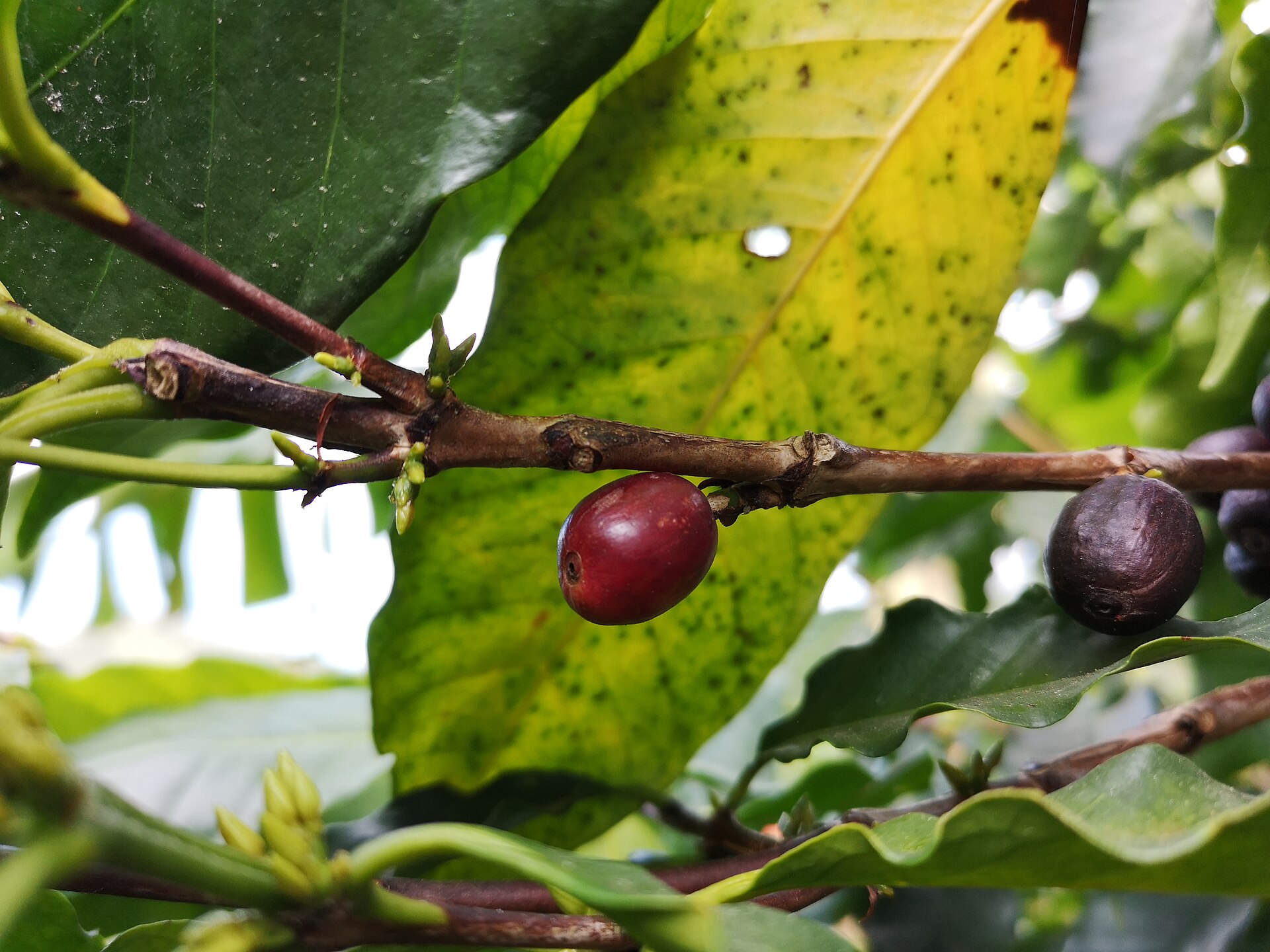
Photo: Roger Burger. File:Coffee arabica cherry.jpg. CC0. Original or source thumbnail; no local file edits. Display resized; image remains under its linked licence.
The bean starts as a seed. Learn what the label on your bag tells you, and what it cannot tell you.
Fruit, seed, species and variety
Foundation
The coffee plant grows fruit commonly called coffee cherries. Coffee beans are the seeds used for roasting and brewing. “Arabica” names a species, Coffea arabica. “Robusta” commonly refers to Coffea canephora. A variety, such as Bourbon, sits within the species rather than being another brewing method.
Look for the growing country or region, producer, species or variety, processing method and roast description. These answer different questions. A country name alone does not tell you exactly how the cup will taste.
Arabica and robusta dominate commercial cultivation. Liberica and excelsa matter too. Kew’s current project treats excelsa as Coffea dewevrei and Liberica as Coffea liberica. Older sources may group them differently.
From the outside in: exocarp is the fruit skin; mesocarp is the fleshy region, with pulp and mucilage terminology differing between anatomical and processing accounts; endocarp is the parchment around the seed. The seed contains silverskin, endosperm and a small embryo. The RSC chapter describes silverskin as remaining perisperm. Endosperm stores reserves used during germination and forms most of the coffee bean. Parchment and silverskin are different layers, removed at different stages.
Ordinary Coffea canephora is diploid, with 22 chromosomes. Coffea arabica is allotetraploid, with 44 chromosomes and ancestry from two species. Those counts describe chromosome sets, not a measure of quality, sweetness or caffeine. The cited experiment doubles chromosome sets in laboratory plantlets; its resulting counts should not be relabelled as the ordinary species counts.
Species and variety interact with local conditions. Soil’s physical, chemical and biological properties, water availability, plant spacing and management affect the root system. A single altitude or pH number cannot replace a site assessment. Use local soil tests and agronomy before choosing amendments, irrigation or planting distances.
Checked 8 October 2026: Business Queensland states coffee berry borer is not currently found in Australia. It can bore into fruit and damage seeds. Coffee bean weevil occurs in Australia and can look similar; identification needs an expert. If you suspect coffee berry borer, use the official report link or Biosecurity Queensland’s 13 25 23. This statement does not mean Australian coffee has no other pests or diseases.
Think of two seeds growing side by side in a small fruit: their facing sides become relatively flat. When only one seed develops, it can grow rounder and is called a peaberry. The name describes this structural variation, not another species or a guaranteed quality grade. A producer’s reported harvest proportion should not be turned into a universal percentage.
Roots need access to air as well as water. The Australian growers’ manual stresses drainage, aeration, organic matter and moisture supply. Its June 2024 soil section gives slightly acidic pH 5–6 as local guidance, rather than the original spec’s unchecked 5.5–6.5 range. Check soil depth and chemistry before planting; this is not a universal lime or fertiliser recipe.
The same manual discusses phosphorus, nitrogen, magnesium, potassium and trace elements together. Nutrition cannot be reduced to one ingredient that guarantees a flavour. Shade can change light, moisture and temperature; full-sun production also needs water and nutrient management. Tropical and subtropical row orientation, ripening and harvesting constraints differ. Use the region’s agronomy instead of assuming all coffee must grow beneath shade trees.
The manual compares tropical Mareeba conditions with subtropical Alstonville. Plant Health Australia’s source, checked 8 October 2026, states Australia remains free of coffee leaf rust (Hemileia vastatrix) and coffee berry borer. That dated status does not establish that a farm is pesticide-free or remove the need for on-farm hygiene and reporting.
Xu and colleagues studied different shade and management treatments in Costa Rica, then examined the roasted coffee’s aroma and colour. It demonstrates why growing conditions deserve measurement. It does not establish that the same treatment, climate or flavour response applies to every Australian planting.
A suitable climate is only the first question. The Australian growers’ manual asks about frost, wind, slope, soil depth, drainage and reliable water, alongside access to processing, transport and technical services. Start with the property and its records before choosing trees or machinery. A region famous for coffee does not make every block suitable.
Professional: build a site assessment before a planting plan
Professional detail
Use the manual’s section 5 checklist as a screening aid. Record climate and frost history, slope and machinery access, soil test results, drainage, water availability, processing arrangements and environmental constraints. Identify what has been measured and what still needs local advice. This is a planning sequence, not approval to plant or a site-specific irrigation or fertiliser prescription.
The manual discusses Australian red volcanic soils and their nutrients, but also asks growers to test soil properties and drainage. “Volcanic” is geological context, not a complete soil analysis or a flavour score. Retain the actual soil classification and measurements in a farm record rather than treating the label as a guarantee.
Arabica and robusta differed on average in Caporaso and colleagues’ green-bean study, but their composition distributions overlapped. Beans from the same batch also varied. Use a species name to ask useful questions, rather than to promise an exact sugar or caffeine percentage in your drink.
Professional: compare composition on the same basis
Professional detail
The study analysed 260 single-bean samples from 12 countries with HPLC-MS reference measurements. Reported as-is means were: sucrose 46.7 ± 7.5 mg/g for Arabica and 33.6 ± 9.1 mg/g for robusta; caffeine 15.7 ± 2.3 and 19.9 ± 4.9 mg/g respectively. These are study means with standard deviations, not species-wide limits. As-is includes the sample’s moisture; a dry-weight percentage uses a different denominator. A green-bean concentration does not measure caffeine in a brewed serving. Distinguish measured reference results from the paper’s hyperspectral prediction model.
FAO’s soil account describes Andosols associated with volcanic materials such as ash, pumice and tuff. Andisols is the corresponding USDA soil-group terminology, not a coffee quality grade. Do not automatically classify every red volcanic Australian soil as an Andosol. The site needs its own soil description and measurements.
FAO describes strong phosphate fixation in Andosols and charge properties that depend on pH and solution conditions. Good water storage does not mean all nutrients are freely available. The account is an explanatory historical reference, not the latest diagnostic key or a fertiliser schedule. Record the classification system, soil test method, available phosphorus and local advice before choosing amendments.
The Philippine Department of Agriculture’s guide identifies Liberica as kapeng barako. That is a local coffee name, not an extra botanical species. Kew distinguishes Liberica (Coffea liberica) from excelsa (Coffea dewevrei); older references also use Coffea liberica var. dewevrei. Kew’s photographed seed specimens show differences in size and outline, but one specimen does not define every seed or replace botanical identification.
Professional: compare the identified lot, not a flavour stereotype
Professional detail
Kew’s Uganda report describes variation in excelsa flavour with locality, plant variant, harvesting and processing. Its evaluations included grape, chocolate and berry descriptions; these are observations of Uganda-grown coffees, not promises for every excelsa. Its seed comparison identifies each species and growing location. Use similarly identified lots when comparing Liberica and excelsa. A fixed smoky-jackfruit profile, exact hooked seed shape or universal 15 m canopy is not established here. The 2025 taxonomy paper linked by the current Kew project was not available in full in this review.
Processing prepares the harvested seed for drying, storage and roasting. The key question is what happens to the fruit around it.
Natural: dry the fruit around the seed
Foundation
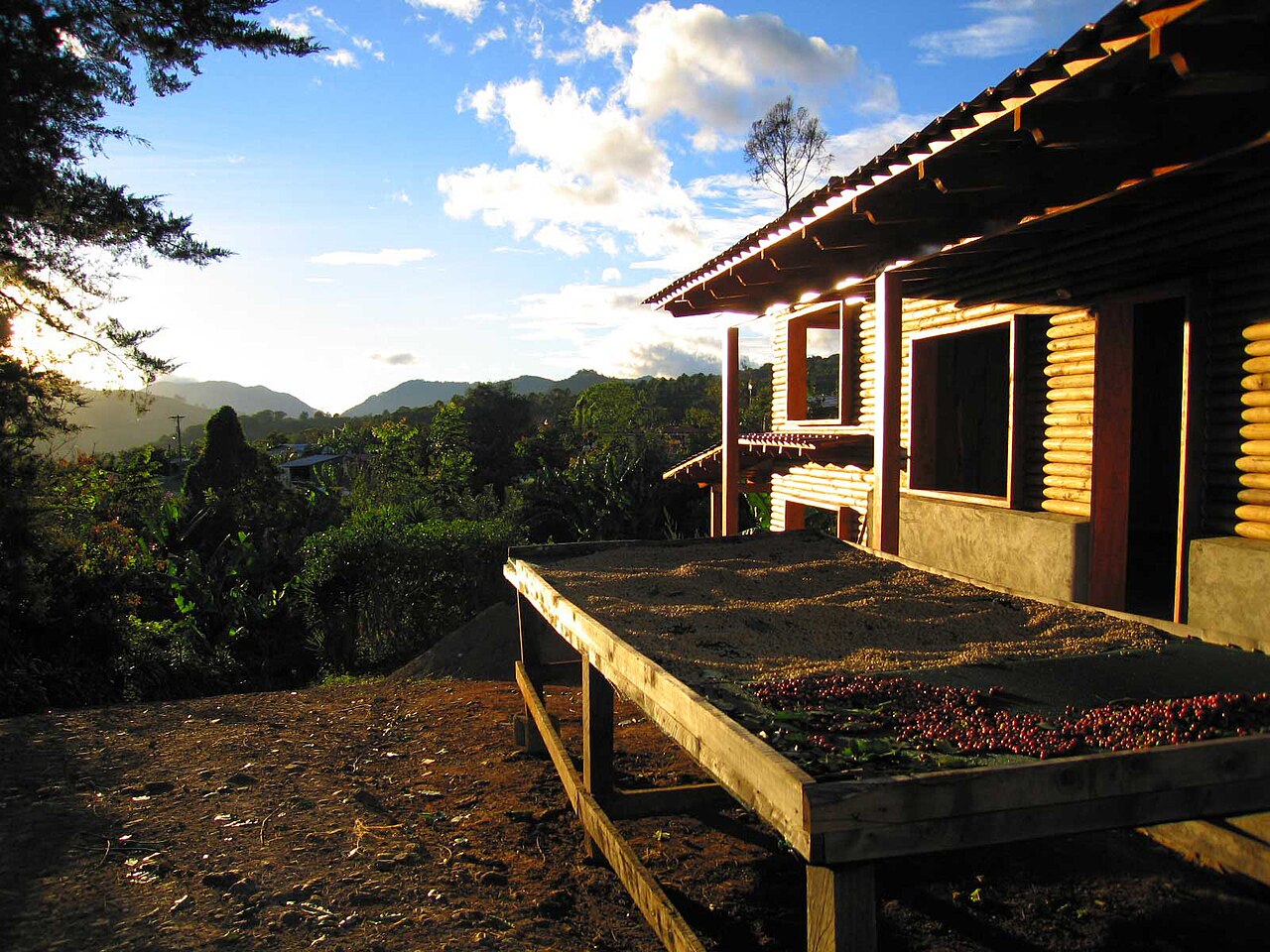
In a natural process, harvested cherries dry with their fruit intact before hulling. Turning and protecting the drying fruit are part of managing the lot. Drying time depends on conditions.
Washed processing removes the pulp, then removes the remaining sticky mucilage before drying the seeds in their parchment covering. Fermentation and mechanical removal are possible parts of the process; equipment and sequences vary.
Honey or pulped-natural descriptions commonly mean the skin/pulp is removed while some mucilage remains during drying. Honey is not added. Producer colour labels do not provide a universal percentage of retained mucilage.
Ask how the lot was fermented and dried, not just whether it is called “anaerobic”. SCA describes a growing range of fermentation approaches, and the associated terminology can be confusing.
In wet-hulled processing, associated especially with parts of Indonesia, parchment is removed while the seed is still wetter than in conventional dry hulling. The exposed seed then finishes drying. It is distinct from simply calling any washed coffee “wet-hulled”.
Processing, drying, milling and storage belong to one traceable sequence. Method names do not establish a safe fermentation time, a drying endpoint or a guaranteed flavour. Ask for the producer’s actual measurements and lot handling records.
Mawardi and colleagues compared varieties and processing methods in Flores during the 2009 harvest. Their results were tied to that place, those varieties and the tasting panel. This is a useful example of why one processing label cannot guarantee the same cup everywhere.
Selective picking chooses suitable ripe fruit; stripping gathers fruit with different ripeness. The PNG training guide separates good ripe cherries from overripe or raisin fruit removed for crop sanitation. Keeping those groups apart protects the processing lot. Its red-fruit examples are regional guidance; no universal Brix target is established here.
A calendar cannot tell you whether a lot is dry enough. The PNG guide uses 10–12% moisture for its dried parchment workflow. Treat that as a named context and verify the buyer’s specification and measurement method. Weather and drying conditions affect the elapsed time. The guide’s moisture table and storage section label this as dry-basis moisture (MCdb). Do not silently equate it with a wet-basis buyer or instrument specification.
In the PNG guide, wet processing prepares parchment coffee. Subsequent dry-mill work removes parchment, with hulling and polishing addressing the coverings. This use of “dry processing” describes milling and should not be confused with the whole-cherry natural fermentation/drying method. Record the stage rather than relying on the word “dry” alone.
Yeasts and bacteria can use the fruit’s sugars and other available material during processing. In a 2026 Arara-coffee experiment, researchers varied time, temperature, water and starter culture, then measured microbial communities and sensory associations. Results depended on the treatment. A bag labelled “fermented” does not identify a predictable flavour or a single universal recipe.
Low oxygen and carbonic maceration are different descriptions
Foundation
Anaerobic means without oxygen; commercial labels often describe processes intended to restrict oxygen. Carbonic maceration describes a more specific intact-fruit process in a carbon-dioxide-rich environment. A sealed vessel alone does not establish how gas was supplied, whether fruit was whole or depulped, or what organisms were active. Ask the producer for the actual procedure. The Arara study used airlocks to release carbon dioxide while limiting oxygen entry; not every low-oxygen process requires injected gas.
Resting: a recorded period, not a universal calendar
Professional detail
In that Arara experiment, processed coffee was dried to 11–12% moisture and hulled after 30 days of storage. Those are study conditions. They do not establish that every coffee must rest for 30–60 days or that a calendar replaces moisture and storage checks.
Optical sorting checks appearance, not the whole cup
Foundation
Bühler describes coffee sorting for discoloured, immature and insect-damaged beans, plus foreign material. Some named systems also use infrared sensing. This is a machine’s detection and rejection task. It does not replace lot sampling, tasting or the buyer’s grading specification; similar-looking material and hidden defects need appropriate controls.
After pulping, sticky mucilage can remain around parchment coffee. Pectinases are enzymes that act on pectic material; the studied enzyme helped remove this coating from pulped beans. This describes one part of processing. It does not mean every fermentation uses an added enzyme or follows the same elapsed time.
Professional: an enzyme experiment is not a farm recipe
Professional detail
Oumer and Abate compared pulped coffee treated with a crude enzyme mixture with a water-only control. They reported removal within 24 hours for the treated beans, while the control remained incomplete at 36 hours. The endpoint was assessed by hand feel. Those conditions and observations do not establish a safe universal fermentation temperature, microbial starter or optimum flavour.
The Australian manual separates three dry-mill sorting tasks. Sieves group beans by size; a vibrating densimetric table with airflow separates material by density; optical sorting rejects selected colours. These stages complement each other. Passing one sorting step is not proof that every defect has been removed or that the cup tastes good.
For a lot, record the sampling method, screen or sieve used, density-table settings where applicable, colour-rejection criteria and the material removed. Keep moisture and sensory records alongside these results. The manual explains equipment functions; it does not supply a complete buyer-specific acceptance contract. Ask which specification governs the lot before calling it accepted.
The manual’s processing sequence includes a flotation tank before pulping and a separate density table at the dry mill. These handle different material at different stages. Keep cherry separation records separate from dried-bean grading; the word “density” alone does not identify the operation or establish a finished quality grade.
The sticky material around a pulped seed contains several kinds of plant material. Avallone and colleagues separated alcohol-insoluble residues and found pectic substances, cellulose and other polysaccharides. Their roughly 30% pectic figure describes that isolated residue, not 30% of the fresh, wet mucilage. Keep the tested material and measurement basis with any percentage.
Professional: removal does not mean complete pectin destruction
Professional detail
In a separate 20-hour experiment, Avallone and colleagues found broadly similar residue yields and composition before and after fermentation. The soluble pectic fraction showed a small viscosity and molecular-weight reduction, while an insoluble fraction showed partial de-esterification. They described restricted pectolysis, with its mechanism still unresolved. This qualifies the simple claim that fermentation completely breaks down the mucilage’s polysaccharides. It does not contradict a different experiment using added commercial pectinase; treatments and endpoints differ.
A processor may assess mucilage removal by touch, while a research study measures chemical fractions. Those are different endpoints. Keep the named method, material, temperature, duration and assessment together. A 20-hour research treatment and a 24-hour enzyme-treatment result do not establish a universal washed-coffee recipe or safe operating limit.
Wet-basis moisture divides water mass by the total mass of the moist sample. Dry-basis moisture divides water mass by the dry solids mass. The same material therefore has different percentages on those two bases. The PNG guide labels its table MCdb; other supplier specifications may use a different basis. Record the basis, material, instrument and method before comparing a result with a target. Appearance and hand feel are not calibrated moisture measurements.
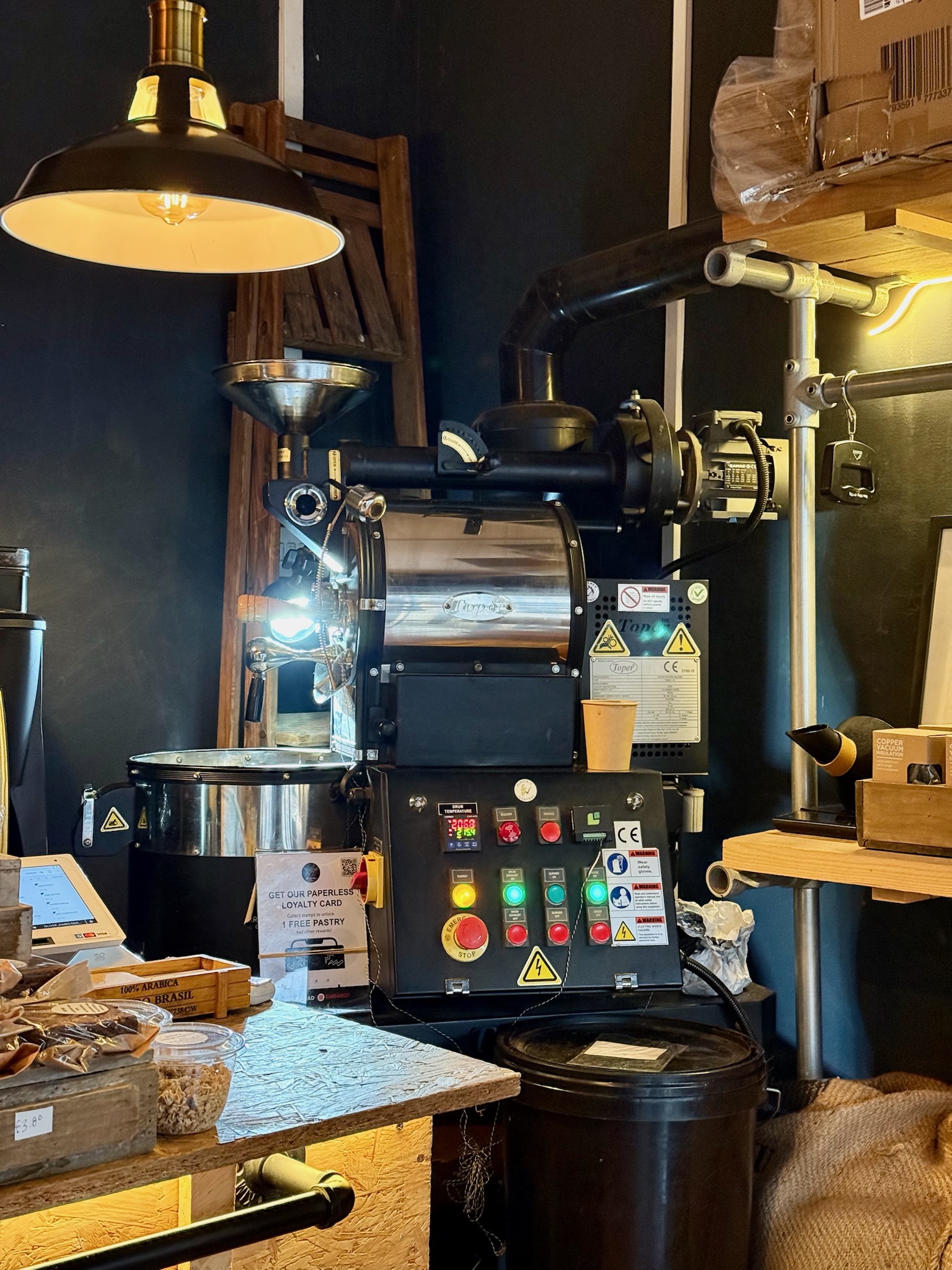
Photo: Robert-brook. File:A Toper coffee roasting machine.jpg. CC0. Original or source thumbnail; no local file edits. Display resized; image remains under its linked licence.
Roasting transforms green coffee with heat. Colour is useful, but one roast name does not describe the whole roast.
From green seed to roasted coffee
Foundation
Roasting changes the colour, aroma and physical character of green coffee. Moisture is lost, browning develops, and the roasted coffee is cooled. Different roast choices suit different coffees and preferences.
Roasters use colour and their own naming conventions to describe a roast. Two bags called “medium” can differ. Ask what the roaster expects in the cup, then brew and taste.
An espresso roast is selected for that brewing method; it is not one mandatory colour. The grinder, recipe and coffee still affect what reaches the cup.
At home, record the coffee, roast date, recipe and flavour. Strong roasted flavour does not by itself tell you the caffeine dose.
Browning and aroma
Foundation
SCA’s roast-colour discussion explains how heating sugars and amino-containing material produces brown compounds and aromas through Maillard reactions. Roast colour helps describe the transformation, but colour alone does not reconstruct every chemical event or a roast’s time history.
A temperature is one observation. A rate requires a change over an elapsed time. Use the numerical timeline below to explore this distinction. Its temperatures and stage labels are invented teaching markers, not universal reaction thresholds.
Compare batch loss with measurements
Foundation
Weigh the green batch and cooled roasted batch using the same units. The difference is mass loss across that process; it cannot, by itself, separate water loss from other losses. Never substitute a claimed universal percentage for your actual batch record.
Aroma is a network of reactions
Professional detail
Think of green coffee as a collection of ingredients that change together under heat. Xu and colleagues describe sugars, amino acids, organic acids and phenolic compounds as aroma precursors. Maillard reactions, Strecker degradation, sugar degradation and lipid oxidation contribute through multiple pathways. A single temperature reading cannot identify all the reactions or guarantee a tasting note.
Roasting produces audible cracks. Wilson’s acoustic experiment found first-crack sounds had greater amplitude and more low-frequency energy than second-crack sounds; the second-crack chorus had more events per unit time. These are measured sound differences, not proof that every first crack occurs at 196 °C or at a fixed internal pressure. Log your actual observations alongside the equipment’s temperature record.
Roasting forms gases, including carbon dioxide, and some remain in the bean’s porous structure. In Smrke and colleagues’ study, roast degree and roast speed affected how much gas was released and how quickly. Grinding changed the release pattern substantially. Their controlled measurements support treating degassing as a changing process; they do not set a universal resting period or prove flavour from gas release alone.
Aroma instruments and the cup answer different questions
Professional detail
Zakidou and colleagues studied ten single-origin Arabica coffees from eight growing locations, each given a customised roast. They identified 138 volatile compounds across the samples using headspace sampling and gas chromatography with mass spectrometry. The samples grouped more strongly by roast degree than geographical origin in this analysis. An instrument’s compound signal is not a direct flavour score for your cup. Because origins and customised roast conditions differed, this dataset does not establish that roast always outweighs origin. Compare recorded roast conditions and tasting observations before generalising.
Maillard reactions involve reducing sugars and amino-containing compounds. Strecker degradation links carbonyl compounds with amino acids, forming aroma-related aldehydes. Caramelisation describes heat-driven sugar changes that do not require amino acids. Pyrolysis means thermal breakdown. These pathways overlap during roasting; they are not four switches that turn on at universal probe temperatures.
In the Maillard pathway, early sugar and amino reactions lead through rearrangements and many further products, including brown melanoidins. Strecker reactions form smaller aldehydes from amino acids. Cao and colleagues review these pathways, but a reaction name does not guarantee caramel sweetness or a particular tasting note in the finished cup.
Schenker and colleagues compared two hot-air roasting processes brought to equal degree of roast. Their measurements found greater bean volume, pore volume and larger cell-wall micropores in the higher-temperature process. This supports recording roast history alongside colour. The publisher abstract does not establish a universal internal pressure or a brewing-performance ranking, and an ordinary photograph cannot measure those pores.
Wilson’s acoustic study found differences in amplitude, frequency content and event rate between first and second crack. Those are sound observations. They do not supply a pressure measurement inside a bean or establish the original specification’s 25-atmosphere claim. Record what you hear alongside time and the instrument reading; a crack label alone is not a universal roast temperature.
Write down the instrument, named scale, sample preparation, whole-bean or ground sample, calibration procedure and measurement timing. Do not compare numbers from unspecified scales as if they were equivalent. On 8 October 2026, SCA lists SCA-131 Coffee Roast Level: Test Method as in development, not a published standard. This chapter does not claim compliance with it or supply an unverified scale conversion.
Use a consistent record: coffee lot, green and roasted mass, machine and batch size, probe identity, charge and discharge times, logged readings, heat and airflow changes, crack observations, cooling routine and tasting date. Separate setpoints from measured values. Record colour only with its method. This is an editorial record template, not a validated production profile; transferring times or temperatures between machines needs a new controlled comparison.
The mass-loss tool describes the masses you enter. The timeline shows a labelled teaching example. Neither identifies which reaction occurred, measures internal pressure or predicts a flavour score. For a real batch, retain the original observations and explain differences before changing the recipe. Numerical precision in a teaching display does not create measurement accuracy.
A compound can form and then decline
Foundation
Bagdonaite and colleagues measured acrylamide in laboratory-roasted Arabica and robusta. Levels were highest early in their roast experiments and decreased with longer roasting. Time, temperature, species and starting precursors affected the result. This is a specific chemical observation, not proof that darker coffee is generally healthier or that one roast colour meets a safety standard.
Zhu and colleagues modelled roasting-induced compounds. Acrylamide and 5-HMF formation and elimination occurred together and were described with first-order kinetics; furan and methyl-furan increases used empirical logistic models. A fitted model describes the experiment and its assumptions. It is not a universal reaction switch, a model of every aroma pathway or a programme transferable to your roaster. No fitted coefficients are provided here because the full methods and applicable equipment conditions were not accepted in this review.
Separate chemistry, flavour and operating acceptance
Foundation
An analytical compound result, a tasting observation and a roaster operating decision answer different questions. Retain each method and its conditions. The laboratory evidence above adds chemical depth to this chapter; it does not validate the illustrative timeline, measure internal crack pressure or establish a commercial roast profile.
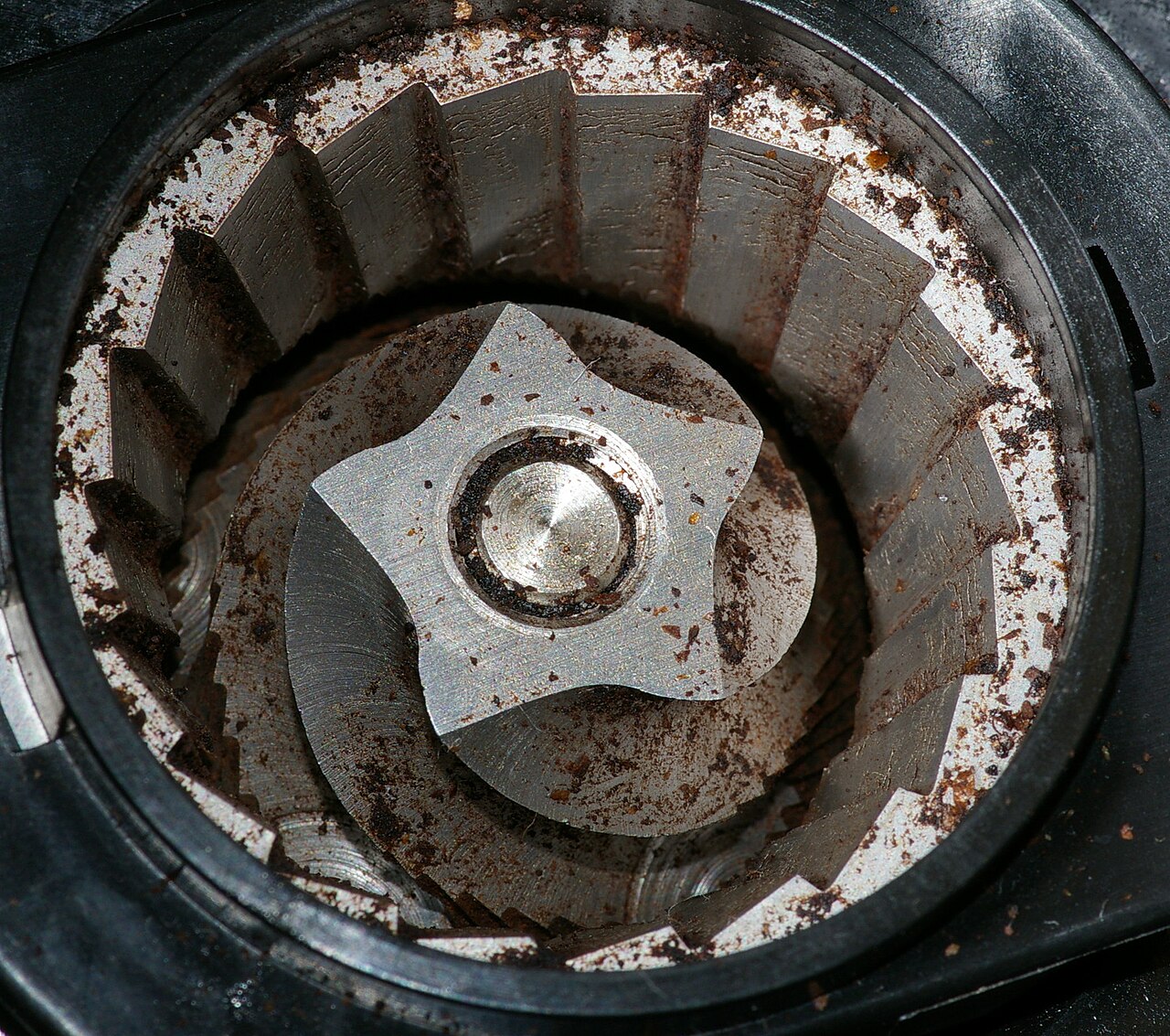
Photo: Hustvedt. File:Coffee burr grinder.jpg. CC BY-SA 3.0. Original or source thumbnail; no local file edits. Display resized; image remains under its linked licence.
Start with a grind setting suited to your brewer. Then adjust in small steps using the brew and taste together.
Choose the method first
Foundation
Espresso usually begins fine; plunger coffee usually begins coarse. For the V60 guide here, Baratza specifies medium to medium-coarse. These are starting descriptions, not measured particle sizes.
“Setting 20” cannot be transferred reliably between different grinder models. Follow the equipment instructions, note your setting and compare results on that grinder.
Keep the dose and recipe steady, make a small grind change and brew again. Record flow or time alongside flavour. A faster or slower brew gives information, but does not prove the cup is better.
An uneven espresso puck can cause uneven extraction. For pour-over, pouring, filter paper and agitation also affect flow. Do not make the grinder explain every problem.
Ground coffee contains particles of different sizes. A nominal grind size does not mean every particle has that diameter. State the measuring method and the fraction described when comparing numerical sizes.
For the same mass and assumed density, smaller spheres have more external surface area. The model below lets you divide the mass into two size classes. Real grounds have rough surfaces, pores and irregular shapes, so the result is illustrative.
Flow adds another question
Foundation
Coffee-bed depth, packing and uneven flow can affect a brew. More modelled surface area does not guarantee more uniform extraction or a better cup. Use the model to understand geometry, then compare real brews.
A conical burr works with an outer ring; the gap helps control how coffee moves through the cutting region. Flat burr systems use two circular cutting faces. Baratza’s description explains its own arrangements. Burr shape alone does not certify a particular taste or identical particle distribution across different grinders.
A blade grinder acts more like a small food processor: moving blades strike the beans repeatedly. Breville describes the resulting mixture of smaller and larger pieces. Timing changes the mixture, but it does not give the same gap-based adjustment as a burr grinder.
Bühler’s industrial GrindDefine uses controlled roller gaps and parallelism, with roll temperature management. The producer describes settings for different coffee applications. This is a named equipment example; capacity, repeatability and suitability need the actual specification and production test, rather than a claim that every roller mill creates one perfect size.
The main photograph shows the cutting region after the hopper was removed. Follow the actual curved and toothed surfaces rather than trying to infer an invisible mechanism from an illustration. Residue is visible, but a photograph alone cannot establish wear, grind consistency or a service interval.
Clean before chasing a new setting
Foundation
Baratza identifies accumulated coffee oils, particles and chaff in the grinding chamber and chute as possible contributors to clogs and inconsistent operation. Check your own model’s care instructions before treating a changed brew as only a grind-setting problem.
Identify the grinder model and read its manual. Before reaching inside or manually clearing a blockage, disconnect power. Remove only user-serviceable parts in the stated order, brush where instructed, keep components that must stay dry away from water, and reassemble correctly. Baratza’s guidance distinguishes Sette burr removal from its other designs; one sequence does not fit all grinders.
Record the model, coffee, dose, setting, cleaning date and observed output or brew behaviour. Compare before and after using the same recipe. A manufacturer’s suggested care interval is a starting schedule, not a measured wear limit for every workload. Do not infer burr life or taste quality from the photograph.
The close-ups show irregular fragments, with different textures and visible pieces. Two sources label their photographs coarse and fine wet grounds. They have no scale bars and are not matched in magnification, so do not estimate microns or calculate a distribution from them. Use a stated measurement method when a numerical comparison matters.
Professional: identify the particle measurement
Professional detail
Uman and colleagues measured grounds using laser diffraction, an EK43 with Turkish burrs at 1480 rpm and relatively light-roasted coffees. State the instrument, grinder, burrs, coffee and sample preparation before comparing a distribution. A photograph or a grinder dial is not the same measurement. Results from that setup do not establish an ideal distribution for every coffee or brew method.
A count gives each particle one vote; a volume-weighted result gives larger particles more influence. Illustrative arithmetic: if spherical particles have diameters of 10 and 100 micrometres, the larger sphere has 1,000 times the volume. This is geometry, not a measured coffee sample. State the weighting and method before comparing a median size or a share of fines. Real grounds are irregular.
Professional: fines affect flow, not just surface area
Professional detail
Smrke and colleagues varied grind distributions and added sieved fines in an espresso experiment. Their fines measure was the volume share below 100 micrometres. More fines reduced bed permeability and slowed extraction under the tested conditions. A median size alone did not describe the flow. This is experimental evidence for that setup, not a universal flow calculator. The surface-area tool does not know packing, permeability, pressure, viscosity or uneven flow, so it cannot predict shot time.
Uman and colleagues found that colder beans produced a smaller modal particle size and generally narrower distributions in their tested grinder setup. That is a reason to record bean temperature when comparing grinds. It does not establish that freezing always improves flavour or that a photograph measures the change.
Professional: distinguish an experiment from its explanation
Professional detail
The study compared bean temperatures using an EK43 with Turkish burrs and laser-diffraction measurements. Its discussion proposed warming burrs as an explanation for adjustments during café service, but taste and preference were not the study’s focus. Record bean temperature and machine history; do not claim that this study measured every café’s warm-burr behaviour. The extreme cooling experiment is evidence about material behaviour, not a home cryogenic procedure.
In Smrke and colleagues’ espresso experiment, the grinder scale described burr spacing. The researchers measured the resulting grounds separately with an imaging particle analyser and reported a volume-weighted median. A burr gap, a median particle size and a share below 100 micrometres are different measurements. Keep the label with the number rather than treating them as interchangeable.
Professional: keep the fines experiment in its context
Professional detail
The study used one coffee and grinder, a 20 g dose, 9 bar and a 40 g beverage target, with three replicates per condition. Grounds were measured by imaging, rather than the laser diffraction used in the Uman study. Sensory scores supplied subjective guidance; this was not a systematic double-blind sensory test. These conditions explain the evidence and do not establish a universal recipe or particle-size target.
The numeric tool adds a deliberately idealised relative comparison using the Kozeny–Carman inverse-square surface relation. It holds bed porosity, tortuosity, geometric constant, bed length and area, and liquid viscosity equal; all particles share the same density. Compare the entered two-size mixture with a hypothetical bed containing only its main diameter. Relative resistance = (1 − q + q × d/f)², with q the small-particle mass fraction, d the main diameter and f the small diameter in the same units. Relative flow at the same pressure difference is its reciprocal. The source tests glass-bead media, not coffee; mixed sizes can violate the model assumptions. Coffee swelling, fines movement and channel formation are excluded. These are dimensionless teaching outputs, not measured pressure, permeability, shot time or extraction.
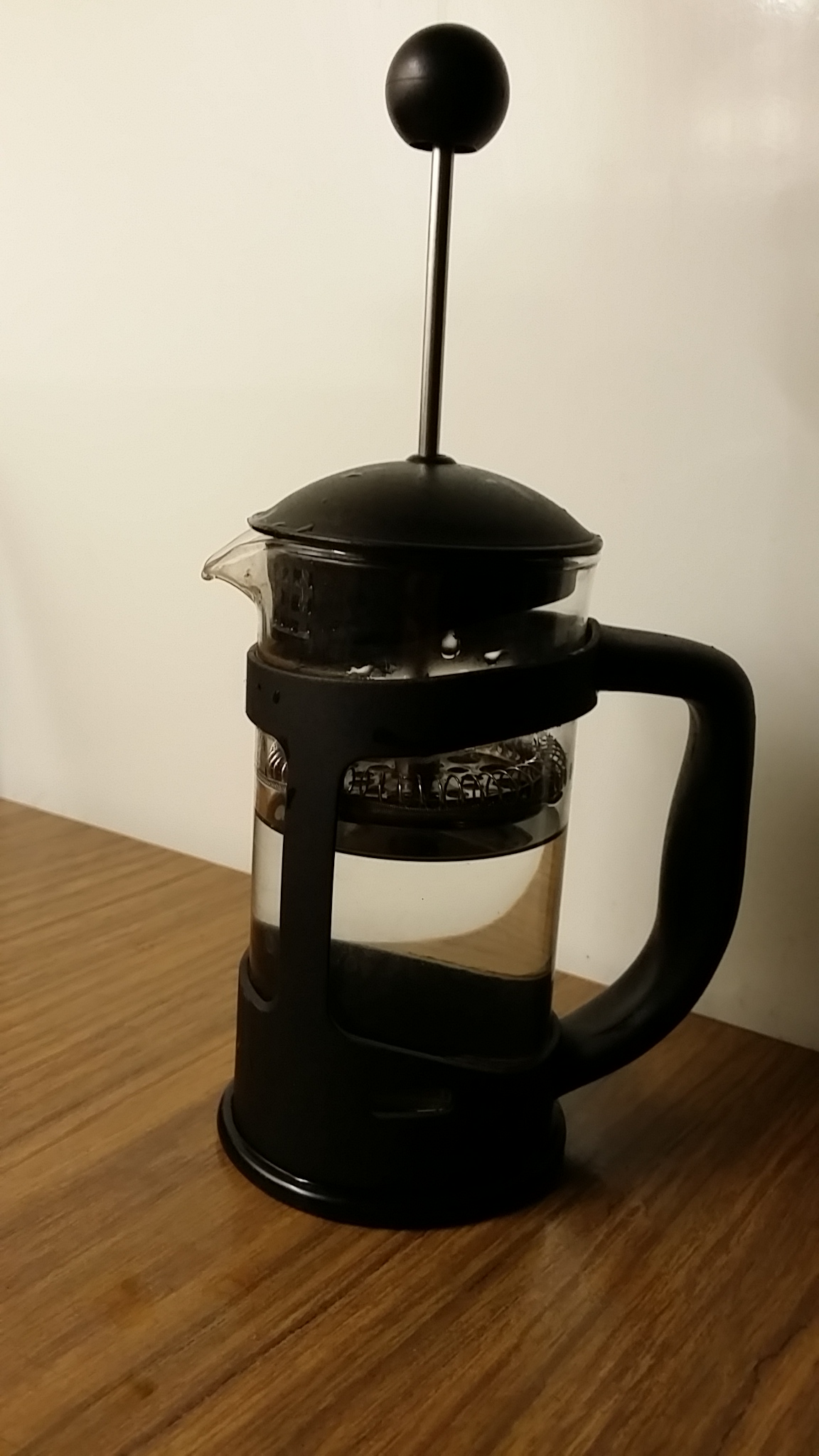
Photo: Ö4anby0502. File:Coffee Press.jpg. CC BY-SA 4.0. Original or source thumbnail; no local file edits. Display resized; image remains under its linked licence.
Make the next cup better: describe what you notice, try one controlled change, then explore the measurements and water behind it.
Start with the cup you enjoy
Foundation
Describe what you notice before changing a setting. Is the coffee light or heavy in texture? Which flavours do you notice? Keep your preference separate from the claim that a recipe is correctly extracted. The practical comparison and measured-input tools below help you change one thing at a time.
Water: four different questions
Foundation
Water hardness mainly concerns dissolved calcium and magnesium. Alkalinity describes the capacity to neutralise acid. pH describes the water’s acid-base state. Water TDS concerns its total dissolved material. These are different properties; one number cannot stand in for the others.
Wellinger’s SCA article explains how water’s buffering capacity interacts with coffee acids. Its effect depends on how much water meets a given coffee dose. An espresso and a filter brew therefore need separate context; pH alone cannot predict the cup’s acidity.
Coffee TDS and water TDS answer different questions
Foundation
The coffee calculator below uses coffee concentration as a percentage of beverage mass. A water reading in ppm describes a different sample and scale. Do not enter a water-meter reading into the coffee extraction calculator. Follow the instrument’s sampling and calibration procedure.
For a manual brewer, compare two drinking waters using the same coffee, dose, grind, input water mass and method. Label the waters and write down what you taste before choosing a favourite. If possible, record tested hardness and alkalinity. A preferred cup is a useful result; it does not prove a chemical mechanism.
Your machine has its own water requirements
Foundation
Check the current instructions for your exact espresso-machine model before using a different water or treatment. A water chosen for flavour still needs to suit the equipment. La Marzocco’s published specification is one manufacturer example, not permission to apply it to another machine.
Record hardness, alkalinity, pH, units, reporting basis, sample location and test date. Wellinger’s article separates taste goals from scale and corrosion concerns. Its proposed ranges are technical discussion, not a current universal standard. A single dissolved-solids total does not establish a complete water composition.
The La Marzocco PDF lists water TDS of 90–150 ppm, total hardness 70–100 ppm, alkalinity 40–80 ppm, pH 6.5–8 and chloride up to 30 ppm. Those values belong to that document. Confirm model applicability and the test’s reporting basis before comparison; the PDF does not explain every method or supply a universal water-treatment recipe.
State the question before brewing: am I comparing grind, dilution, coffee choice or milk balance? Label a baseline and a single intended change, record actual outputs and compare at similar tasting temperatures. For an espresso grind trial, keep dose and target beverage yield steady and observe time rather than forcing both brews to finish at the same second. Repeat before treating a difference as stable. This is an editorial comparison routine, not a statistically validated trial or an SCA certification protocol.
Professional: concentration does not describe evenness
Professional detail
Cameron and colleagues combined modelling and espresso experiments. Their observed extraction yield peaked, then fell at very fine settings, where partial clogging and non-uniform flow were implicated. They also showed that the same overall extraction yield can arise from different grind settings and need not give the same chemical composition. These findings support checking flow and repeatability, not a universal grinder setting. A whole-cup TDS reading cannot reveal a map of extraction through the puck.
Professional: calibrate descriptions before comparing preferences
Professional detail
Agree on what each sensory word means. World Coffee Research’s lexicon gives attributes and intensity references; SCA’s olfactory library gives aroma-category examples with preparation instructions. Use the relevant source procedure when practising a reference. An informal familiar-food comparison is not automatically a calibrated standard. Describe aroma, taste and mouthfeel, then record preference separately. A customer’s preferred acidity may differ from yours; neither preference is an instrument reading.
Record coffee and roast identity, brewer or machine, basket where relevant, coffee dose, input water or beverage yield, grind, timing convention, selected temperature, water identity and preparation routine. Add milk or dilution quantities separately. If using a coffee refractometer, also record calibration, sample preparation, replicate readings and their spread. Write the tasting observation, preference, change made and next action. Separate an instrument reading from a setpoint or assumption. This checklist supports a repeatable comparison; it does not calculate uncertainty or replace the instrument instructions.
First repeat your starting recipe and write down what happened. Then change one thing and compare at a similar, comfortable tasting temperature. If the difference disappears when you repeat, record that too. This is an informal learning exercise, not a certified sensory test. A personal preference is a useful outcome even when you do not have a laboratory measurement.
Professional: compare water on the same reporting basis
Professional detail
Before comparing a water report with a machine specification, identify each quantity, unit and reporting basis. Total hardness, alkalinity, chloride and total dissolved solids are separate entries in La Marzocco’s example specification. Its PDF labels hardness and alkalinity in ppm but does not explain every analytical method. Ask for the method or basis rather than inventing a conversion. Record the sample date and any treatment; this chapter does not prescribe a salt mixture or establish warranty suitability.
Professional: choose the sensory procedure deliberately
Professional detail
SCA lists separate published standards for sample preparation/tasting mechanics (102), descriptive assessment (103) and affective assessment (104). Its olfactory library supplies vetted category examples and their preparation instructions. Choose the relevant procedure for the question you are asking. An informal two-cup preference comparison is not automatically CVA assessment or evaluator certification. The linked reference recipes and formal calibration still require their own review before adoption.
A coffee refractometer measures refractive index and reports coffee concentration through its calibration. Suspended sediment can interfere. VST’s instructions call for clarified samples and control of sample and instrument temperature. Follow the exact instrument procedure rather than treating a cloudy espresso or a hot drop as a ready measurement.
Professional: keep the VST preparation stages separate
Professional detail
The LAB Coffee III precision note specifies a DI-water zero-set and a stirred, clarified small sample brought towards ambient temperature before measurement. Its syringe-filter sheet separately describes cooling and stirring espresso, drawing 3–4 mL below the crema, slowly filtering into a clean glass, further cooling, transfer and equilibration. Retain the applicable document and revision instead of merging these steps into one universal waiting time. The filters are single-use and non-sterile; VST says not to drink the filtered test sample or apply excessive syringe force. Manufacturer repeatability claims are not a local calibration result.
Hendon and colleagues used computational chemistry to compare how selected coffee compounds interact with dissolved ions. That helps explore a possible mechanism. It is different from measuring how much material a brewer extracts or asking tasters which cup they prefer. A magnesium-related calculation does not certify a universal water recipe.
Professional: compare the model with a brew experiment
Professional detail
Bratthäll and colleagues added calcium or magnesium chloride before and after brewing and analysed citric, malic, lactic and quinic acids using GC-MS and NMR. At lower salt concentrations, changes were generally limited and pre/post results mostly similar. Higher concentrations produced more variation and discrepancies between the analytical methods. Their dark-Arabica immersion preparation and selected acids do not establish every brewer’s total extraction or preference. The results qualify a simple “magnesium extracts more acids” claim; they do not show that minerals have no effect on flavour.
A reference number only helps when its equipment, procedure and document edition match your question. Keep the measurement separate from your taste preference. An equipment test does not certify your cup.
SCA 310-2021 concerns electrical home filter brewers at atmospheric pressure. It excludes manual pour-over, plunger, espresso and pod/capsule devices. Its test uses 55 g coffee per 1 kg fresh water and a target brew strength of 1.15–1.55%. These are document-specific test conditions, not universal extraction-yield limits. The current SCA index lists Standard 310 behind member access; this inspected 2021 edition is a dated example, not confirmation of the current certification requirements.
Photo: Robert-brook. File:A Toper coffee roasting machine.jpg. CC0. Original or source thumbnail; no local file edits. Display resized; image remains under its linked licence.
Start with the customer, then connect the offer to sourcing, quality, people and costs.
Choose the operation before the equipment
Foundation
A café, mobile coffee service, roastery and wholesale supplier have different workflows. Define your customers, menu, expected service volume and sales channel. Test the offer before treating a machine purchase as the business plan.
Trace the coffee you buy
Foundation
Record supplier, origin, lot, processing, delivery condition and agreed quality checks. The international benchmark is only part of a purchase: physical coffee, quality differentials, freight, currency, finance and supplier terms affect the delivered cost.
ICE now lists a Coffee C Metric futures contract, AC, for 10 metric tonnes quoted in US dollars per metric tonne. Do not transfer the older Coffee C contract’s units to this listing. Identify the actual contract and delivery month before comparing prices. This chapter explains conventions, not a trading strategy.
Import into Australia with the actual product in mind
Foundation
DAFF distinguishes roasted coffee and green coffee with pulp and seed coat removed from products with different risks. Those standard products generally do not require an import permit; applicable BICON conditions still matter. Commercial roasted kopi luwak is an exception requiring a permit. Check the current product, origin and documentation conditions before shipment.
FSANZ Standard 3.2.2A applies to specified businesses handling unpackaged, potentially hazardous, ready-to-eat food. Depending on the category, tools include a certified food-safety supervisor, trained handlers and evidence of critical controls. Confirm your classification and local requirements rather than assuming every café has identical obligations.
Include beans, milk, packaging, waste, labour, rent, utilities, cleaning, maintenance and owner remuneration. Keep startup equipment and fit-out costs separate from daily operating costs. Obtain written quotes that identify installation, training, service, tax and exclusions. An incomplete quote subtotal is not a complete startup budget.
Use supplier and equipment instructions, named recipes, clean equipment and recorded checks. Plan receiving, storage, stock rotation, service and closing routines. Water suitability depends on the machine and source water; use the model’s specification and a suitable water test rather than a universal treatment recipe.
Read a water specification before buying treatment
Professional detail
La Marzocco’s published example specifies water TDS of 90–150 ppm, total hardness of 70–100 ppm, alkalinity of 40–80 ppm and pH of 6.5–8. These are that manufacturer’s limits, not a universal recipe. Water TDS in ppm is different from brewed-coffee TDS expressed as a percentage. A TDS meter alone cannot establish hardness, alkalinity or chloride. Test the source water and check the current specification for the actual machine before choosing treatment.
A roasting installation needs more than a roaster. PROBAT’s ReiCat example uses electrically heated catalytic treatment for smoke and odour, with separate exhaust pipes and an external cyclone. Particle separation and treatment of smoke or odour are different jobs. Match the complete installation to the manufacturer’s design and local approval requirements; a universal afterburner temperature is not a permit or a design specification.
A drum roaster moves beans in a rotating chamber; a fluid-bed design uses moving air to lift and mix them. Roast Master’s FAB is a named electrically heated fluid-air example. Heat transfer depends on the actual design: Bühler’s RoastMaster20 uses hot air through a rotating drum and describes a high proportion of convective heat transfer. Avoid assuming every drum roaster is mainly heated by metal contact.
PROBAT’s P Series describes adjustable fan and drum speeds, bean and exhaust-temperature monitoring, and parallel roasting and cooling. Batch capacity alone does not establish your hourly output. An editorial production plan should also allow for loading, cooling, checks, packing, cleaning and operator time. Record those stages in a trial before committing to a production promise.
List the required espresso machine, grinders, batch brewer, water treatment, plumbing and installation separately. Ask suppliers to identify the model, quantity, quotation date, GST treatment, delivery, installation, electrical needs, warranty and service exclusions. The editable schedule below begins with unknown amounts. It avoids treating the original unsourced AUD range as a current setup price.
Build maintenance around the actual machine
Professional detail
Breville’s BES880 manual distinguishes its cleaning cycle from its descaling cycle and provides model-specific steam-wand cleaning. That distinction matters: removing coffee residue and managing mineral deposits are different tasks. Use the equipment’s compatible products, prompts and service instructions. Keep a dated maintenance record rather than imposing one chemical or interval on every machine.
A useful editorial buying checklist identifies the supplier, lot, crop, process, quantity, packaging, delivery arrangements and the quality sample both parties accepted. Write down how a mismatch will be assessed before ordering. ISO’s public catalogue describes ISO 9116:2025 as guidance for specifying green coffee and related handling. The full standard has not been reproduced here; this checklist is a planning aid, not its clauses or a contract.
A handful from the top of one bag can miss variation elsewhere. The European Commission’s customs sampling example takes increments across a consignment and mixes and divides them carefully. This is an EU example, not Australian law. For your purchase, agree the sampling method and test purpose with the supplier and laboratory. Label the lot, date and collector, retain the agreed records, and protect samples from moisture, odours and contamination.
Green and roasted coffee need their own packing instructions. GrainPro’s Hermetic Pouch guide says commodities must already be at safe moisture before packing and roasted coffee must degas before entering that pouch. It also gives product-specific sealing instructions. This is one named system, not a rule for every liner or valved retail bag. Use the exact packaging supplier’s procedure and check compatibility with your coffee and storage conditions.
An editorial trial record can identify the coffee lot, roast or receiving date, packaging model, closure method, operator, storage conditions and inspection dates. Decide the acceptance criteria before the trial and compare retained samples consistently. Record damage, seal failures and sensory changes separately. A trial needs a suitable design and any required food-safety assessment; a photograph or one successful bag cannot validate a universal shelf life.
ICC’s Incoterms explanation separates delivery, transport costs and risk from ownership, payment terms and coffee specifications. A delivery term does not replace the sale contract. Identify the chosen rule, named place or port and edition; separately agree lot, quality, price, payment and remedies. This is a reading aid, not a contract for signing.
Professional: distinguish paid destination from risk transfer
Professional detail
In the C rules, ICC explains that the named destination is where carriage is arranged and paid for, not necessarily where delivery and risk transfer occur. Read the actual rule and transaction before assuming the seller bears every risk until arrival. Record insurance, documents and the agreed delivery point separately; do not infer ownership from an Incoterms label.
The 2009 Codex coffee code, reproduced in FAO/WHO’s 2012 compilation, addresses re-wetting and contamination during storage and transport. Temperature changes in shipping can create condensation and local wet areas. Packaging is one part of control; inspect storage, loading protection and container condition too. This historical code is guidance, not proof that a particular shipment is safe.
Professional: turn receiving into a recorded decision
Professional detail
The coffee code calls for stock-condition records, lot separation, suitable pallets and warehouse care. An editorial receiving record can capture lot, supplier, arrival date, packaging damage, wetting or taint concerns, sampling and the person accepting or holding the delivery. Agree tests and handling of suspect coffee before receipt. A clean-looking bag does not replace analysis or validate a toxin result.
Professional: do not turn a drying target into a toxin test
Professional detail
The coffee code describes water activity and moisture content in a drying/storage context. Those are different quantities and need stated methods. A low current value is not a measurement of ochratoxin A already in the lot. This chapter does not establish the original specification’s universal aw < 0.60 requirement or a remediation procedure. Retain the applicable specification and analytical results separately.
The calculator models one drink and a daily contribution. If a café sells several products, their quantities and contributions differ. Keep sales, variable costs and daily overhead on the same accounting basis; record inclusions such as fees, waste and labour. A calculated break-even is a planning scenario. It does not prove demand, service capacity or enough cash to cover startup purchases.
Fixed price and price-to-be-fixed are different agreements
Foundation
Royal New York describes two forms in its own buying guide. A fixed-price contract agrees the full per-pound coffee price when contracted. Its price-to-be-fixed example agrees a differential first, then adds that differential to the market component when fixed later. This is a named US trader’s explanation, not a universal contract or a current quotation.
Professional: keep a forward purchase separate from a hedge
Professional detail
A future delivery date does not tell you whether the purchase price is already fixed. Record price status, benchmark, delivery period, quantity and unit in the actual agreement. Do not transfer a per-pound differential from this trader’s example to a per-tonne futures listing without checking the units and terms. Whether a separate hedge is appropriate needs its own assessment; this page provides no trading strategy or assurance that a PTBF purchase removes price risk.
GrainPro’s FIBC Hermetic Liner manual gives its 1,500 kg capacity on a maize basis. That is not a verified coffee load or a shipping-container capacity. The liner and the outer FIBC are separate parts. Choose the complete packaging system using its actual product instructions, commodity and loading conditions.
Professional: keep moisture and closure checks product-specific
Professional detail
The same manual lists a recommended maximum coffee-bean moisture of 12% on a wet basis and tells operators to check moisture before loading. It describes closing the downspout, aligning the top zipper and protecting the liner with the outer bag. Those are instructions for this product. Record the measurement method, lot and closure checks, and confirm the current applicable manual. This moisture recommendation does not measure ochratoxin A or establish the original specification’s universal water-activity limit.
Prime cost combines the cost of goods sold with total labour cost. Divide that combined amount by sales from the same period and on the same accounting basis. Define what each amount includes before comparing periods. The US National Restaurant Association’s 2025 release describes food, beverage and labour costs; its restaurant results are context, not a prescribed Australian café target. A prime-cost percentage alone does not include every expense or establish profitability.
DAFF separates biosecurity conditions from imported-food safety requirements. Its coffee summary says ordinary roasted coffee and green beans with fruit pulp and seed coat removed do not need an import permit; it still directs importers to the applicable BICON case. Imported food must also meet Australian food standards and may undergo inspection or testing. Check the actual product, origin and shipment before ordering. This summary is not a completed BICON assessment for your consignment.
Professional: historical green grading counts equivalents
Professional detail
The SCA-authored historical Protocols and Best Practices document, inspected in a training-provider-hosted copy, calculates full defects on a 350 g green sample. Its Specialty Grade criterion is zero Category 1 primary defects and no more than five Category 2 secondary full-defect equivalents. This does not mean five visibly imperfect beans: the document gives five broken beans as one full defect, requires category-specific conversion and rounds down whole full-defect counts. Physical identification uses the applicable Defect Handbook. Record the protocol version and buyer’s specification. This is a historical explanation, not a claim to have graded a lot or to apply a newly published SCA-110 standard; the current SCA index lists SCA-110 in development.
Discover the people, places and occasions around the cup. Choose a photographic reading path, then compare a named drink or preparation.
Ask what the name means here
Foundation
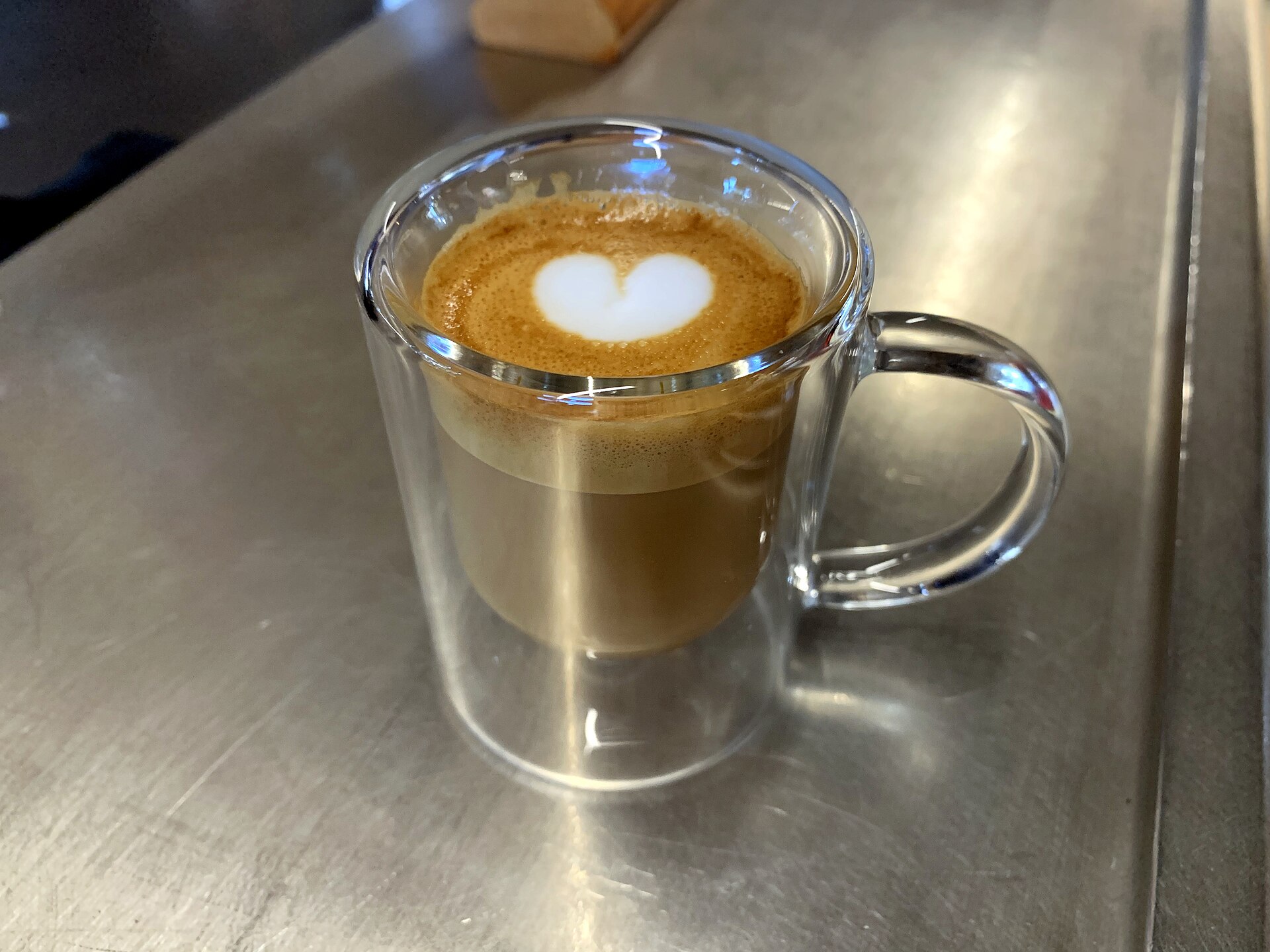
The same drink name can describe different quantities or serving styles. Ask how it is made, whether it contains milk or sugar, and what size will arrive. Regional names provide context, not a universal recipe.
Greek cold-coffee traditions
Foundation
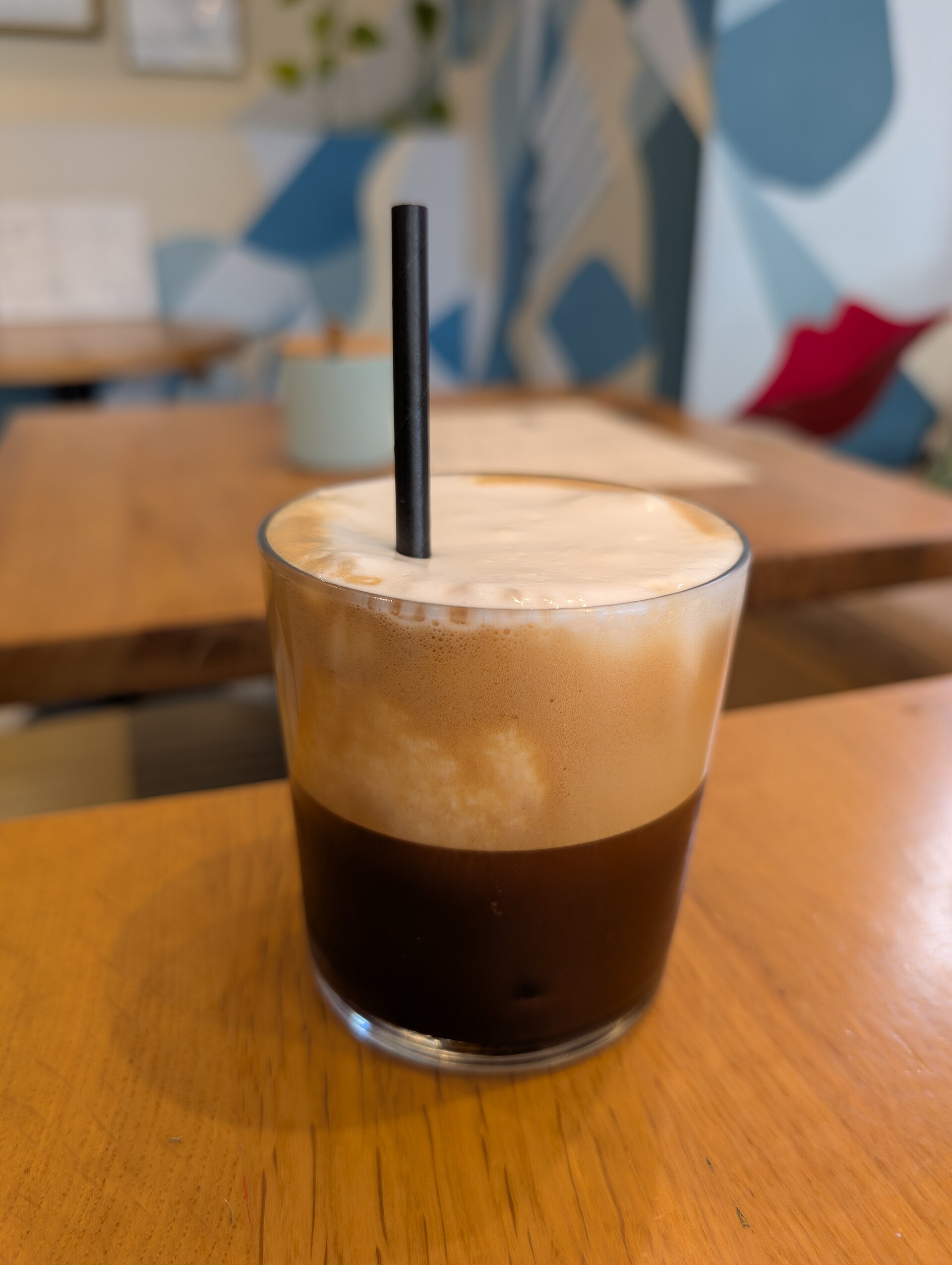
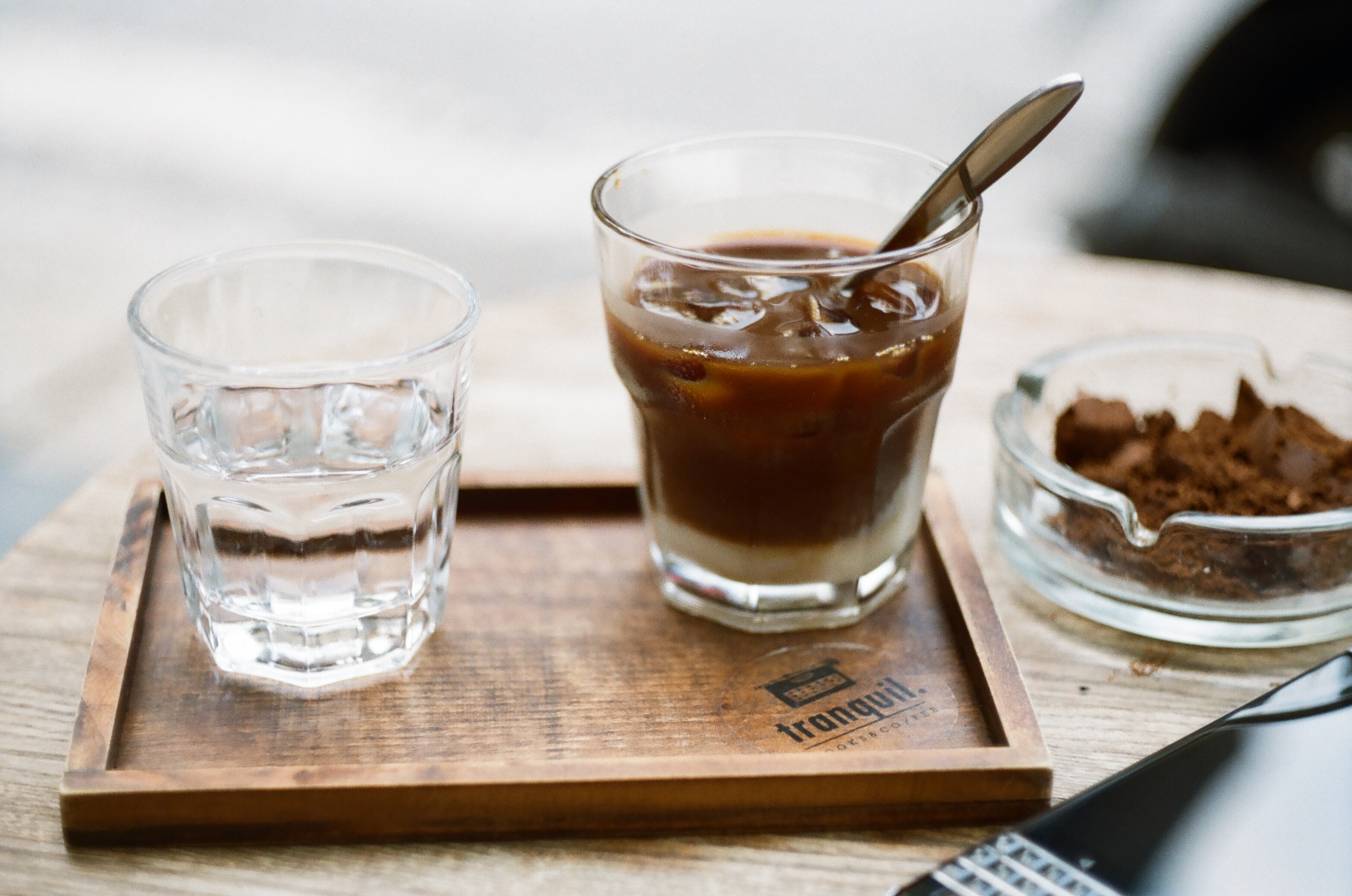
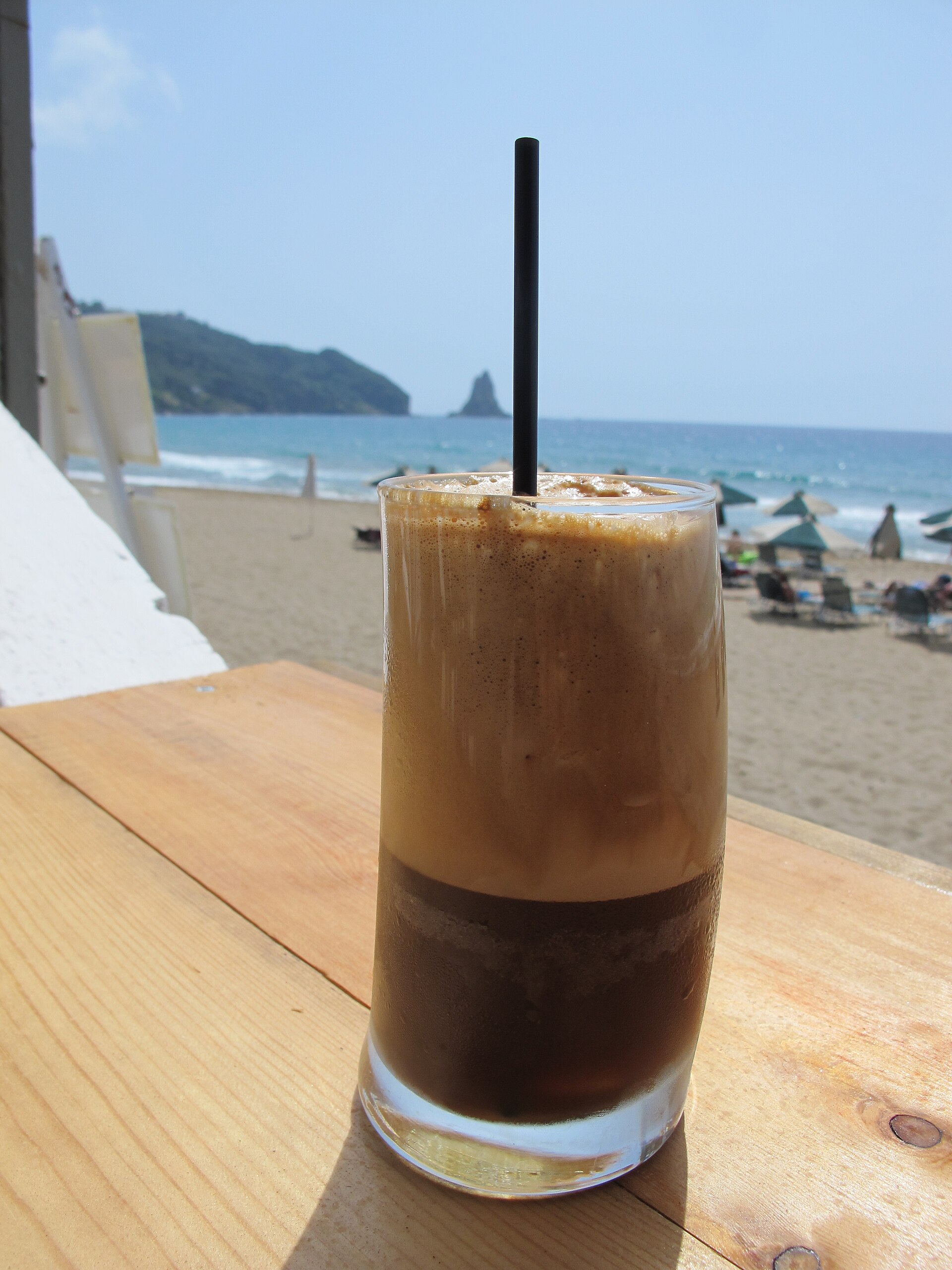
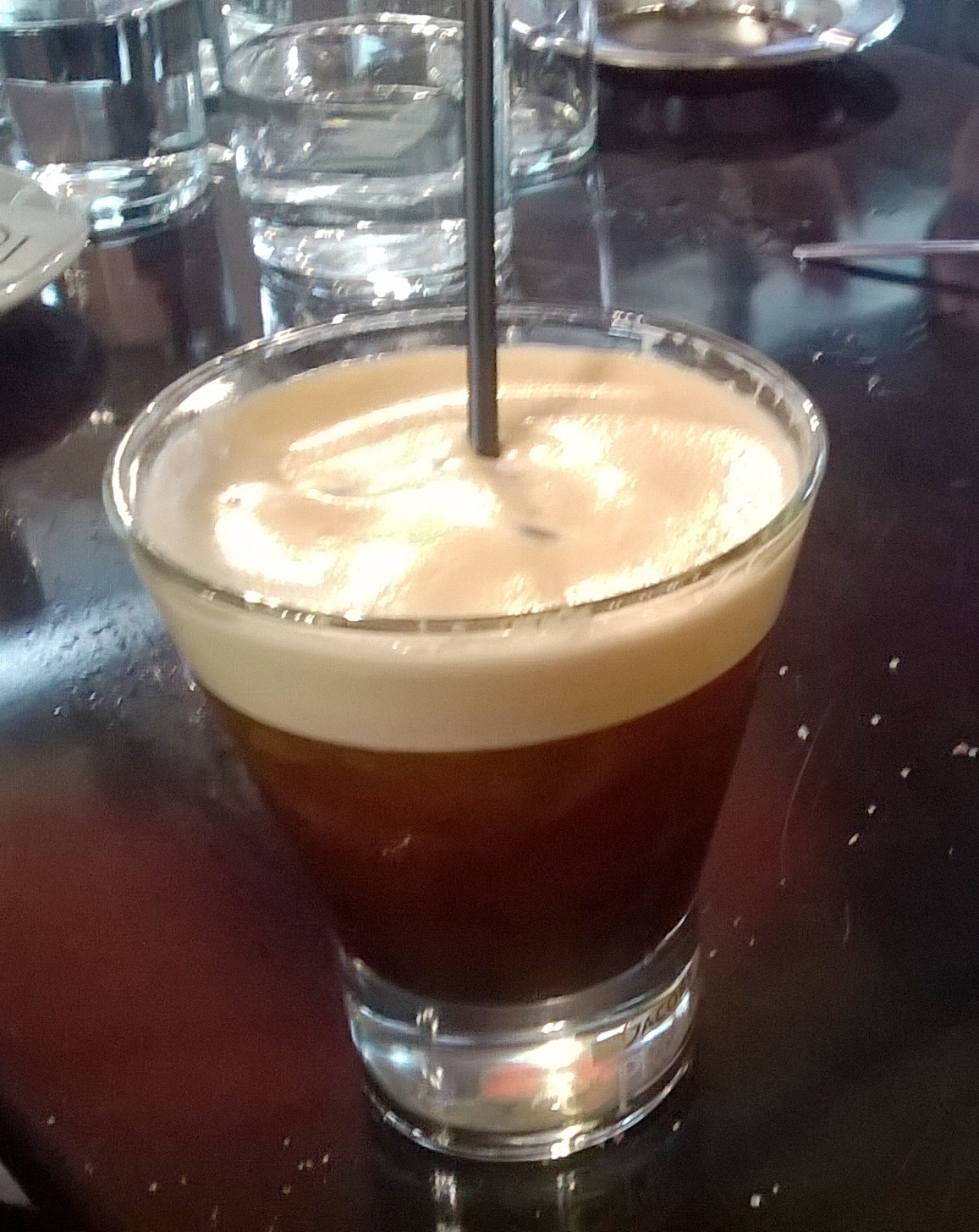
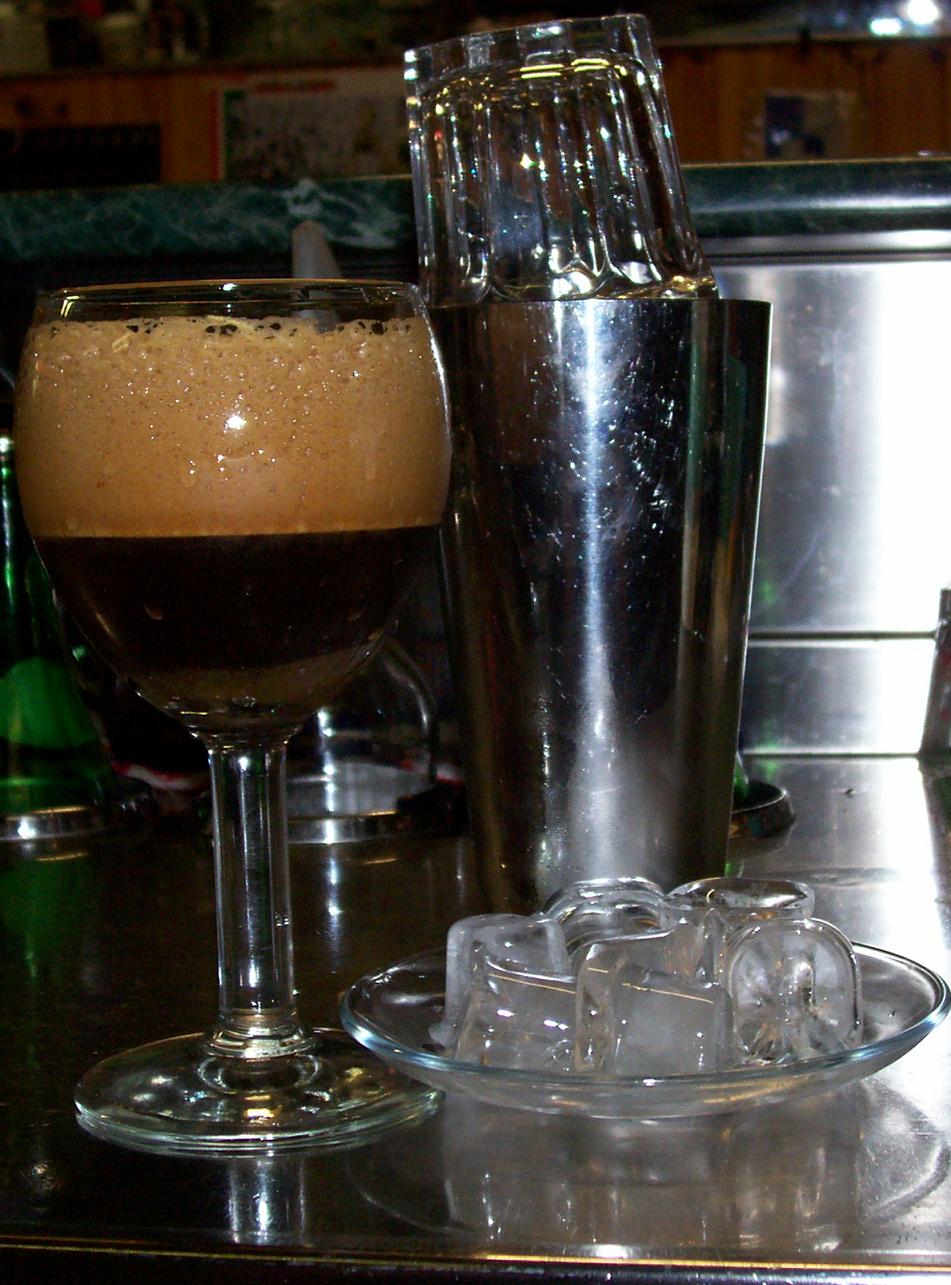
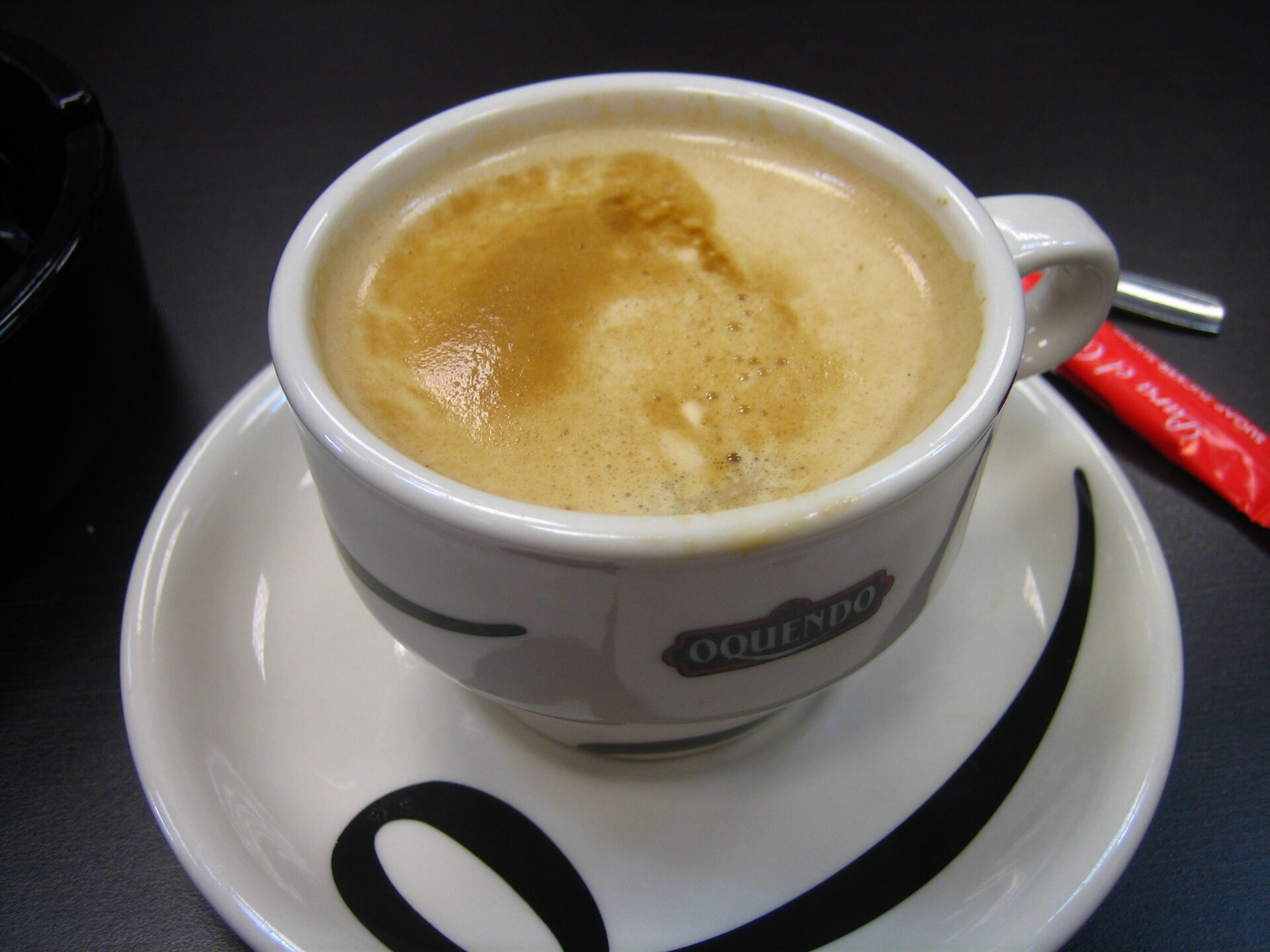
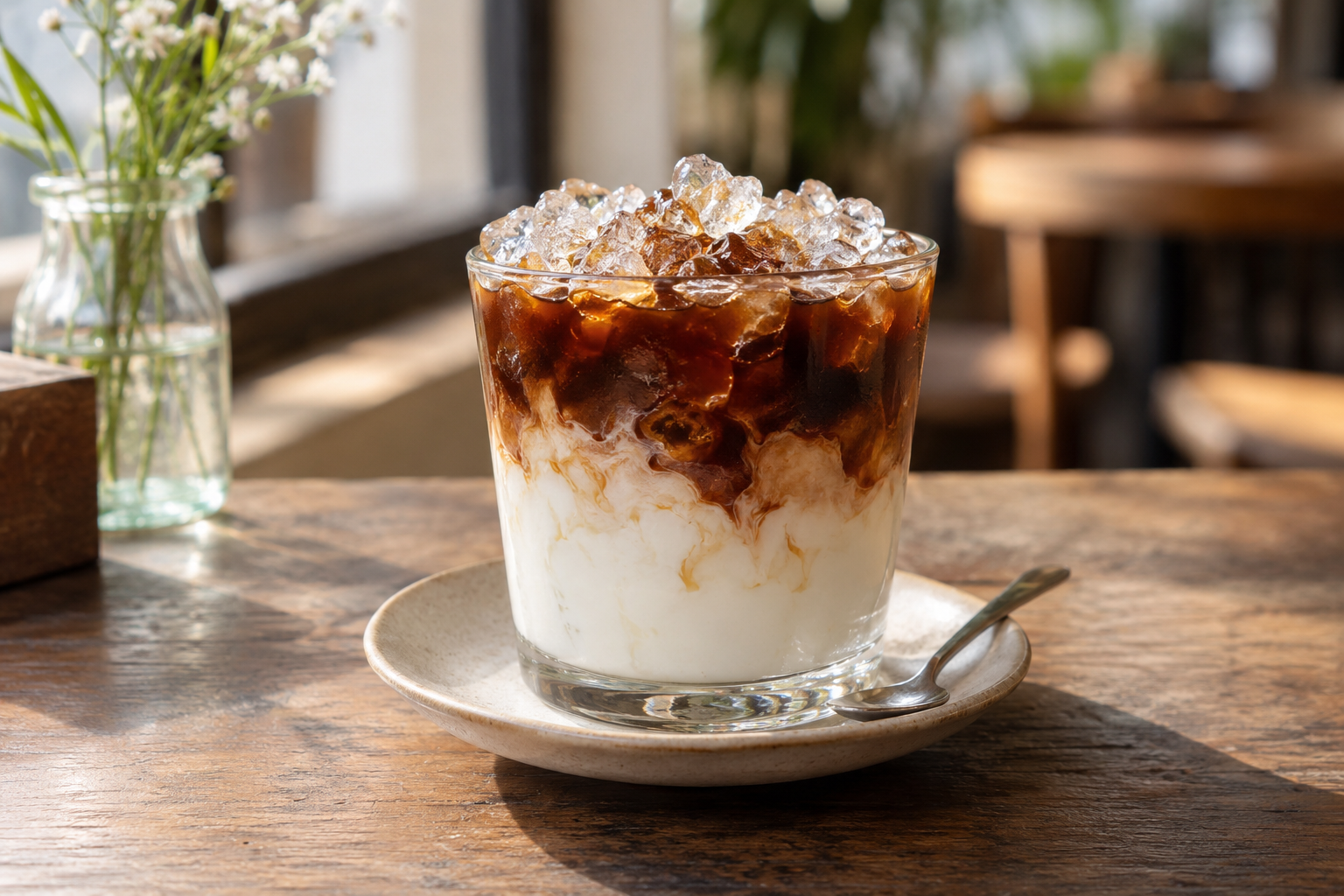
Greek frappé and freddo drinks illustrate different preparations: the Atlas frappé method uses instant coffee, while freddo espresso and freddo cappuccino begin with espresso. Choose the actual method rather than treating every iced Greek coffee as the same drink.
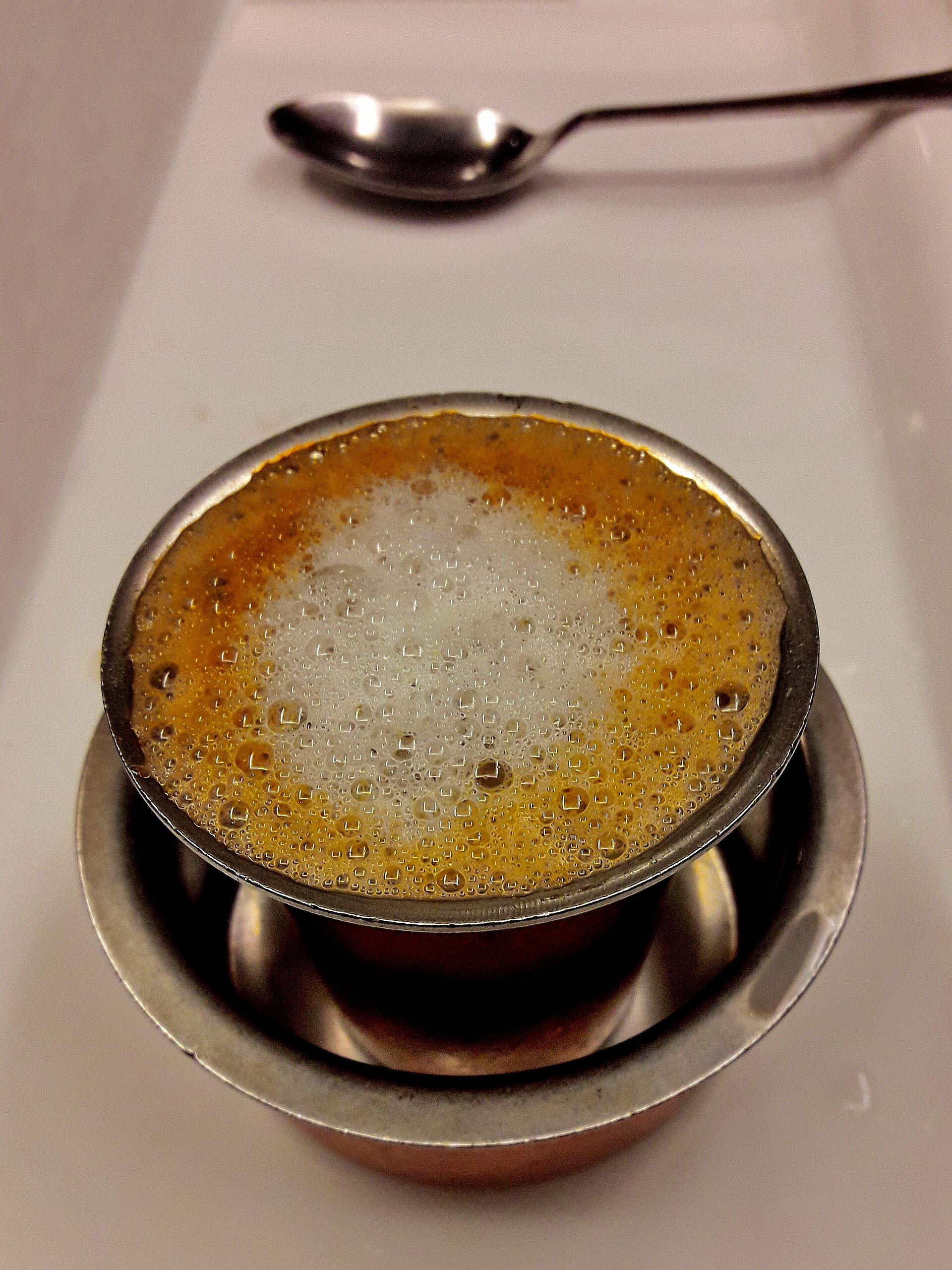
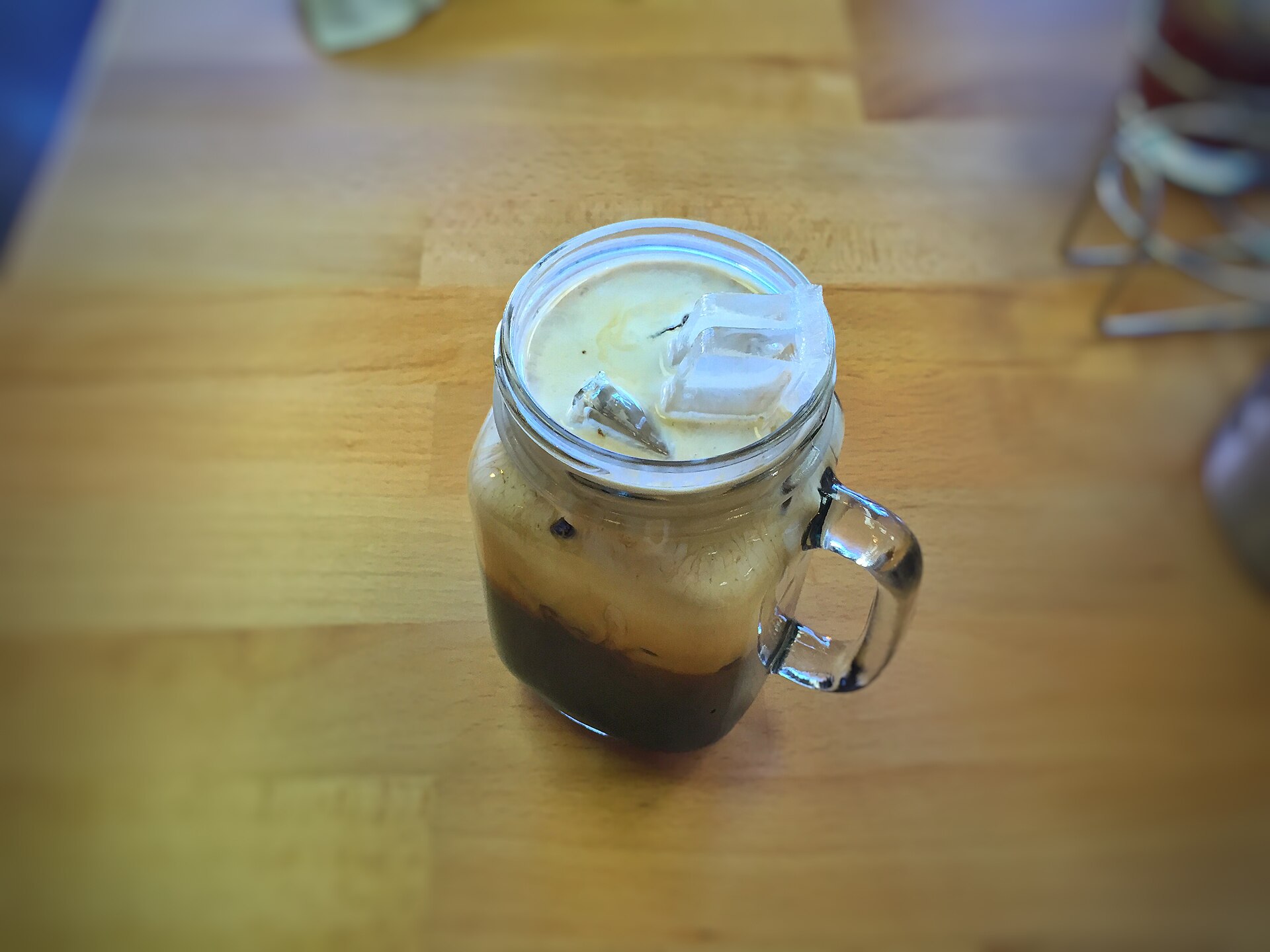
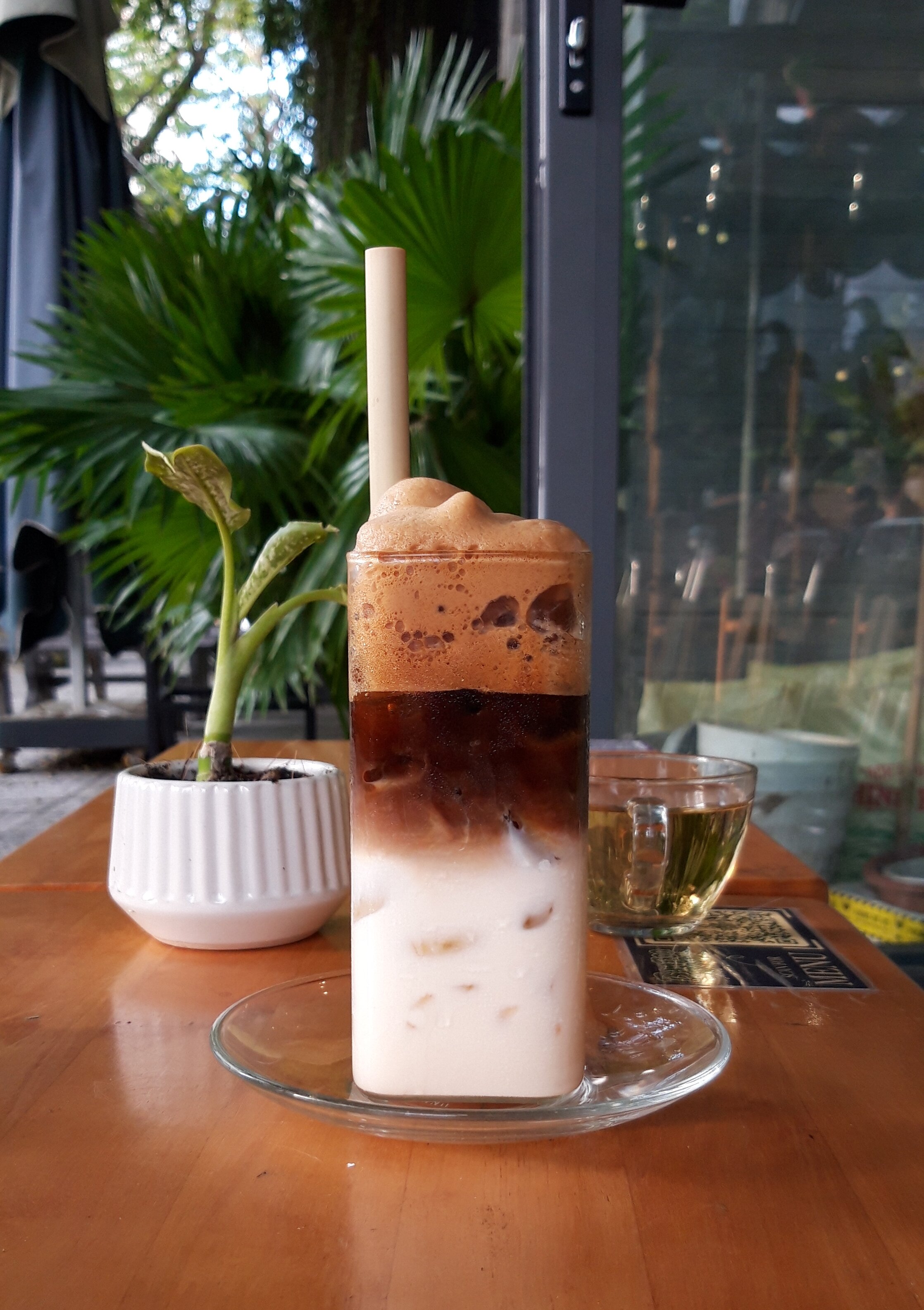
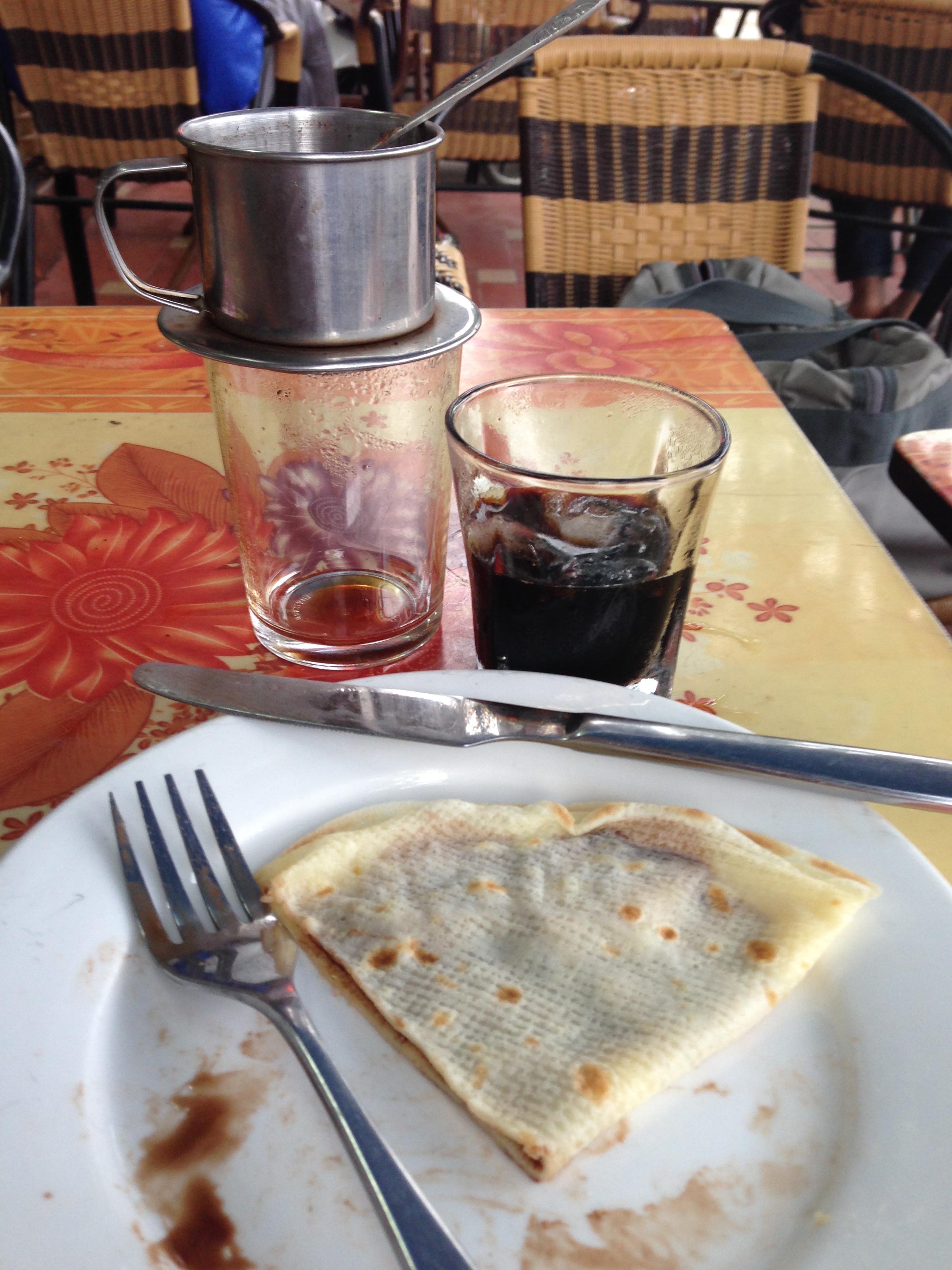
A phin is a drip filter. Condensed milk, ice and egg-based preparations produce distinct drinks; they are not interchangeable names for Vietnamese coffee. Our milk-coffee profile separates water for brewing from the ingredients and ice used for serving.
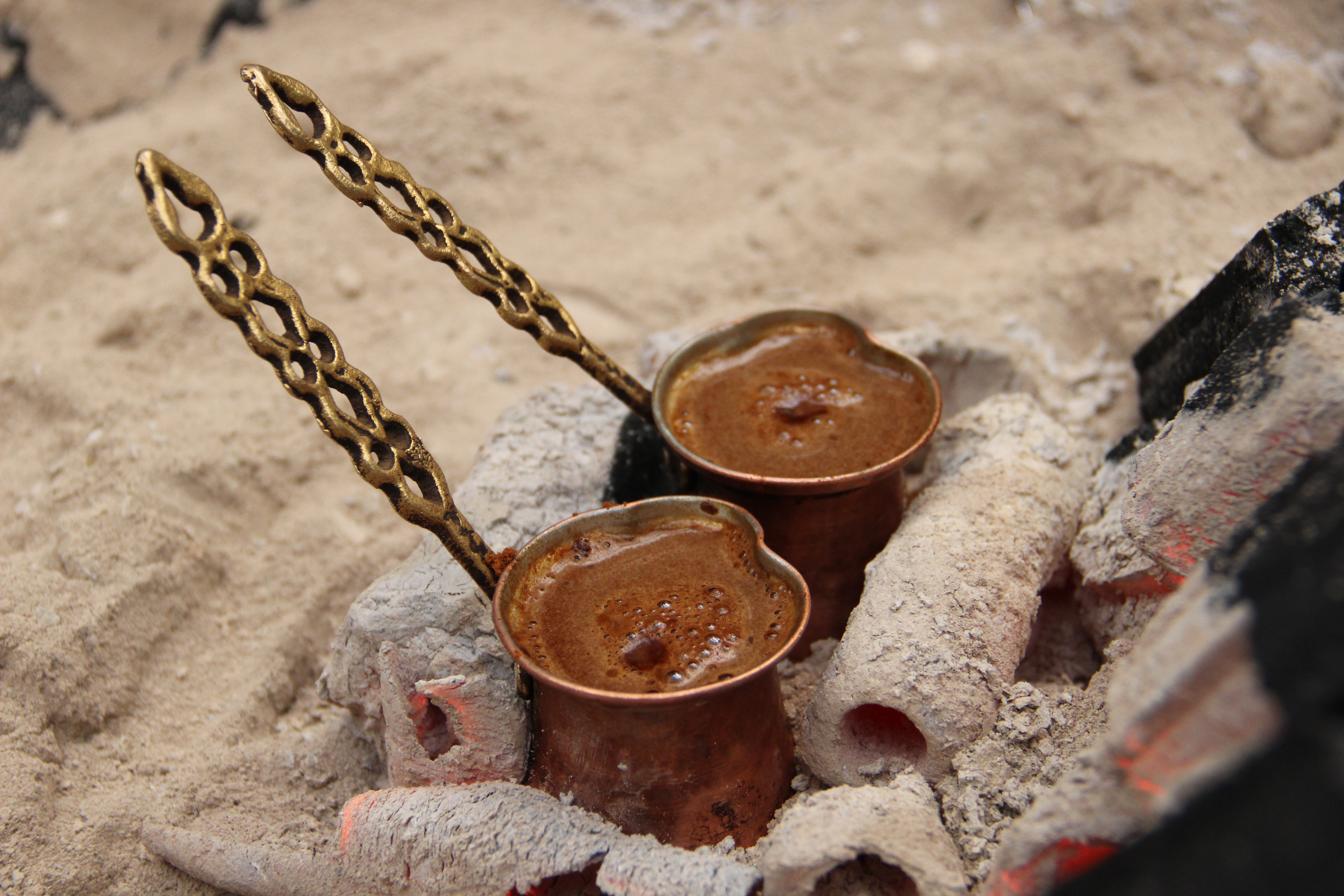
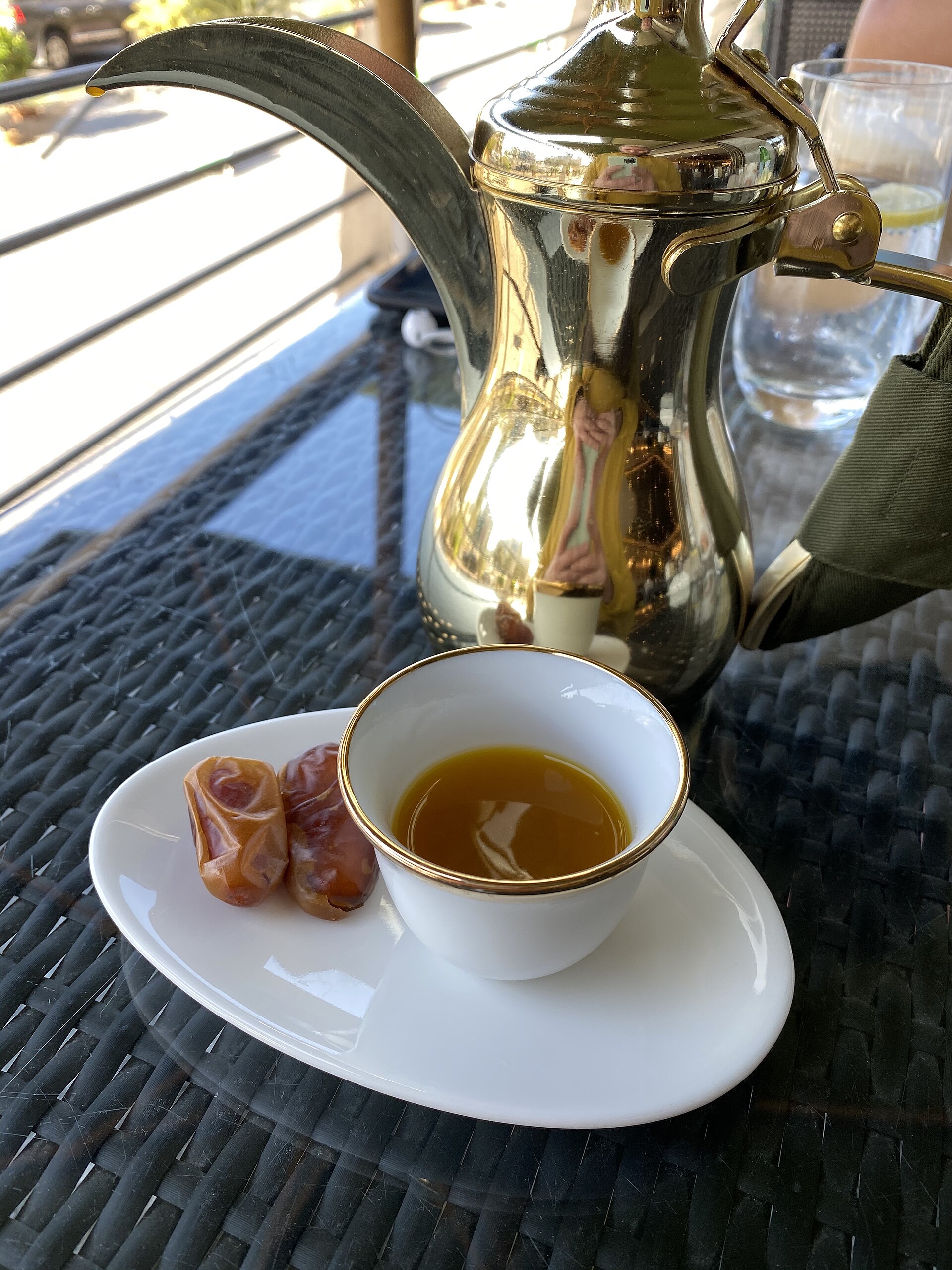
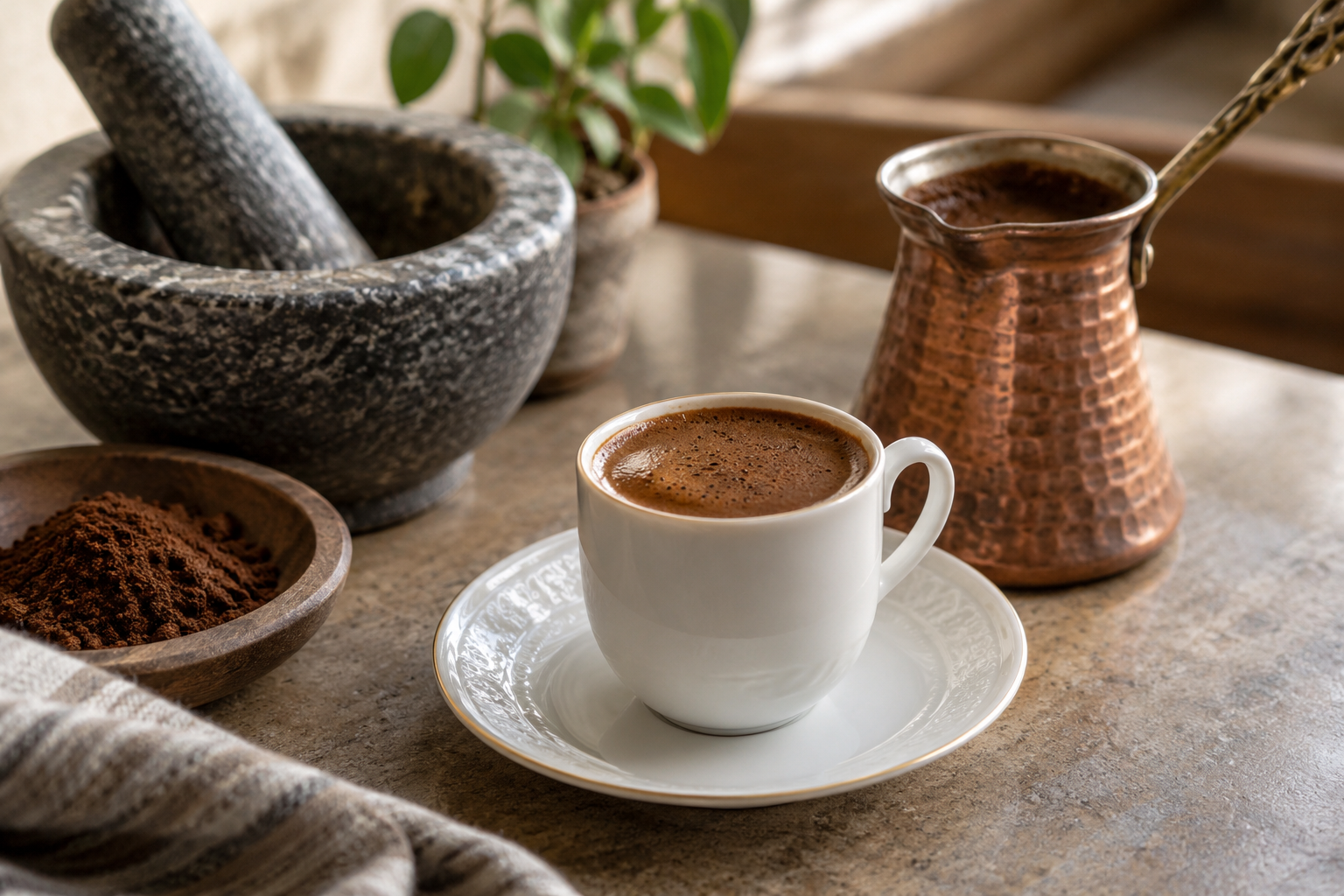
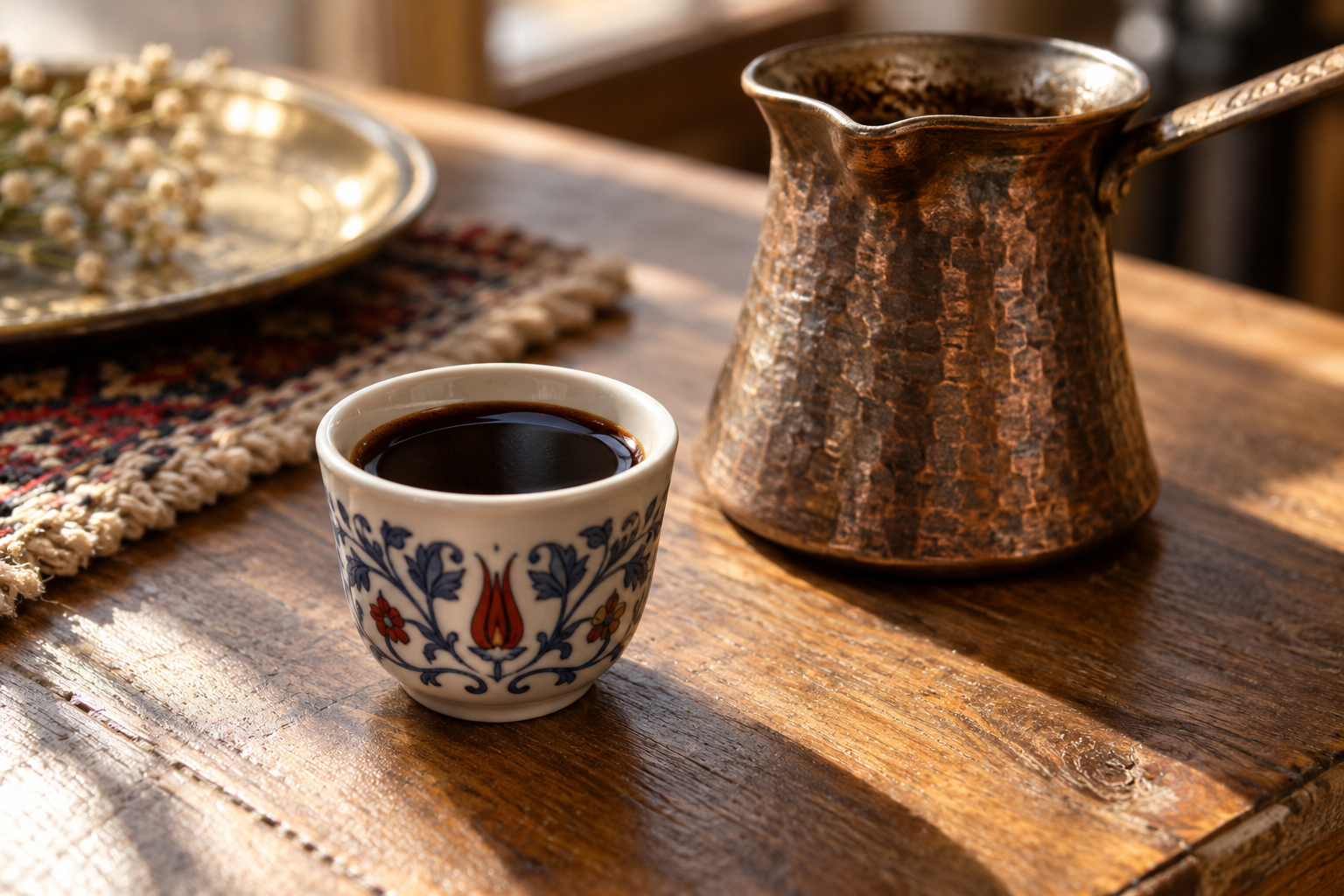
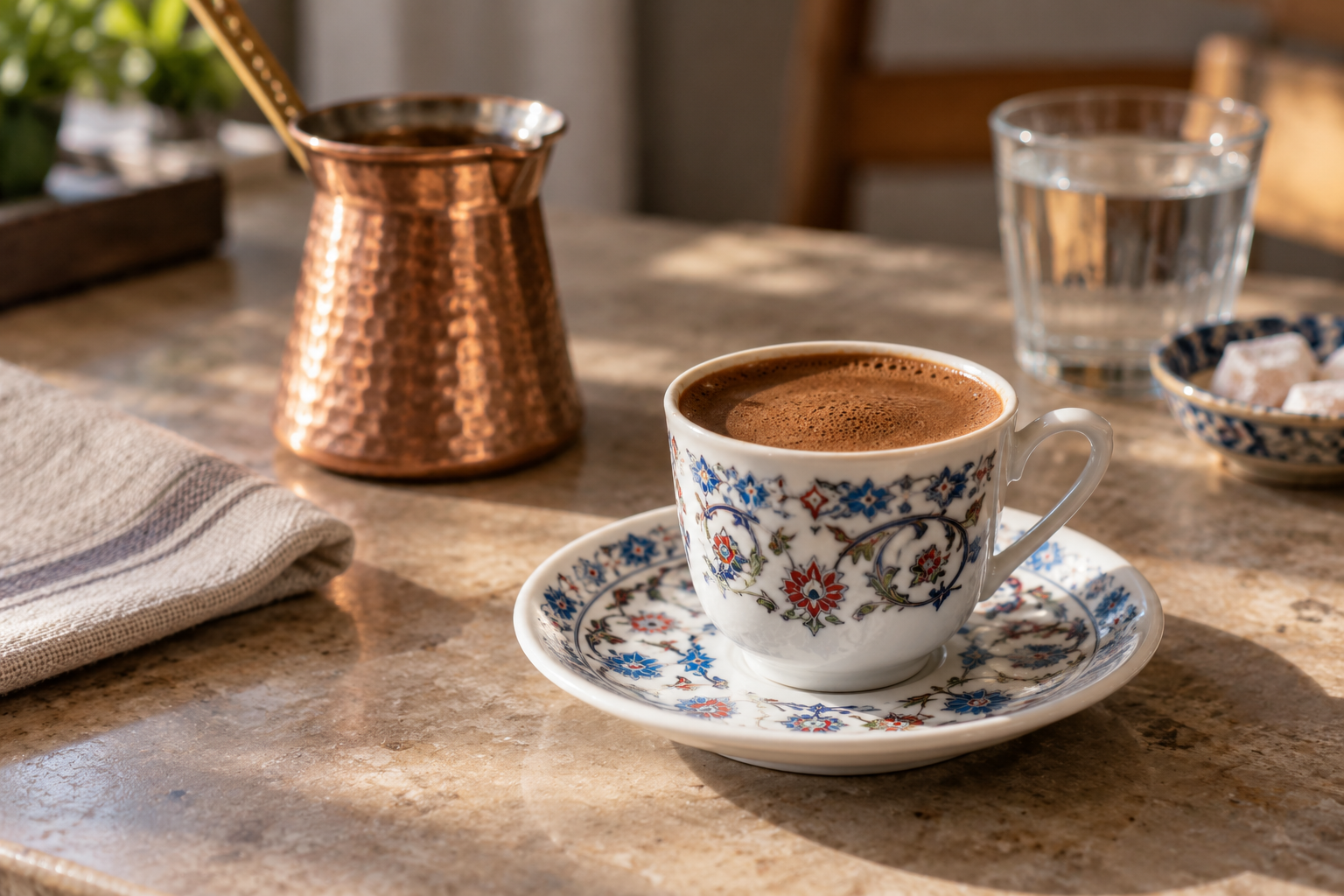
Arabic coffee’s UNESCO heritage entry centres on hospitality and generosity. The vessel, service and social setting are part of its meaning. Turkish coffee is also a distinct preparation and cultural tradition. A sand-heated vessel is a preparation photograph, not proof of a particular finished recipe.
Coffeehouse practice, home recipes and commercial menus influence one another. Avoid rules such as “everyone in this country drinks it this way”. Identify the source and version, acknowledge disputed origins, and invite comparison with local practice.
Senegal: café Touba and named spices
Foundation
The FAO-supported Senegalese culinary publication describes café Touba as coffee flavoured with the fruit of Xylopia aethiopica, also called diar, and links its name and traditions with Touba and the Mouride community. Use the named spice identity rather than silently substituting ordinary black pepper. Its recipe water quantities conflict, so a precise brew ratio is still under review.
Ethiopian Airlines describes a ceremony in which beans are roasted before slow brewing and coffee is offered in small cups as people gather. Preparation, conversation and hospitality belong together in this account. This introduces a living social practice; it is not a single recipe for every household. The familiar shepherd discovery story is a legend, rather than documented evidence of coffee’s first use.
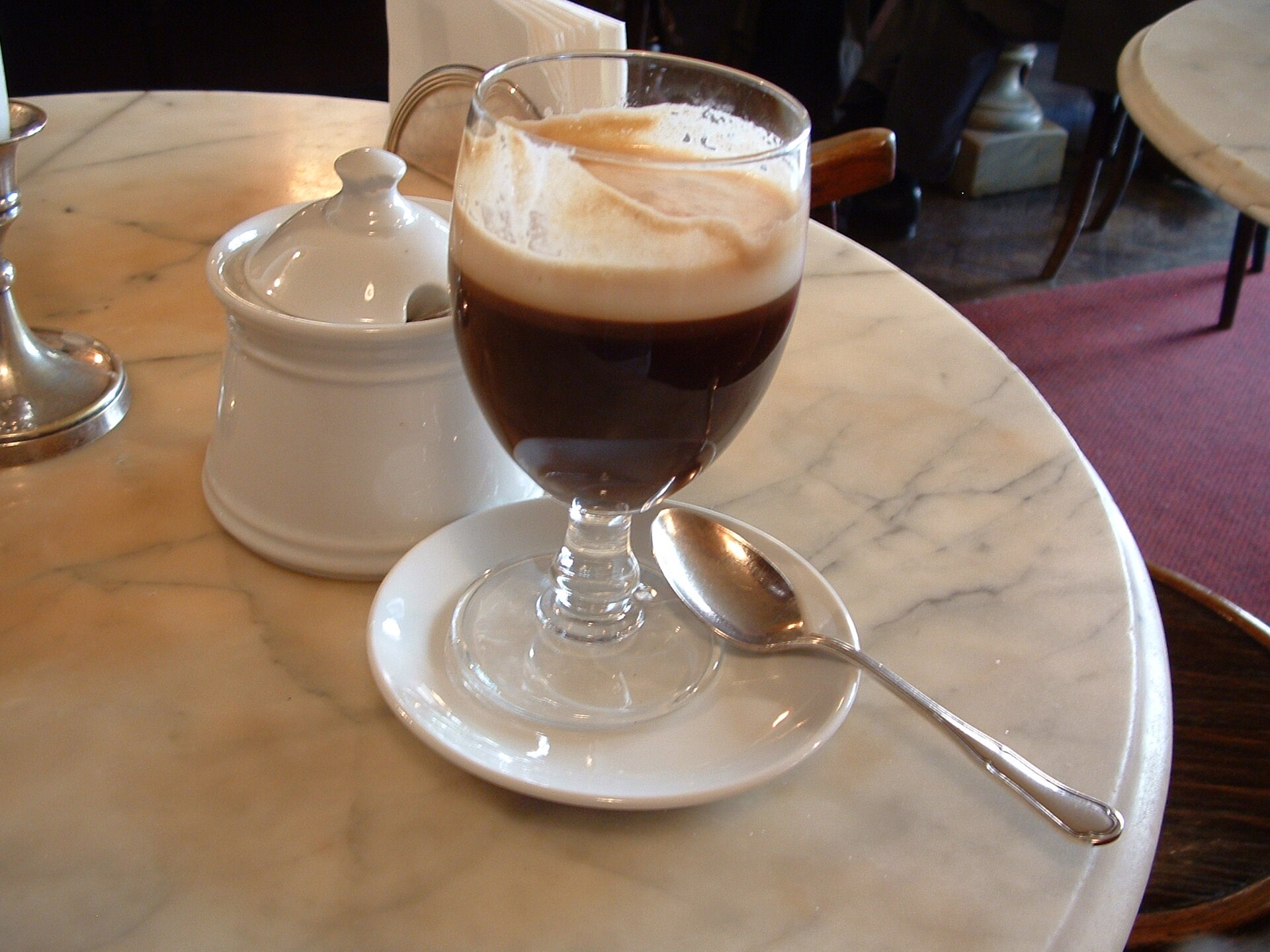
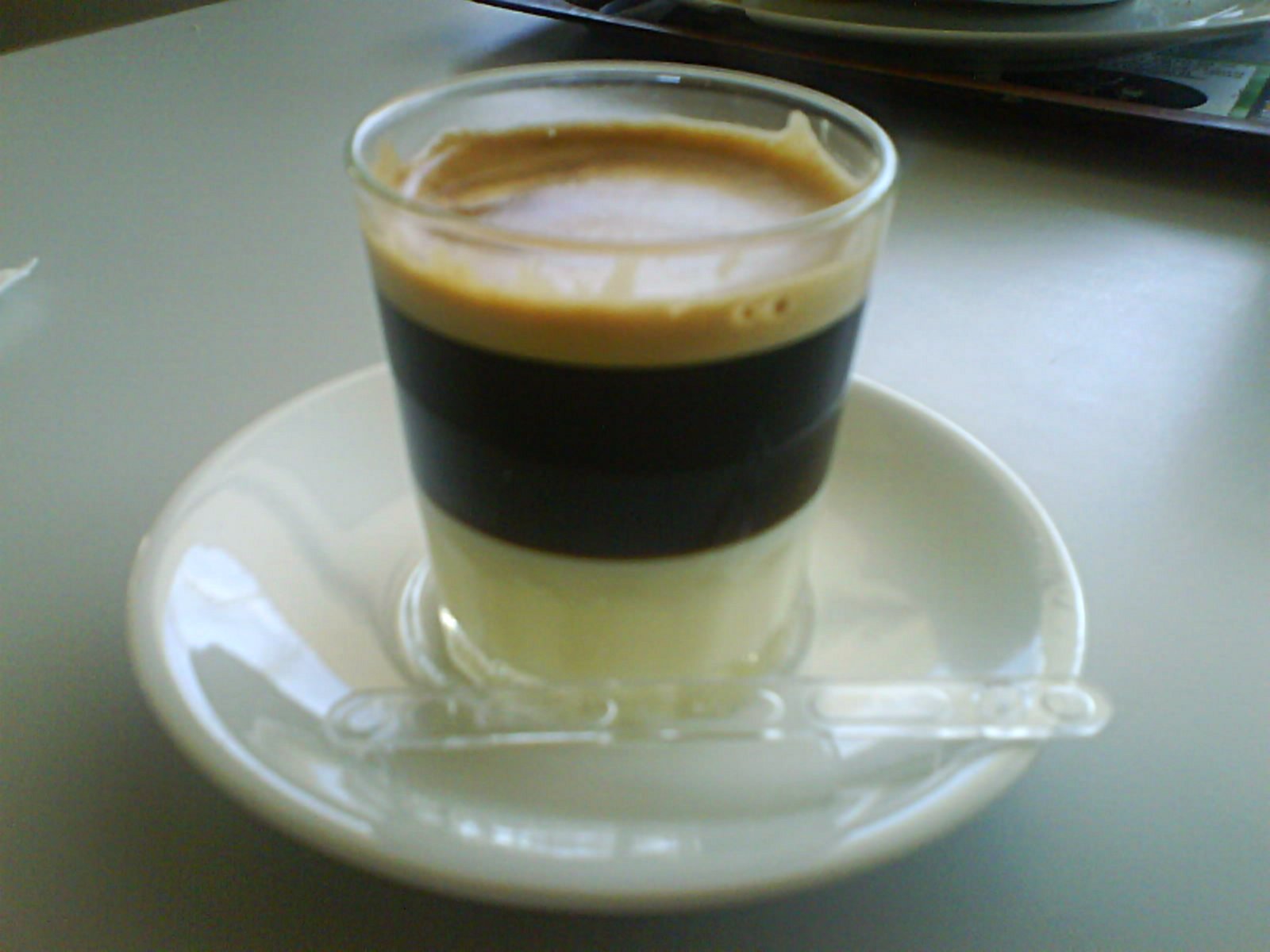
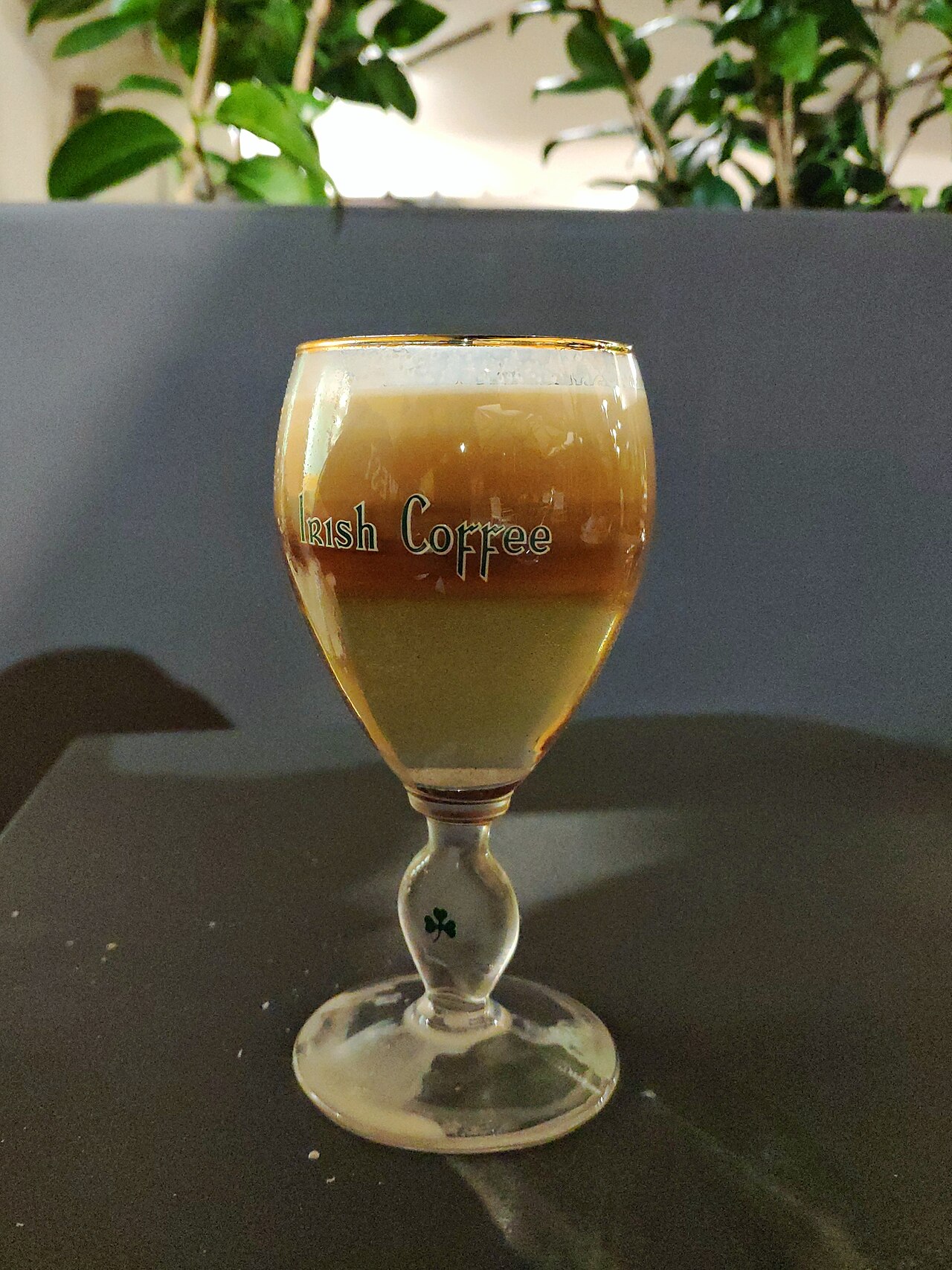
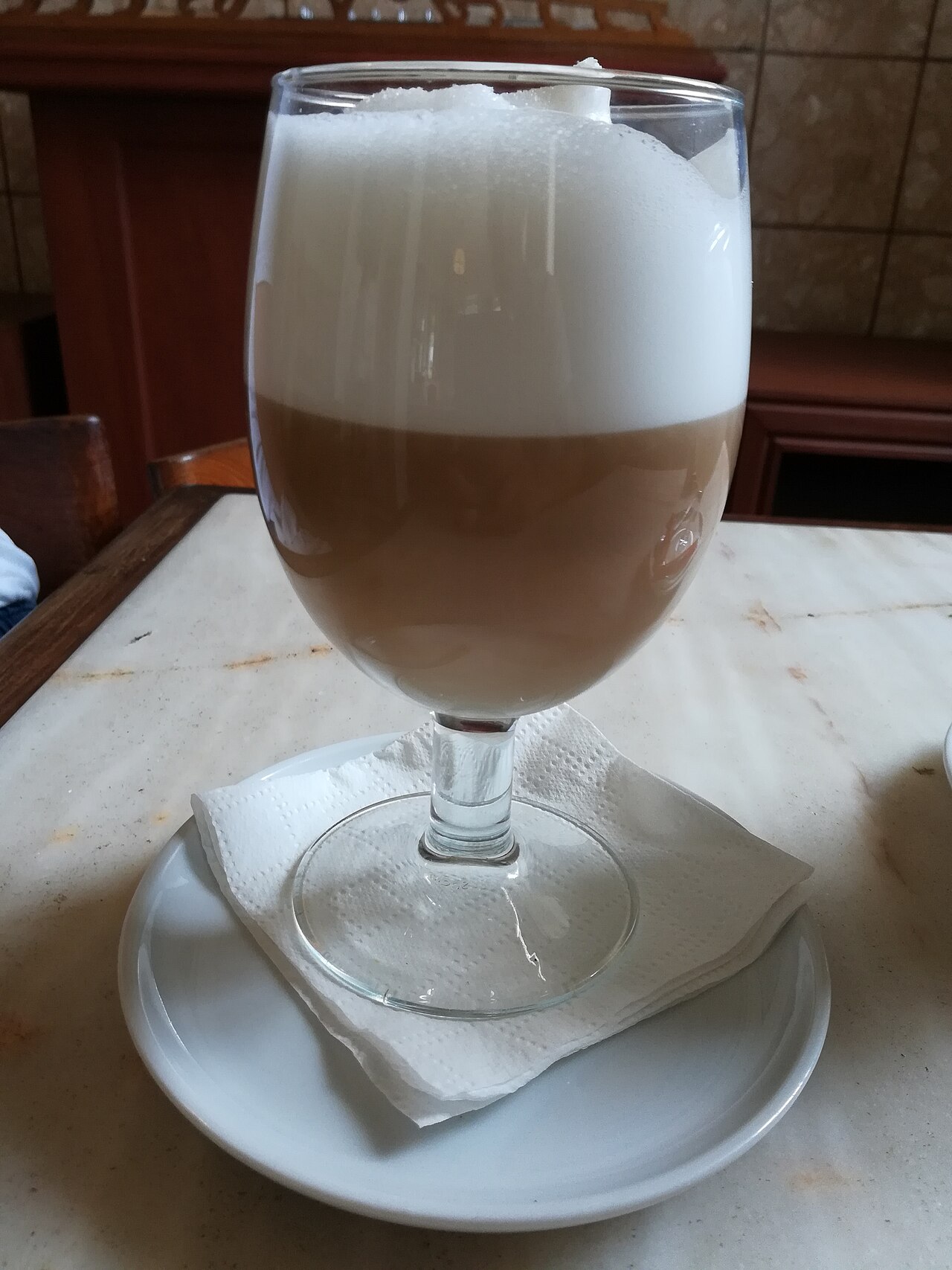
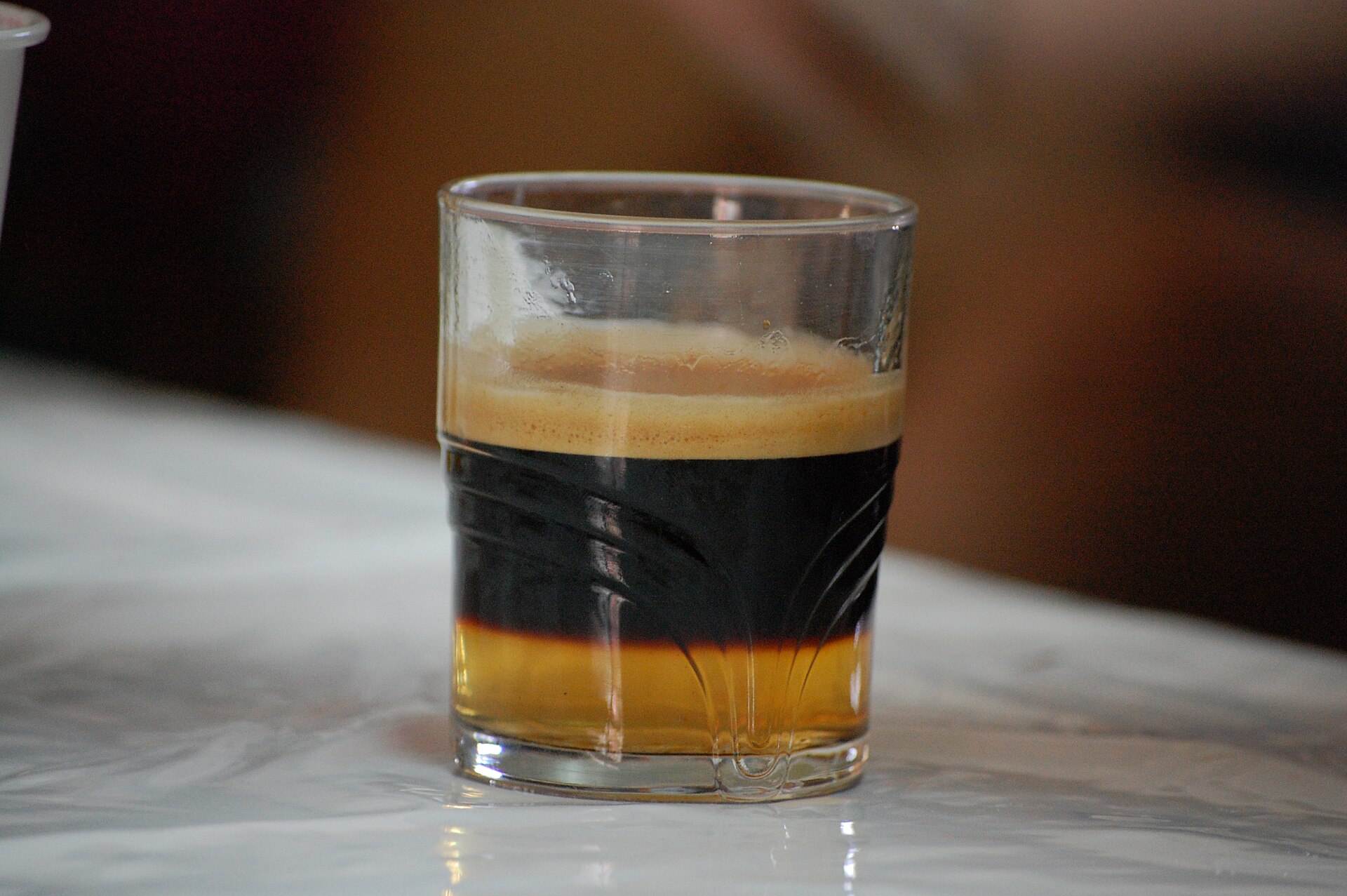
At Caffè Al Bicerin in Turin, coffee, chocolate and cream are served as a layered drink in a small glass. The café recommends leaving the layers unmixed. Its own account links the drink to earlier bavareisa preparations and claims invention at the establishment. Read that as a named café’s account, not independent proof of the earliest invention or a rule for all Italian coffee. The Atlas offers a disclosed home example rather than the café’s secret recipe.
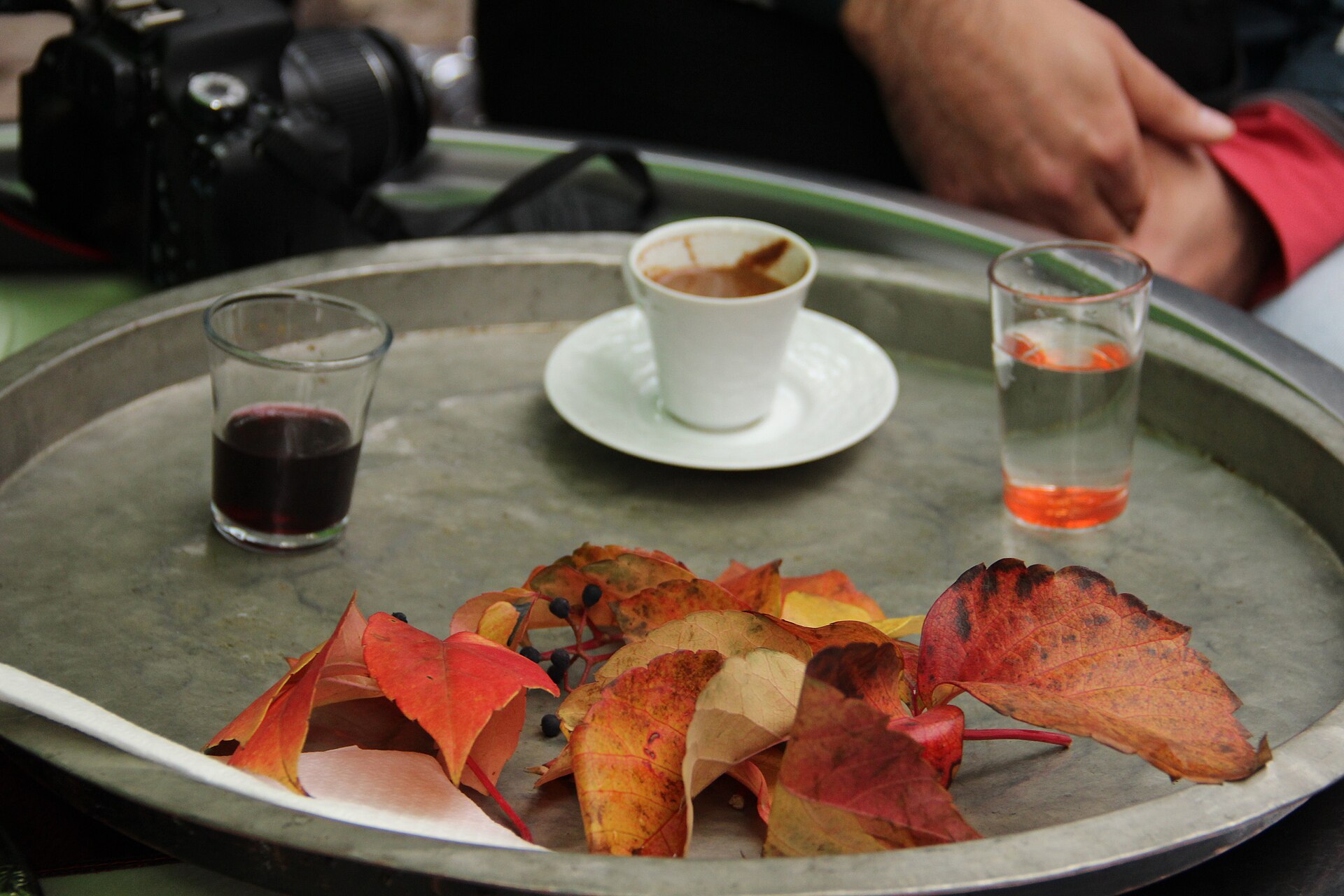
UNESCO’s Turkish coffee entry describes finely ground coffee heated slowly in a pot, served in small cups with water. Conversation, family learning, engagement occasions and holidays form part of its account. Grounds-reading is described as a social practice; it is not evidence that coffee predicts events. Sand heating is one preparation setting in our photograph, rather than a requirement of every Turkish coffee.
UNESCO’s current Arabic coffee entry includes Jordan, Oman, Qatar, Saudi Arabia and the United Arab Emirates. It describes daily hospitality and gathering rituals, with older people and guests served first and a shaken cup signalling that the drinker is finished. Treat these as customs in the documented communities, not universal rules for every Arab household. Our photograph shows a dallah and cups, not the coffee’s roast, spices or a finished recipe.
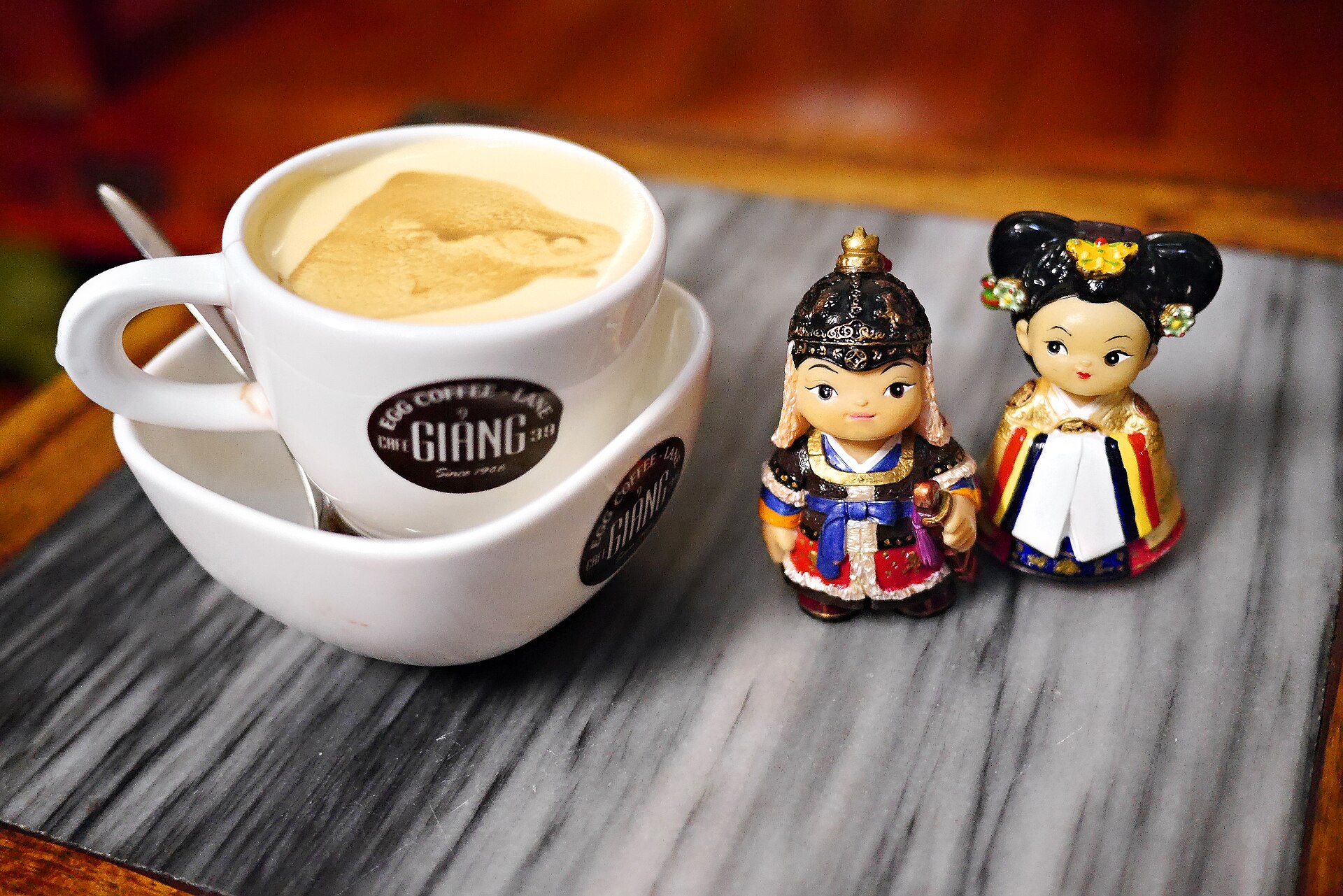
Vietnam Tourism describes slow phin brewing alongside sidewalk coffee and contemporary specialty cafés. Its account also distinguishes Hanoi’s egg coffee, Ho Chi Minh City’s cloth-filter coffee and Hue’s salt coffee. These are examples of local diversity, not fixed recipes or a promise that every shop serves them. Ask which brewer, milk or topping the house uses; the photographed milk-coffee profile provides one preparation example.
London Museum catalogues a halfpenny trade token issued by the Sultaness Coffee House in Sweetings Rents, with a mid-seventeenth-century date range of 1648–1673. A surviving token gives a concrete starting point for studying a named business and its setting. It does not establish the first coffeehouse, its complete menu or who was welcome there. Follow the catalogue evidence before turning a single object into a universal coffeehouse story.
UNESCO describes intangible heritage as living knowledge and practice recognised by its communities, passed on and adapted over time. A listing documents a nominated practice; it is not a cup-quality score or independent proof that one country invented every related preparation. Check the entry, submitting communities, date and scope. Current Arabic coffee documentation includes the 2024 extension with Jordan; the Turkish coffee entry records 2013.
Professional: separate legend, provenance and first use
Professional detail
Keep four claims separate: a discovery legend, a source’s account of its own tradition, a dated object, and evidence for the earliest documented use. The airline’s Ethiopian shepherd story is explicitly a legend; the Turin café gives its own drink history; the London token documents a named coffeehouse. None alone settles coffee’s global origins. Attribute the account and leave disputed or uncorroborated first-invention claims open.
For a menu or learning session, name the community or source and identify the version being offered. Explain substitutions and whether the serving is a contemporary adaptation. Invite local guidance rather than treating a national label as a single compulsory recipe. This is an editorial service checklist informed by UNESCO’s community-based account of living heritage, not a certified cultural or recipe standard.
Australia: a Greek-owned café was a local meeting place
Foundation
The National Museum of Australia records Lambros Zantiotis buying Gunnedah’s Busy Bee Cafe in 1933, followed by family reunification over several years. Its menu offered familiar Australian meals and American-style sodas rather than a mainly Greek menu. This example connects migration, work and community. A Greek-owned Australian café should not automatically be described as serving today’s Greek coffee menu.
Museums Victoria records a circa-1950s coffee maker used by the Candela family and bought from Mocopan in High Street, Preston. The family arrived in Melbourne in 1920. A household object documents another part of Australian coffee life alongside café service. The catalogue’s “espresso” wording does not establish that this pot produced a modern pump-machine espresso or settle Australia’s first espresso date.
Ryan Kueh’s Singapore Chinese Cultural Centre account describes cloth-filtered kopi, commonly sweetened with condensed milk, alongside kaya toast and eggs. It discusses Hainanese involvement in localising coffee service and kopitiams as everyday gathering places. This is an attributed cultural account, not a measured recipe or a rule for every stall. Ask which milk, sweetness and serving the house name means.
United States: packaged coffee changed how people bought it
Foundation
The Smithsonian finding aid for Hills Bros. records describes vacuum-packed coffee entering the company’s market in July 1900 and helping it reach new markets. Packaging, distribution and advertising belong in coffee history alongside café drinks. Read “original” and quality claims as part of the company/archive account; vacuum packing does not establish indefinite freshness. The finding aid is not inspection of every underlying company record.
Professional: keep the object, account and inference separate
Professional detail
Record the catalogue identifier, approximate date, provenance and the institution’s actual claim. A dated home coffee maker is not proof of a national invention; a family café history is not every migrant’s experience. Here, the museum’s maker-title and manufacturing-location wording are not used to resolve technology or country of manufacture. Community accounts and further archival sources remain part of the review.
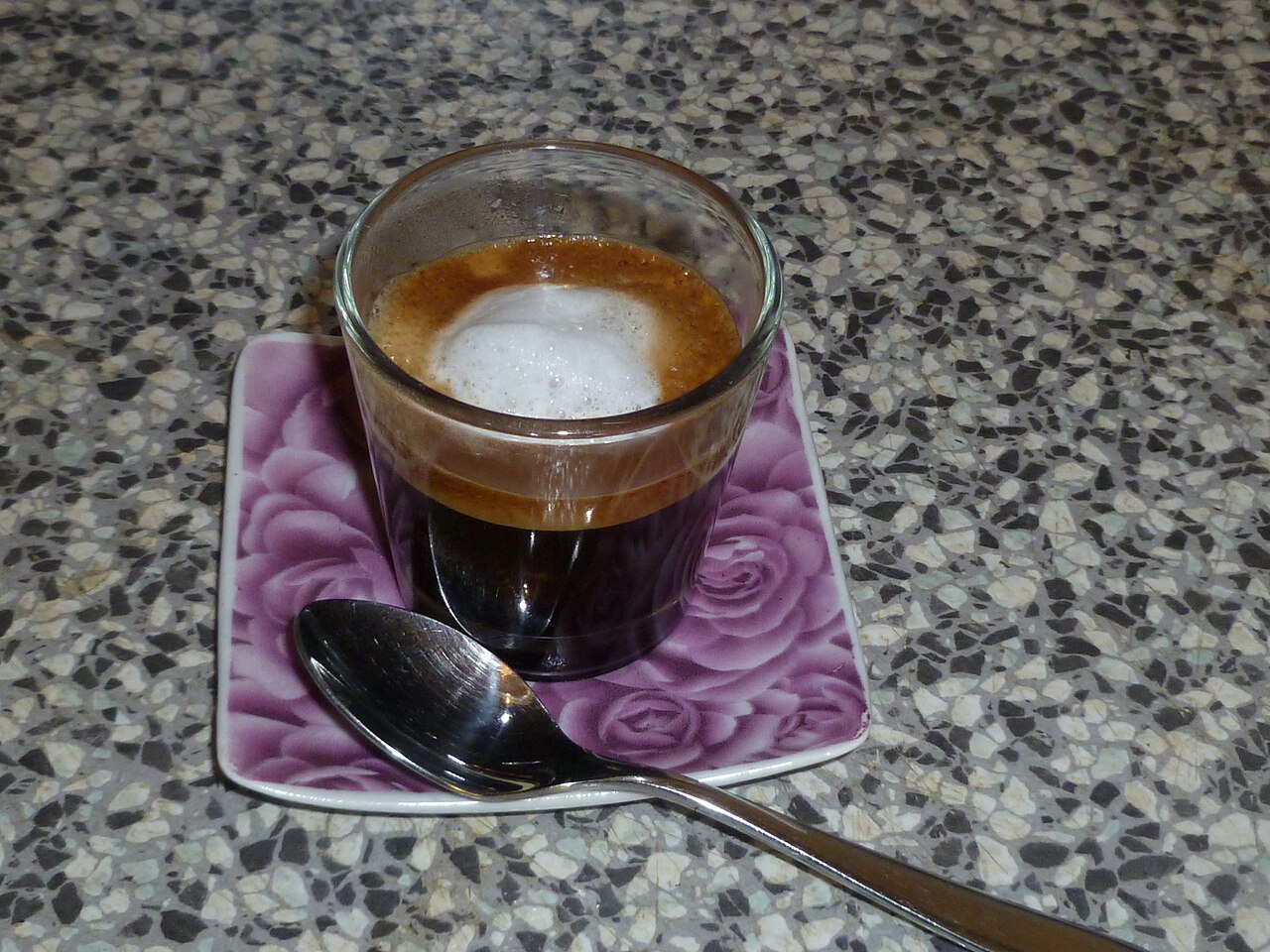
Italy’s official tourism account describes quick standing café breakfasts in Milan and focaccia with cappuccino or caffelatte in Genoa. These illustrate the familiar counter-service and morning milk-coffee customs, alongside regional differences. They are not a national ban on an afternoon cappuccino, a medical explanation or a rule for every customer. Ask about counter and table service at the actual café. The Atlas also includes a separately attributed spirit-added caffè corretto.
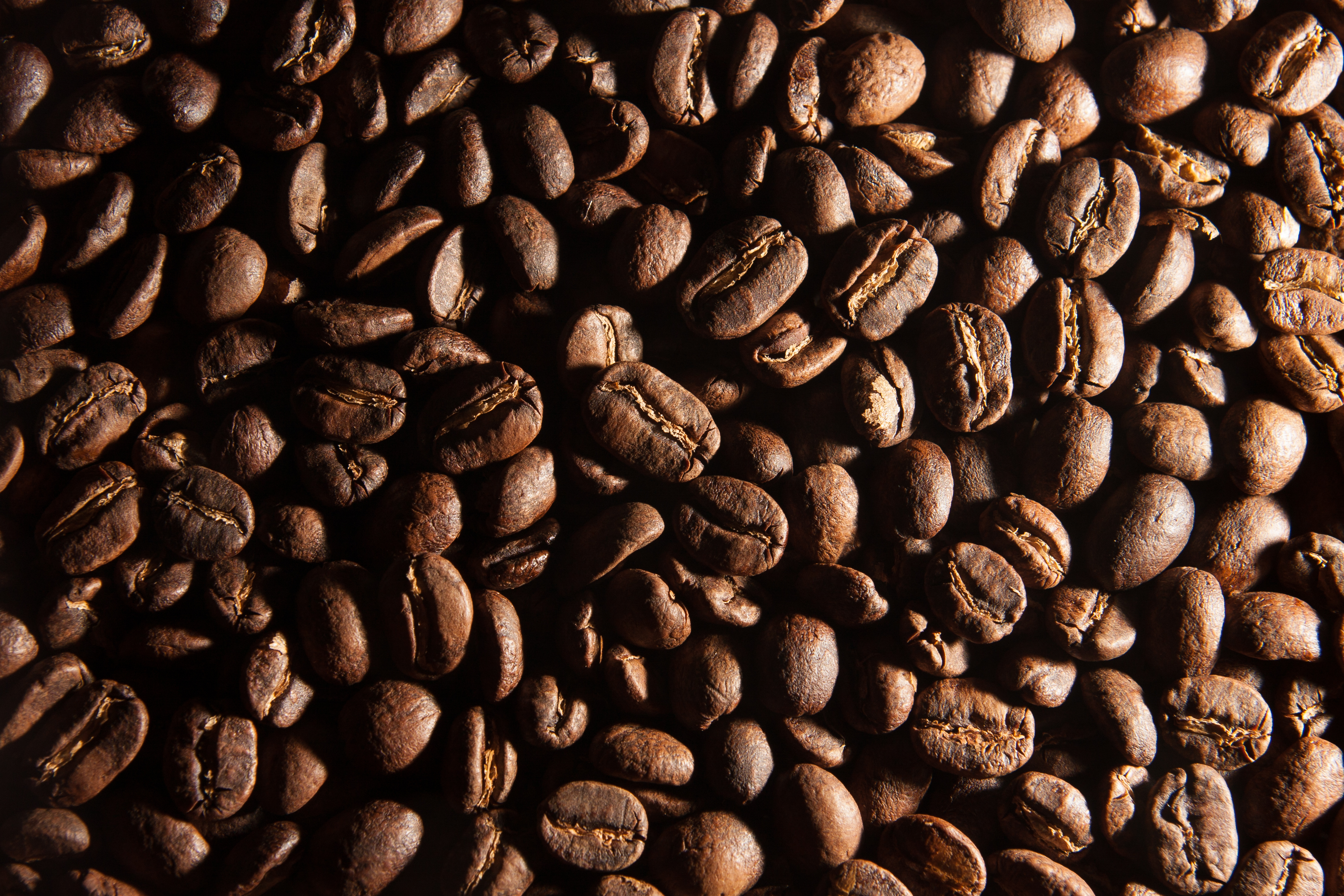
Photo: Chuck Grimmett from Yonkers, NY, United States of America. File:Coffee Beans, color (28183654506).jpg. CC0. Original or source thumbnail; no local file edits. Display resized; image remains under its linked licence.
Caffeine amount, sleep and research evidence deserve separate questions. Coffee is not a prescription.
Count caffeine, not just cups
Foundation
Caffeine can increase alertness and reduce sleepiness. Coffee’s caffeine content varies with the beans, preparation and serving size. Include other sources such as tea, energy drinks, chocolate and some medicines when considering the total.
EFSA’s 2015 assessment identifies no safety concern for generally healthy adults at single doses up to 200 mg, and up to 400 mg spread through the day, excluding pregnancy. For pregnancy and lactation it reports up to 200 mg daily from all sources. These are assessment boundaries, not targets or guarantees for an individual.
EFSA notes that even 100 mg near bedtime may affect some adults’ sleep. Its assessment excludes disease and medicine combinations. If pregnancy, symptoms, a health condition or medicines affect your decision, discuss your circumstances with a qualified health professional.
Healthdirect’s Pregnancy, Birth and Baby service recommends a maximum of 200 mg caffeine per day in total during pregnancy and breastfeeding. Count all foods, drinks and medicines containing caffeine. A cup count is only an estimate because the beans, preparation and portion vary. The page was last reviewed in July 2024. Discuss individual circumstances with your maternity care provider.
The Poole umbrella review reports associations between coffee consumption and several health outcomes. Much of the evidence is observational: differences in other habits and study methods can influence the result. A favourable association does not prove that starting coffee will prevent disease or justify a prescribed number of cups.
Bak and Grobbee’s randomised trial compared boiled coffee, filtered coffee and no coffee. The cholesterol result differed by preparation. It does not show that every coffee, filter or person will have the same response. Keep the tested method and study population attached to the finding.
Decaffeination separates much of the caffeine from coffee; it does not make a cup automatically caffeine-free. Ask which process was used and check the actual product information. Bean processing at origin, decaffeination, roasting and brewing are separate stages.
Swiss Water describes hydrating green beans and contacting them with green coffee extract. Caffeine moves into that liquid, which is refreshed through carbon filters. This names a particular commercial system. “Chemical-free” is marketing shorthand: water and caffeine are chemicals too, and the phrase does not prove that all other compounds remain unchanged.
Supercritical carbon dioxide is used as an extracting fluid in another decaffeination approach. Temperature, pressure, time and process configuration affect the operation. That industrial description is not a home recipe or a promise that every decaf will taste the same. Compare the coffee itself and the finished preparation.
Coffein Compagnie describes separate ethyl acetate and dichloromethane processes. Its beans are conditioned with steam and water, contacted repeatedly with a solvent-water mixture, then steamed to remove remaining solvent and dried. Ethyl acetate can come from plant material or synthetic production; its name alone does not tell you the source. A process description does not establish a residue test result or a health benefit for the finished product.
Ding and colleagues combined 28 prospective studies with about 1.1 million participants. For one additional daily cup, pooled relative risks were 0.91 for caffeinated coffee and 0.94 for decaf. These estimates describe associations with new type 2 diabetes diagnoses. They are not reductions of 9 or 6 percentage points in an individual’s absolute risk, and the review does not demonstrate a chlorogenic-acid treatment mechanism.
Kennedy and colleagues combined five cohort and four case-control studies. For two additional daily cups, the pooled relative risk of cirrhosis was 0.56, with a 95% confidence interval of 0.44–0.68. Results varied substantially between studies. “44% lower relative risk” is a description of that pooled association, not 44 percentage points of absolute risk or proof that coffee prevents liver disease.
Ross and colleagues followed 8,004 Japanese-American men, initially aged 45–68, for up to 30 years. There were 102 Parkinson disease cases. Age-adjusted incidence ranged from 10.4 per 10,000 person-years in non-drinkers to 1.9 in the highest coffee category. This is a specific observational comparison. It does not prove that starting coffee will prevent Parkinson disease or establish the proposed receptor mechanism.
Caffeine, trigonelline and chlorogenic acids are distinct compounds studied in coffee. Honda and colleagues compared beans with and without supercritical carbon dioxide decaffeination and different roasting conditions. The compounds did not all change in the same way. “Decaf” describes caffeine removal, not a measurement of every other constituent or proof of a health benefit.
Professional: bean chemistry is not a clinical result
Professional detail
Honda’s 2022 study measured treated and roasted beans, including compound concentrations and colour. Its results depend on the tested treatment and heating histories. Do not convert them into a universal cup dose or infer that retaining more of a compound prevents disease. A process comparison, an absorbed dose and a clinical outcome are different evidence questions.
Urgert and colleagues’ 1997 randomised crossover study gave ten healthy men purified cafestol or cafestol with kahweol for 28 days. The abstract reports a larger serum-lipid effect from cafestol than the additional effect of kahweol. These coffee diterpenes are distinct compounds; a purified-compound experiment is not a measured ordinary serving. It does not predict an individual’s cholesterol response from a drink photograph. The unrelated tobacco-paper DOI in the original specification is not used.
Read Australian and European caffeine advice separately
Foundation
EFSA’s generally healthy-adult assessment and its population limits remain named above. FSANZ’s consumer page says there is no recognised health-based Acceptable Daily Intake for caffeine; do not label 400 mg as a universal FSANZ rule. RANZCOG’s January 2020 pregnancy leaflet discusses moderation and counting other sources but gives no numerical 200 mg ceiling. The separate Australian Pregnancy, Birth and Baby advice above supplies that figure. Guidance date, issuer and population matter.
Poole’s 2017 umbrella review identified 201 meta-analyses of observational research and 17 of interventional research. Those are different study designs, not 218 independent clinical trials. Its favourable associations do not establish an individual treatment. PubMed also links a 2018 correction; the full correction was unavailable in this check, so the numerical findings have not received a fresh full-paper acceptance.
A relative-risk comparison describes the difference between study groups in proportion to a reference group. It does not tell you an individual’s absolute chance without an appropriate baseline, population and time period. The Ding review pools prospective studies of new diabetes diagnoses; it does not show that coffee treats diabetes or prove a particular constituent caused the association.
Photo: Chuck Grimmett from Yonkers, NY, United States of America. File:Coffee Beans, color (28183654506).jpg. CC0. Original or source thumbnail; no local file edits. Display resized; image remains under its linked licence.
Build a small, repeatable routine. Good records and sensible storage make it easier to understand the next cup.
Buy for the brewer you have
Foundation
Tell the seller how you make coffee and what flavours you enjoy. If buying ground coffee, ask for a grind suited to that method. Begin with an attributed recipe, then adjust.
Keep coffee away from air, moisture, heat and light. Buy quantities you can use while you enjoy the flavour. An airtight container in a cool, dark place is a useful starting routine.
NCA discusses freezing as an option, using airtight storage and taking out only what you need. Avoid repeated warming and exposure to moisture. Storage decisions depend on the amount, packaging and how often it will be opened.
If the cup is disappointing, check the recipe, dose, grind, water and equipment condition. Write down the observation and change one factor. “Strong”, “bitter” and “high caffeine” describe different things.
Espresso names a preparation, rather than a separate plant species. Choose a coffee you enjoy and a grind suited to your machine. A bag labelled “espresso” usually indicates the seller’s intended use; it does not change the botanical identity of the beans.
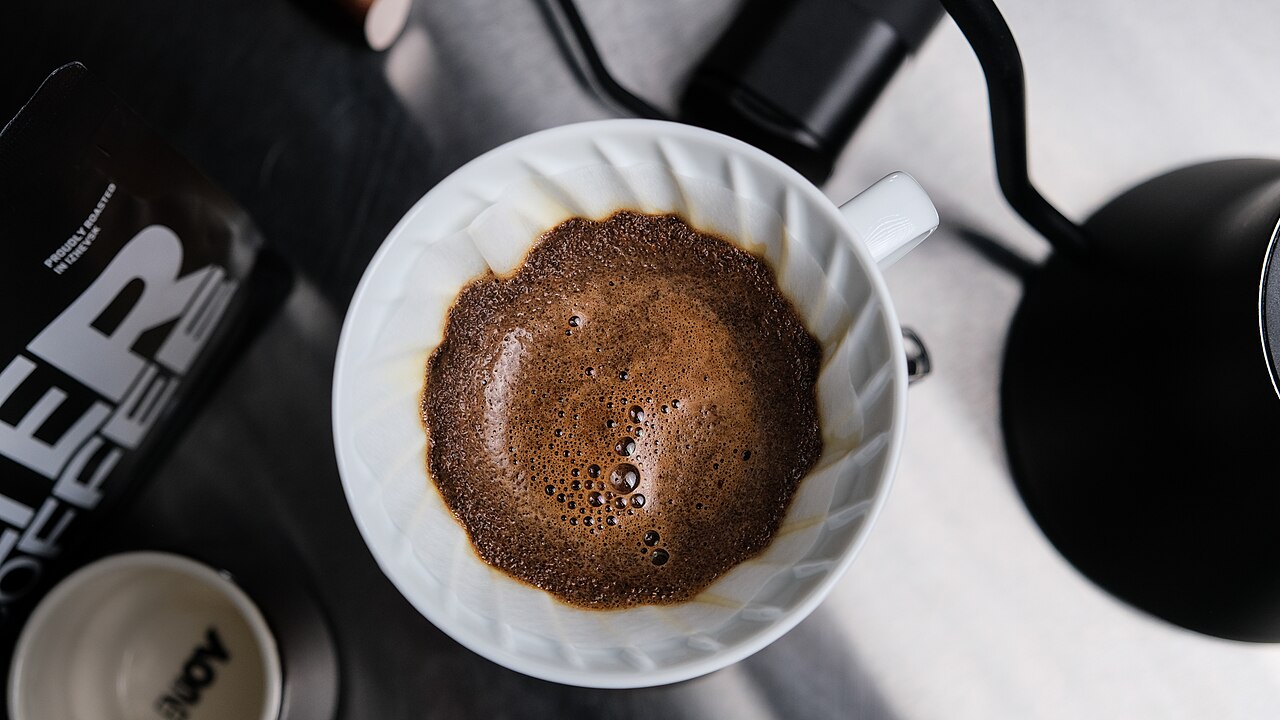
Bloom is the initial wetting stage in many pour-over recipes. Gas, including carbon dioxide, escapes as the grounds become wet. Follow the chosen recipe’s water amount and pause. The appearance alone cannot measure extraction or tell you the complete storage history.
Weiss Distribution Technique uses fine needles to stir espresso grounds in the basket before tamping, breaking clumps and redistributing the bed. Barista Hustle’s testing highlights the importance of an even technique. It is an optional preparation step, not a guarantee of a better cup. Establish your recipe first and compare repeatability if you add it.
Water can flow more readily through some parts of a coffee bed than others. This is called channelling. For espresso, review distribution, dose, grind and the condition of the basket before drawing a conclusion. A sour or bitter taste alone does not prove where water flowed.
Start with the named recipe for your brewer. Our Baratza V60 example uses 98 °C; the NCA plunger guide gives 93 °C with a 3 °C allowance either way. Different guides can reasonably choose different starting points. Measure when possible, keep the rest of the recipe steady, then compare the cup. A fixed wait after boiling does not reliably establish temperature for every kettle and batch.
Water suitable for drinking can still vary in mineral content and suitability for a coffee machine. Check your actual supply and the equipment’s instructions. A simple TDS reading does not identify every dissolved mineral or establish hardness and alkalinity. The business chapter gives a named machine-water specification and explains why treatment needs a water test.
Roasted coffee releases gas over time. Smrke and colleagues measured different release patterns for different roast degrees and roasting speeds, and for whole beans versus ground coffee. Their experiment does not establish a universal best drinking day. Ask the roaster for a starting window for that coffee and method, then compare recorded brews on different days while keeping storage and preparation consistent.
Roast colour alone cannot tell you the caffeine in your cup. The dose, beans, brewing method and the comparison all matter. Weighing grams and filling a scoop are different ways of setting a dose. To compare coffees, record the actual mass, water, method and serving rather than assuming equal-looking portions give equal caffeine.
Professional comparison: same recipe or same extraction?
Professional detail
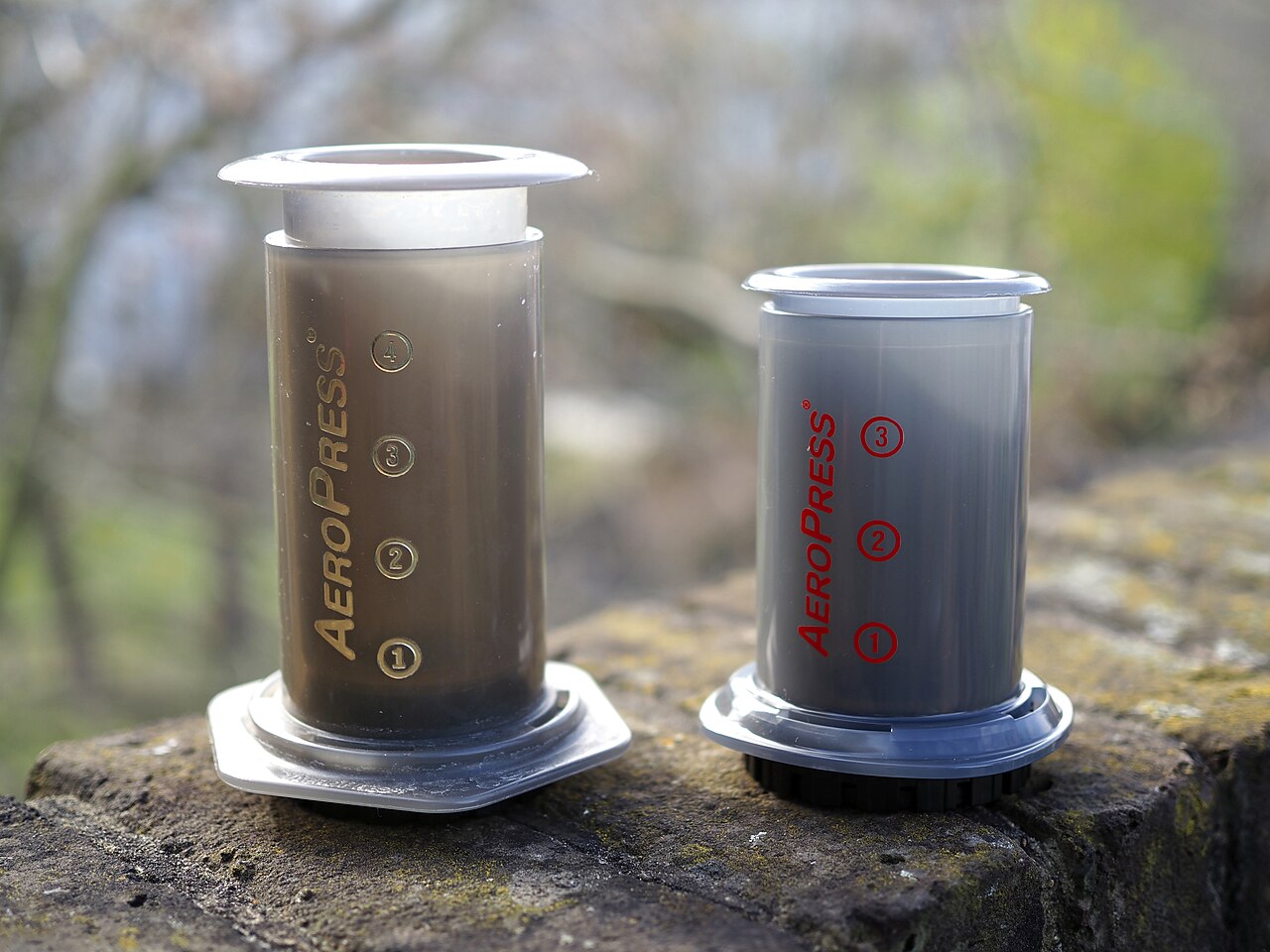
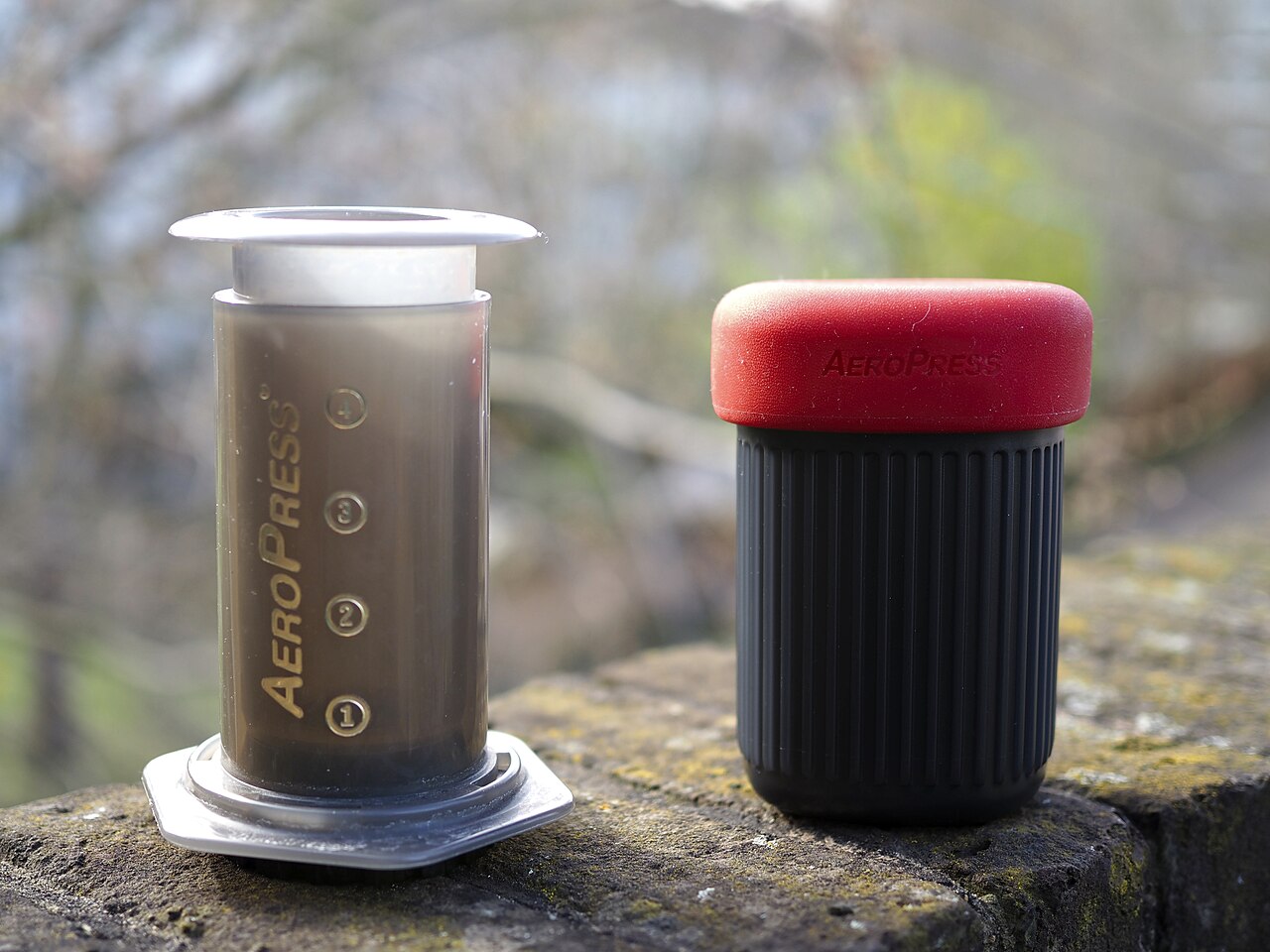
Lindsey and colleagues tested 30 combinations of coffee variety, roast and brew time using an AeroPress with a 15:1 water-to-coffee mass ratio. Under identical brewing conditions, darker roasts generally produced lower caffeine concentrations; when compared at the same extraction yield, darker roasts generally had higher concentrations. Changing the comparison changes the result. This study is not a caffeine calculator for every espresso, scoop or coffee.
Different milk products texture differently. Breville’s BES880 manual starts with cold milk and allows texture and temperature adjustments. Choose a product you enjoy and follow its guidance alongside your machine’s instructions. Record the actual product and settings when comparing results.
No. Instant coffee has been brewed and dried into soluble solids, then is rehydrated for drinking. Ordinary ground coffee needs water to extract its flavour, rather than dissolving like instant. Follow the brewing method’s filtering or settling instructions. Check ingredients when comparing plain instant with mixed sachets.
Serving sizes can differ between products. Where a nutrition panel is provided, the per-100-mL values help compare similar drinks; the per-serving values describe the stated serving. Check whether you drink that amount or the whole container. Plain coffee can be exempt from a panel.
Choose your exact brewer, its compatible cup and filters, then use the model’s own recipe. A travel mug’s capacity and a chamber fill mark are different things. If you want to compare brews by mass, weigh water input and collected coffee rather than guessing them from a photograph.
Breville’s BES880 ANZ troubleshooting separates an empty or poorly seated tank from coffee-bed or basket restrictions and descaling needs. Start with the exact manual and simple user checks. For slow espresso, compare actual dose, grind and basket condition before changing several settings. Do not turn “nothing comes out” into a universal fine-grind diagnosis, and do not copy a factory reset from another model as a first step.
Professional: record the symptom before the repair
Professional detail
Write the model and manual edition, whether the problem concerns water, espresso or steam, settings, recent care and the checks already completed. Follow the manufacturer’s user-serviceable instructions; use its support route when those checks do not resolve the issue. A troubleshooting note is a record of observations, not proof of a failed pump or permission to dismantle internal components.
Choose one guide for the brewer you own. Record a baseline, repeat it, then change one factor and compare. Keep coffee identity, dose, water or beverage yield, grind, timing and taste in the note; distinguish what you measured from a machine setting. The seven guide checklists show what to record. This is an editorial learning routine, not seven completed practical trials.
V60, matching paper, cup/server, kettle, grinder, scale and timer.
Dose
20 g coffee
Water
320 g input water
Temp
98 °C
Grind
Medium to medium-coarse
Time
Under 3 minutes as a starting guide
Rinse the fitted filter with hot water and discard the rinse. Add 20 g ground coffee and level the bed.
Start the timer with 40 g water, gently wetting all the grounds. Immediately swirl or stir gently to wet the grounds evenly, as in Baratza’s method. Allow a 30-second bloom.
Add roughly 100 g in a gentle circular pour over the coffee. Pause about 10 seconds between further pours, reaching 320 g total input water.
Let it drain, then taste. Baratza aims for under three minutes; do not force a good-tasting cup to match a timer.
This is Baratza’s recipe, not a universal V60 standard. The coffee-to-input-water mass ratio is 1:16. Measure finished beverage separately. Filter, grind and pouring affect drawdown.
Coffee steeps in water before a mesh filter separates the grounds. Use a press sized for your batch.
Photo: Ö4anby0502. File:Coffee Press.jpg. CC BY-SA 4.0. Original or source thumbnail; no local file edits. Display resized; image remains under its linked licence.
Equipment
A suitable plunger, kettle, scale, timer and non-metal stirring utensil appropriate to the vessel.
Dose
30 g coffee
Water
450 g input water
Temp
93 °C starting point; NCA gives ±3 °C
Grind
Coarse starting setting
Time
About 4 minutes
Add 30 g coarse ground coffee to a suitable press, then 450 g hot water.
At about one minute, gently stir to break up the floating crust.
Fit the lid with the plunger raised and allow roughly three more minutes of steeping.
Press gently and decant promptly. Clean according to the equipment instructions.
The 30 g / 450 g example is an editorial batch within NCA’s 1:10–1:16 input-water range. Its input ratio is 1:15, not its finished yield ratio. Mesh-filter sediment and retained liquid complicate beverage-based extraction measurement.
A compatible AeroPress of adequate capacity, approved paper/filter cap, sturdy cup, kettle, scale and timer. Follow your model’s instructions.
Dose
18 g coffee
Water
270 g input water
Temp
About 93 °C
Grind
Medium-fine starting setting
Time
Begin pressing at 1:30; about 2 minutes total
Fit the rinsed paper and secure the filter cap. Place the brewer upright on the cup and add 18 g coffee.
Start the timer, add 270 g water and stir gently to wet the grounds.
Insert the plunger seal gently to reduce drip-through, following the manufacturer’s upright guidance.
At 1:30 press slowly, stopping at the gentle hiss. Do not force a difficult plunge.
Baratza’s example is 1:15 coffee-to-input-water by mass. Some users invert the brewer to prevent early dripping and extend steeping. AeroPress strongly discourages inversion because instability can expose users to hot liquid and burns; this beginner guide remains upright.
Make a concentrate in the named brewer, then dilute a serving to taste. Concentrate and ready-to-drink coffee are different products.
Equipment
Toddy Home brewing container, stopper, felt filter, paper bag and decanter, with clean water and equipment.
Dose
340 g coarse ground coffee
Water
1.9 L input water by volume
Temp
Room temperature in this specific Toddy method
Grind
Coarse
Time
Manufacturer specifies 8–24 hours
Fit the stopper, dampened felt filter and paper bag as specified in the Toddy Home instructions.
Put 340 g coarse coffee in the bag and add 1.9 L water. Gently wet all the grounds, then close the bag.
Follow the manufacturer’s 8–24-hour room-temperature steep for this named home method.
Drain into the decanter and refrigerate. Start with one part concentrate to two parts water or milk by volume; adjust to taste.
This is Toddy’s paper-bag Home Method 1. Its no-bag method uses a different sequence. The separate Hario refrigerated method is not interchangeable. This home recipe is not a validated commercial food-safety process or a universal storage-life claim. Measure your collected yield and serving dilution.
A sound moka pot with correct gasket, filter and valve, suitable coffee and a compatible hob. Read the full model manual, including first-use preparation and care.
Dose
Full filter funnel, without tamping
Water
Cold water to the lower edge of the safety valve, following the model manual
Temp
Room-temperature input water; heat on the compatible hob
Grind
Moka-suitable grind, not very fine espresso grind
Time
Watch the brew rather than assuming one fixed time
Check the pot and components against the manual. Put cold water in the lower chamber to the specified valve-level limit. Do not cover the valve.
Fill the filter funnel with moka-ground coffee without pressing it down. Remove grounds from the sealing rim and assemble without using the handle as a lever.
Use the compatible hob and the manual’s heat setting. Keep a gas flame inside the pot’s base; supervise the brew and stop heating when the upper collector has filled.
Use the handle and lid knob to serve carefully. Let the pot cool completely before opening it. Follow the model’s cleaning and maintenance instructions.
This is an equipment-specific preparation summary, not a fixed gram recipe or measured extraction model. Record the actual coffee dose, water input and collected beverage if comparing brews. Moka cup counts do not mean café mug sizes. The representative photograph does not establish the exact model.
An upright Go recipe using the maker’s medium-fine instructions.
Photo: Bex Walton from London, England. File:Aeropress Go (49771112987).jpg. CC BY 2.0. Original or source thumbnail; no local file edits. Display resized; image remains under its linked licence.
Equipment
AeroPress Go, suitable filter and secured cap, supplied mug, kettle, scale and timer.
Dose
12–14 g coffee
Water
Fill to chamber mark 3; measured water mass not supplied
Temp
85 °C manufacturer starting temperature
Grind
Medium-fine
Time
Wait 30 seconds after stirring, then gently press
Secure the paper filter and cap. Stand the chamber upright on the supplied mug and add 12–14 g coffee.
Add 85 °C water to mark 3. Stir for about 3 seconds.
Fit the plunger as instructed to limit dripping. Wait 30 seconds.
Press gently. Use the manufacturer’s cleanup instructions.
These model-specific marks do not give an exact water mass. Weigh the input and collected beverage if recording a ratio. The maker’s separate pre-ground method waits 60 seconds.
Photo: Jubair1985. File:Espresso Coffee 01.jpg. CC0. Original or source thumbnail; no local file edits. Display resized; image remains under its linked licence.
A small, concentrated coffee brewed under pressure. It is also the starting point for many other drinks.
You need: An espresso machine, a suitable basket, grinder, scale and cup.
Breville double-espresso starting example
Choose a basket that suits a 19 g coffee dose. Grind and distribute the coffee, then tamp following your machine guidance.
Brew towards 38 g liquid coffee. Use 20–30 seconds as a starting guide, recording your timing convention.
Taste, record what happened and adjust one thing at a time. Basket capacity and beans affect the starting recipe.
This example is a double recipe, not a universal single-shot definition. Record coffee dose, liquid yield, grind setting and timing. Crema makes a millilitre reading different from liquid mass. illy describes a separate traditional single using 7 g and up to 30 ml.
Vessel
Breville suggests a small glass or demitasse cup.
Quantity
The recipe here uses a 19 g dose and 38 g liquid yield. illy describes a separate traditional single of up to 30 mL. Grams of liquid, liquid volume and cup capacity are different measures.
Texture
Crema sits above the brewed coffee. Its appearance alone does not tell you the dose, freshness, taste or caffeine content.
Notice
Sip, then describe aroma, acidity, bitterness and mouthfeel in your own words. Record the coffee and recipe when comparing another espresso.
Variations
Single, double and split servings depend on the house recipe. Ask what “short black” means there.
Order
“Is your short black a single or double, and what liquid yield do you serve?”
Photo: Mustang Joe. File:Cappuccino (50544608617).jpg. CC0. Original or source thumbnail; no local file edits. Display resized; image remains under its linked licence.
Espresso with steamed milk and foam. Cup size and foam style vary between cafés and traditions.
You need: An espresso machine with a steam wand, milk, a jug, thermometer and cup. Check milk allergens.
illy starting example
Prepare 25 ml espresso using a suitable method.
Steam 85 ml milk following equipment guidance. illy gives 65 °C for this recipe.
Combine the espresso and textured milk. With foaming, the recipe describes about 150 ml finished volume.
Milk input, expansion during foaming and final cup volume are different quantities. Equal thirds is not a universal recipe. An alternative-milk version should be named and tested separately.
Vessel
illy’s named preparation uses a cappuccino cup.
Quantity
illy describes about 150 mL finished volume from 25 mL espresso and 85 mL milk before foaming. The difference is not an extra liquid ingredient.
Texture
Foamed milk contributes to the finished volume. Do not read a one-third rule as a measured recipe for every café.
Notice
Notice the foam texture as well as the liquid below it. Compare with a flat white before deciding which finish you prefer.
Variations
Chocolate topping and the depth of foam are house choices. The illy method here does not require a chocolate dusting.
Order
“Does your cappuccino come with chocolate, and can I have it without?”
Photo: Jeremy hunsinger. File:Bicerin.jpg. CC BY 2.0. Original or source thumbnail; no local file edits. Display resized; image remains under its linked licence.
A warm layered drink combining coffee, chocolate and cream. The public home version here is distinct from the original café’s secret recipe.
You need: Espresso, dark chocolate, milk, cream, icing sugar, a saucepan, whisk and heat-safe glasses.
Eataly home version, two servings
For two servings, prepare about 237 ml cream, 237 ml milk, 30 ml icing sugar by volume, 85 g dark chocolate and two espresso shots. These are rounded conversions from US measures.
Whip the cream with the icing sugar. Make hot chocolate from the milk and chocolate.
Layer hot chocolate, coffee and cream in heat-safe glasses. Serve without stirring.
Retain the two-serving basis when scaling. The public recipe is attributed to Eataly; it does not reproduce Caffè Al Bicerin’s secret house recipe. Final cup sizes and recipe performance need practical review.
Vessel
Eataly uses a warmed, clear heatproof glass so the layers can be seen.
Quantity
The listed ingredients make two servings. The source does not fix glass capacity or finished yield; do not read the whole batch as one drink.
Texture
Chocolate, coffee and cream are layered and left unstirred in this home version.
Notice
Notice how a sip changes as it passes through the cream into the coffee and chocolate.
Variations
This is Eataly’s published version. It does not reveal Caffè Al Bicerin’s secret house recipe.
Order
“Is this your house Bicerin, and should I leave the layers unstirred?”
Chilled espresso over ice with separately prepared cold milk foam. A refreshing introduction to Greek coffee culture.
You need: Double espresso, ice, cold milk foam, a suitable mixer/shaker with strainer and serving glass.
Buondi Craft / Nestlé Professional Greece version
Prepare double espresso, up to 70 ml. Chill and agitate with 1–2 ice cubes for 1–2 seconds using suitable equipment.
Put 5–6 medium ice cubes in the serving glass. Add cold milk foam to just below half the glass.
Pour the chilled coffee through the shaker strainer. Sugar is optional. This manufacturer’s version uses foam-first assembly.
The milk measure is a fraction of the glass, not a specified input volume. Glass size and foaming method still need practical review. Keep this version separate from coffee-first assembly and all-in-one blended Greek Cappuccino variants.
Vessel
Use a glass with space for ice and a separate cold milk-foam layer.
Quantity
Buondi Craft specifies a double espresso up to 70 mL. Its milk-foam measure is a fraction of the glass, not a fixed milk input or final drink volume.
Texture
This version combines shaken espresso and ice with separately prepared cold milk foam.
Notice
Compare the airy milk topping with the coffee beneath it, then notice the change as ice melts.
Variations
Buondi’s sequence puts foam in the glass before the strained coffee. Other descriptions use coffee first; name the method when comparing.
Order
“Is the milk cold-frothed separately, and do you add sugar to the espresso?”
Very finely ground coffee heated with water in a cezve and served with settled grounds in a small cup.
You need: A cezve, very finely ground coffee, water, a suitable heat source and small serving cup. Sugar is optional.
Mehmet Efendi manufacturer method
Use 6 g coffee and one serving cup of water. Measure your cup rather than assuming every cup holds the same volume. Add optional sugar during preparation.
Heat slowly until foam rises, then share some foam between the serving cups. Avoid overflow.
Complete the heating and pour gently. Allow the grounds to settle. The manufacturer describes another rise/boil; other traditions use different methods.
Vessel, heat source and grind fineness affect preparation. Do not impose repeated boiling on every tradition. A conflicting water unit in another source has been excluded from this starting method.
Vessel
Mehmet Efendi brews in a cezve and serves in small coffee cups, with water alongside.
Quantity
The manufacturer uses 6 g coffee and one serving-cup measure of water. It does not assign that cup a universal millilitre capacity.
Texture
Fine grounds remain in the unfiltered drink; a foam layer and settled sediment are different parts of the serving.
Notice
Let the grounds settle. Notice the aroma and body of the liquid above them rather than drinking the sediment.
Variations
Sweetening and heating routines vary. The named method here is not a rule for every regional preparation.
Order
“Can I choose the sweetness before brewing, and how large is the serving?”
Strong drip-filter coffee with sweetened condensed milk and ice. A phin filter is part of its preparation.
You need: A suitable phin, ground coffee, hot water, sweetened condensed milk, ice and a glass. Check milk allergens.
Attributed home starting example: Nguyen Coffee Supply and Cafely
Nguyen’s protocol uses 14 g coffee and about 118 ml input water at roughly 91–93 °C. Wet the coffee first, wait 45 seconds, then add the remaining water.
Allow the coffee to drip. About five minutes is a starting guide, not a guaranteed result.
Stir in condensed milk and serve over ice. This example selects 30 mL; Cafely suggests two tablespoons, adjustable to taste. Use the stated millilitres rather than an Australian tablespoon conversion.
This combines an attributed phin protocol and milk quantity; it awaits practical review. Input water is not finished coffee yield. Do not interpret a mixed tablespoon/ounce ratio as a mass ratio. Phin size and press design affect flow.
Vessel
A phin sits over a receiving cup or glass. For this iced example, choose a glass with room to stir in condensed milk and ice.
Quantity
The named phin protocol uses 14 g coffee and about 118 mL input water. The selected 30 mL condensed milk is a separate ingredient; neither gives finished yield after brewing and ice melt.
Texture
Coffee drips through the phin, then mixes with thick sweetened condensed milk. Ice cools and dilutes the serving.
Notice
Notice the change from separate coffee and milk layers to a mixed drink; compare before much ice has melted.
Variations
Phin size, milk amount and iced or hot service need their own quantities. This profile combines two attributed home guides.
Order
“Is it brewed with a phin, and can I choose less condensed milk?”
Photo: Kritzolina. File:Frappé.jpg. CC BY-SA 4.0. Original or source thumbnail; no local file edits. Display resized; image remains under its linked licence.
Instant coffee whipped with a little water to make foam, then served with ice and cold water. Sugar and milk are optional.
You need: Instant coffee, water, ice, a tall glass and a suitable frappé mixer. Optional sugar and milk.
Nestlé Professional Greece version
Put 5 g instant coffee in the glass with optional sugar and 30 ml room-temperature water.
Use the named frappé mixer for no more than 10 seconds to form foam.
Add ice, optional milk, then cold water to fill your glass. Leave room for the foam.
The source leaves final glass volume and ice quantity unspecified. Record both when repeating a recipe. This is an instant-coffee preparation; freddo espresso starts with brewed espresso. Equipment changes need their own practical check.
Vessel
Serve in a glass with room for ice, water and the whipped coffee foam.
Quantity
Nestlé’s version starts with 5 g instant coffee and 30 mL water. Top-up water, ice and final glass size are unspecified.
Texture
Instant coffee and a little water are whipped into foam before the drink is lengthened. This is coffee foam, not necessarily milk foam.
Notice
Notice how the foam feels compared with the liquid. Record whether milk and sugar were added.
Variations
Milk is optional in the named method. Freddo espresso uses brewed espresso rather than this instant-coffee base.
Order
“Can I have it without sugar, and is milk included or optional?”
A strong filtered coffee concentrate, often called decoction, mixed with hot milk. The familiar metal tumbler and saucer are part of its serving tradition.
You need: A two-part South Indian metal filter, suitable finely ground filter-coffee blend, water, milk, sugar if wanted and a cup. Check milk allergens.
Continental Coffee / Malgudi home version
For the concentrate, use 20–25 g of the named filter blend and 80–100 ml water just off the boil. Lightly settle the grounds in the upper chamber with its disc; follow the filter instructions.
Cover and let the concentrate collect below. The source gives 10–15 minutes as a starting guide.
For one serving, start with 30 ml collected concentrate and 150 ml hot milk. Add sugar to taste and stir well.
This serving selects the published 1:5 concentrate-to-milk volume ratio from the source ranges. It does not use the entire concentrate batch. Chicory content, grind and filter size affect flow; pure-coffee versions also exist. Stirring is the beginner option here; traditional pouring between tumbler and davara takes practice with hot liquid. Milk choice is a variation, not a rule of authenticity.
Vessel
Continental describes a tumbler and davara. For a beginner, stirring in a stable serving vessel is a practical alternative to pouring hot liquid between them.
Quantity
This example selects 30 mL decoction and 150 mL milk from Continental’s ranges. These are ingredient inputs, not a measured foamed serving yield.
Texture
Filtered decoction is combined with hot milk. Pouring between vessels can create surface froth; it is not required for this beginner method.
Notice
Notice the milk-to-coffee balance and record the blend, especially whether it includes chicory.
Variations
Coffee-and-chicory blends and pure-coffee versions both exist. Narasu’s cited product is pure coffee; milk choice is not a test of authenticity.
Order
“Does the blend contain chicory, and can you adjust the milk or sugar?”
Photo: José Manuel Pérez. File:Cafe bombon2.jpg. Public domain. Original or source thumbnail; no local file edits. Display resized; image remains under its linked licence.
Espresso layered over sweetened condensed milk in a small glass. Stir before drinking if you want the sweetness mixed through.
You need: Espresso, sweetened condensed milk, a small heat-safe glass and spoon. Check milk allergens.
Nespresso Spain proportion, editorial 60 ml example
Measure 18 ml sweetened condensed milk into a heat-safe glass.
Prepare 42 ml espresso and pour it gently over the milk, using the back of a spoon if helpful.
Enjoy the layers, then stir to combine. Adjust sweetness on your next serving.
The 42 ml coffee and 18 ml milk example scales Nespresso’s stated 70:30 proportion by volume. This is one named version, not a universal 1:1 rule. Crema and the thickness of condensed milk make volume measurements approximate. The photograph illustrates the drink; its ingredient quantities are not known.
Vessel
A clear glass shows the condensed milk beneath the coffee in Nespresso’s described serving.
Quantity
The 42 mL coffee and 18 mL condensed milk here are an editorial 60 mL scaling of the source’s 70:30 volume proportion. They do not prescribe a standard glass size.
Texture
Thick condensed milk and coffee form visible layers before stirring. Crema makes volume readings approximate.
Notice
Notice the sweetness and coffee balance after mixing; the layers alone do not tell you the recipe.
Variations
This named proportion is one version. Optional foam or cocoa in the source is not a compulsory ingredient here.
Order
“What coffee-to-condensed-milk proportion do you use, and can you reduce the milk?”
Photo: B adger1. File:Caffe Latte at Pulse Cafe.jpg. CC0. Original or source thumbnail; no local file edits. Display resized; image remains under its linked licence.
Espresso with steamed milk and a thin foam layer. It is a useful starting point if you enjoy a milky coffee.
You need: Espresso machine and steam wand, suitable grinder and basket, milk jug, thermometer and cup or glass. Check milk allergens.
Breville Coffee Journey version
Prepare espresso using a basket and dose suitable for your machine. Breville demonstrates a roughly 19 g double basket split between two cups.
Texture cold dairy milk using the machine instructions; the named guide uses 60–65 °C. Swirl the jug to keep milk and fine foam together.
Pour over the espresso, leaving room for a thin foam layer. Record your cup size and milk amount for next time.
This source uses jug and cup references rather than a fixed milk volume. Milk input, expanded foam volume and espresso yield are separate quantities. The split double basket does not mean a 19 g dose in each cup. For plant drinks, follow their own product and equipment guidance.
Vessel
Breville’s starting guide uses a glass or cup; it does not establish one universal vessel size.
Quantity
Record the espresso yield and milk addition separately. A glass’s capacity is not a measurement of milk used.
Texture
Steamed milk with a fine foam finish. Keep the milk and foam integrated when pouring.
Notice
Compare the milk-to-coffee balance with a flat white using the same coffee base. Your description can include milky, coffee-forward, smooth or foamy without treating those words as a quality score.
Variations
A larger latte can use a different shot recipe. Ask the house rather than assuming a size upgrade changes only the milk.
Order
“How does the coffee-to-milk balance change between your small and large latte?”
Espresso with finely textured milk and a thin foam layer. Cup size and coffee strength vary between cafés.
You need: Espresso machine with steam wand, suitable grinder and basket, cold milk, milk jug, thermometer and cup. Check milk allergens.
Breville Coffee Journey version
Prepare espresso following your machine guidance. The source demonstrates a double basket divided between two cups.
Texture cold dairy milk with less added air than for a cappuccino. The guide gives 60–65 °C; use a thermometer.
Swirl to combine milk and fine foam, then pour into the espresso. Record the cup size and coffee and milk amounts.
The source describes less milk and a thinner foam layer than its latte. It leaves exact milk volume unspecified. Origins are contested between Australia and New Zealand; this profile does not choose an inventor. The photographed café’s recipe is unknown and may differ from the named guide.
Vessel
Breville allows a glass or cup and leaves its capacity unspecified.
Quantity
The starting guide does not supply a measured milk addition. Cup capacity and liquid coffee yield are different quantities.
Texture
Finely integrated milk with a thinner microfoam layer than the guide’s latte or cappuccino.
Notice
Compare how much coffee you taste through the milk, then describe the surface texture. Record your own preference rather than assuming every flat white will taste alike.
Variations
House cup size, espresso recipe and milk choice can change the balance. Ask before comparing two cafés.
Order
“What size is your flat white, and what espresso goes into it?”
Coffee with chocolate and milk. Chocolate sauce, cocoa and melted chocolate versions have different sweetness and texture.
You need: Espresso, milk, dark chocolate sauce, cup and the Aeroccino specified in this version. Check milk and chocolate allergens.
Nespresso Spain Original Mocha version
Use 30 ml dark chocolate sauce, 80 ml milk and 40 ml espresso.
Prepare the milk in the Aeroccino following its instructions, then pour it over the chocolate sauce in the cup.
Brew the espresso over the milk and sauce. Optional home variation: stir gently if you prefer the chocolate evenly mixed through.
These quantities belong to a specific sauce-based recipe. Chocolate squares are not interchangeable millilitre for millilitre with sauce. The Brighton café photograph identifies a mocha but does not document the café’s ingredient amounts. This chocolate drink should not be used to infer the origin of the beans.
Vessel
For this home example, choose a heatproof cup with room for the coffee, chocolate sauce and textured milk.
Quantity
The rechecked Nespresso Spain example specifies 40 mL coffee, 30 mL dark chocolate sauce and 80 mL milk input. These are recipe inputs, not a measured finished serving.
Texture
Textured milk is poured over the chocolate sauce, then espresso is brewed over the milk. Stirring is an optional home variation, rather than part of the source’s listed sequence.
Notice
Notice the balance between chocolate sweetness and coffee; record the sauce when comparing another version.
Variations
Ask what chocolate is used and whether extra sugar or cream is added. The photographed café serving does not document those amounts.
Order
“Do you use chocolate sauce or powder, and is it sweetened already?”
Photo: Weetjesman. File:Caffè lungo.JPG. CC BY-SA 3.0. Original or source thumbnail; no local file edits. Display resized; image remains under its linked licence.
A longer extraction through coffee, rather than espresso topped up with separate water.
You need: A Nespresso Original machine, a capsule intended for lungo, and a suitable cup for the named example.
Nespresso Original 110 ml lungo example
Follow the machine instructions and insert a capsule intended for lungo.
Use the 110 ml lungo setting for this manufacturer’s example.
Serve without assuming that 110 ml defines every café lungo.
The longer water passage is part of brewing. An Americano adds water to an already prepared espresso. This capsule recipe does not specify a traditional portafilter dose, pressure or mass ratio, and its volume cannot be treated as measured liquid mass.
Vessel
For this capsule example, choose a cup that comfortably holds the 110 mL coffee serving.
Quantity
Nespresso Original identifies its lungo extraction as 110 mL. This specifies a capsule system, not a universal portafilter dose or liquid mass.
Texture
More water passes through the coffee during brewing. Adding water to finished espresso is a different preparation.
Notice
Compare it with an espresso from the same system and coffee, recording the extraction setting rather than judging from cup size alone.
Variations
Café recipes may use different dose and yield definitions. Ask whether “long” means longer extraction or separately added water.
Order
“Is this a longer extraction, or espresso with hot water added?”
Photo: Irini Xasiotou. File:Espresso freddo.jpg. CC BY-SA 4.0. Original or source thumbnail; no local file edits. Display resized; image remains under its linked licence.
Espresso chilled and agitated with ice, served with a foamy coffee surface and no milk topping.
You need: Prepared espresso, ice, a suitable coffee mixer or shaker, and a serving glass.
Editorial home sequence based on Visit Greece’s description
Prepare espresso using a repeatable recipe suited to your equipment.
Chill and agitate the espresso with ice using suitable equipment.
Serve in a tall glass over ice. Adjust sweetness to preference. No milk-foam topping is added.
Visit Greece describes espresso blended with ice but does not provide a standard dose, ice mass or final serving yield. This sequence is a qualitative home adaptation, not a fully measured official recipe. Record your own quantities before comparing versions.
Vessel
Visit Greece describes a tall-glass iced espresso serving.
Quantity
The cultural description does not give a coffee dose, ice mass or final yield. The home sequence here is qualitative; record your quantities if repeating it.
Texture
Espresso is agitated with ice. The resulting coffee foam differs from a freddo cappuccino’s separate milk topping.
Notice
Notice the cooled coffee and surface foam, then compare again as ice melts.
Variations
Ask about sweetness and coffee quantity. Adding a separate milk-foam topping changes the serving to freddo cappuccino.
Order
“How much espresso is in it, and can I have it without sugar?”
Espresso marked with a small amount of milk foam. Different from the much milkier latte macchiato.
You need: Espresso, 20 ml fresh cold milk for this named example, a suitable milk frother and a small coffee cup.
Nespresso espresso macchiato example
Froth the milk using equipment suitable for that quantity, following its minimum-fill instructions.
Prepare 40 ml espresso for this capsule-system example.
Add a little milk foam to the espresso. Sugar and chocolate flakes are optional in the source; this simple version omits them.
The 20 ml quantity is milk before frothing, not guaranteed foam volume. Some frothers need a larger minimum fill, leaving unused milk. Do not transfer this capsule volume to a universal portafilter dose or mass ratio.
Vessel
Nespresso’s method pours espresso into an espresso cup; its materials list also names a 110 mL glass.
Quantity
This capsule-system example prepares 40 mL espresso and adds a small amount of froth. Its 20 mL cold-milk ingredient is a preparation amount, not a measured foam-layer volume.
Texture
Espresso with a small milk-foam addition. More froth changes the balance in the named recipe.
Notice
Taste the coffee with its small milk addition and compare with a latte macchiato. Those names describe different preparations here.
Variations
The source offers optional sugar and chocolate. The simple starting method here omits them; ask what the café adds.
Order
“Do you mean espresso with a little milk foam, or a latte macchiato?”
Photo: Richard Huber. File:Affogato al Caffe.jpg. CC BY-SA 3.0. Original or source thumbnail; no local file edits. Display resized; image remains under its linked licence.
Hot espresso poured over gelato, bringing coffee and dessert together in one serving.
You need: One scoop vanilla or hazelnut gelato, ¼ cup hot espresso, and a bowl, glass or cup.
Eataly Canada affogato example, without optional liqueur
Place the gelato in the serving vessel.
Pour the hot espresso over it.
Serve straight away as the gelato begins to melt.
Eataly gives a scoop and a cup measure rather than a gelato mass and finished yield. Scoop size varies. The source also offers optional hazelnut liqueur; it is omitted here. This photographed vanilla version should not be read as a measurement of the recipe.
Vessel
Eataly offers a bowl, glass or coffee cup. Choose one with room for the gelato and poured espresso, and serve with a spoon.
Quantity
The named recipe uses one scoop gelato and a quarter-cup measure of espresso. Scoop mass and finished yield are unspecified.
Texture
Hot espresso meets cold gelato, which melts during serving. It is a coffee dessert rather than a stable milk-foam drink.
Notice
Notice how the temperature, texture and coffee-to-gelato balance change as you eat it.
Variations
Eataly suggests vanilla or hazelnut gelato and optional hazelnut liqueur. The version here omits liqueur.
Order
“Which gelato do you use, and does the affogato include any liqueur?”
Photo: Roland Tanglao. File:Iced cold brew coffee.jpg. CC0. Original or source thumbnail; no local file edits. Display resized; image remains under its linked licence.
Coffee brewed without hot water, then served chilled over ice. Different from hot-brewed coffee cooled afterwards.
You need: Prepared cold-brew concentrate, drinking water, ice and a serving glass. Follow the named Toddy Home guide for the concentrate.
Toddy Home concentrate with an editorial iced serving
Prepare the concentrate using the Toddy Home brewing guide in Make a coffee.
Start with one part concentrate to two parts water by volume, following Toddy’s dilution example.
Pour into a glass with ice. The ice and final serving size are editorial choices; record them when comparing strength.
Dilution is separate from brewing. The collected concentrate yield depends on retained liquid and the brewer. Ice melts and further dilutes the drink, so do not label a water-input ratio as its measured final strength. The home recipe is not a validated commercial production or storage protocol.
Vessel
Toddy collects concentrate in its decanter. For the iced serving here, use a glass with room for dilution and ice.
Quantity
The Home brewer’s starting dilution is one part concentrate to two parts water or milk. The batch water input is not the collected concentrate yield.
Texture
The filtered concentrate is diluted for serving; ice then adds further dilution as it melts.
Notice
Taste the diluted serving and record the dilution. Compare with hot-brewed iced coffee using the same beans if possible.
Variations
Ready-to-drink cold brew and concentrate are different products. The home method is not a validated commercial storage protocol.
Order
“Is this ready to drink or a concentrate, and what dilution do you recommend?”
Iced coffee with milk and aren palm-sugar syrup. The syrup is an ingredient, not a roasting method.
You need: About 30 ml espresso, 150 ml full-cream milk, 20 ml palm-sugar syrup and ice.
Frisian Flag Indonesia espresso option
Measure the palm-sugar syrup into a glass. Add the prepared espresso and stir.
Add ice, then pour in the milk.
Stir before drinking; adjust sweetness in a later controlled comparison.
The source offers espresso or a separate coffee-powder option. This profile uses espresso, so it does not add the powder option’s 50 ml brewing water. Use 20 ml syrup: the source’s approximate tablespoon conversion is inconsistent. Its condensed-milk commentary is not part of the listed full-cream-milk method. Ice and finished yield remain unspecified.
Vessel
For the iced example here, choose a glass with room to mix the palm-sugar syrup, espresso, milk and ice.
Quantity
Frisian Flag’s espresso option uses about 30 mL coffee, 150 mL milk and 20 mL syrup. Ice and finished yield are unspecified.
Texture
Palm-sugar syrup and milk are mixed with the coffee; stir the layers before comparing the balance.
Notice
Notice how much the syrup contributes to sweetness and aroma. Record the syrup used rather than assuming all palm sugars taste the same.
Variations
The source’s coffee-powder alternative uses separate brewing water. Do not add that water as well as the espresso in this selected option.
Order
“Is it made with espresso, and can you use less gula aren syrup?”
Photo: Gunawan Kartapranata. File:Javanese Kopi Tubruk.jpg. CC BY-SA 3.0. Original or source thumbnail; no local file edits. Display resized; image remains under its linked licence.
Ground coffee steeped directly in the serving cup, with the grounds left to settle.
You need: 15 g ground coffee, a 140 ml cup, hot water and a scale to record actual water used.
Nescafé Indonesia tubruk example, with measurement limits
Put the weighed coffee in the cup. The source’s 140 ml figure is cup capacity, not a guaranteed water input.
Add water at the source’s 92–96 °C starting range, leaving safe headspace. Record the actual amount.
Wait for the grounds to settle and the drink to reach a comfortable drinking temperature. Leave the sediment in the cup.
The source does not give an exact steep time or collected beverage mass. Do not equate its tablespoon description with a dependable 15 g scoop. It describes tapping the cup as a practice; that action is not recommended here. These details make a starting method, not a universal tubruk standard.
Vessel
Nescafé’s example names a 140 mL-capacity cup. Choose a stable heatproof cup for brewing and serving.
Quantity
The source gives 15 g coffee, but the cup’s capacity is not a measured water input. Steep time and collected liquid yield remain unspecified.
Texture
The grounds stay in the cup. Let them settle and drink the liquid above the sediment.
Notice
Notice the body and aroma without stirring the settled grounds back through the drink.
Variations
Sweetening and coffee quantity can change the serving. Record actual measurements instead of treating a household scoop as a fixed mass.
Order
“Is it served with the grounds in the cup, and is sugar added during preparation?”
Photo: Digital Terrorist. File:Kopi O.jpg. CC BY-SA 2.0. Original or source thumbnail; no local file edits. Display resized; image remains under its linked licence.
Learn the ordering words before choosing milk, sugar or ice. The photographed version is kopi-o.
You need: For the selected kopi-o version: prepared local-style coffee and sugar to preference.
Editorial serving sequence based on Mount Alvernia’s ordering definitions
Prepare coffee using the method specified for your local-style coffee product.
For kopi-o, add sugar and serve without milk.
For kopi-o kosong, omit sugar. Ask for peng when you want the iced variant.
The same source defines kopi as coffee with condensed milk and kopi-c as coffee with evaporated milk and sugar. These are related ordering variants, not one universal brewing ratio. It does not provide measured coffee dose, water or sugar quantities. Ask the vendor what is in your order.
Vessel
For this kopi-O starting example, use a coffee cup; for an iced order, ask for the iced serving and its vessel size.
Quantity
Mount Alvernia supplies ordering definitions, not measured brewing or sweetening quantities. No standard serving volume is inferred here.
Texture
Kopi-O is coffee with sugar and no milk. Kopi uses condensed milk; kopi-C uses evaporated milk and sugar.
Notice
Start by identifying the milk and sugar in the order. Compare like-sized servings rather than assuming the names specify strength.
Variations
Kopi-O kosong has no added sugar or milk. Kopi-C kosong omits added sugar but still includes evaporated milk. “Peng” requests iced service.
Order
“Can I have kopi-O kosong, iced, and what size is the serving?”
Read whether your product is ground coffee or an instant mix, and check its milk, sugar and allergen ingredients.
Prepare it using that product’s instructions. Do not substitute a generic espresso ratio.
For an iced serving, use the product’s iced preparation instructions where supplied. Record added water and ice.
OLDTOWN identifies its Classic product with traditional Ipoh white coffee, but the inspected page does not supply a measured café recipe or pack water quantity. This is a product-directed beginner route, not a reconstruction of every kopitiam’s roast. The detailed traditional method remains to be verified.
Vessel
For the editorial iced serving here, choose a glass with room for prepared coffee and ice. Follow the actual pack’s preparation directions.
Quantity
OLDTOWN’s Classic page identifies the product with Ipoh white coffee but supplies no measured café recipe or water amount.
Texture
The named manufacturer-product route is different from reconstructing a kopitiam’s brewing and roast method.
Notice
Record the product and preparation, then notice the coffee, sweetness and milk balance. Do not infer the recipe from the colour.
Variations
A café-prepared serving and an instant product need separate ingredient checks. Hot or iced service also changes dilution.
Order
“Is this café-brewed or an instant mix, and are milk and sugar already included?”
Dark Thai iced coffee made with an oliang blend. Product ingredients and milk-containing variations need separate checks.
You need: An oliang coffee blend, a suitable cloth coffee filter, hot water, sugar and ice.
Temple of Thai base preparation, served without optional dairy
Brew the oliang blend through the cloth filter into a suitable vessel, then steep for about ten minutes in this source’s method.
Sweeten and stir while hot, then allow it to cool.
Serve over ice. This pictured black version omits the source’s optional dairy additions.
The retailer identifies one blend containing coffee, corn, soya and sesame; do not assume all brands share those proportions. Check the actual pack, including allergens. Its suggested parts ratio does not state a mass or volume basis, so no gram conversion is claimed here. Milk additions produce a different serving variant.
Vessel
Temple of Thai pours the cooled brew into a glass with ice.
Quantity
Its suggested parts ratio does not state a mass or volume basis. No gram conversion, standard glass size or finished yield is claimed.
Texture
The blend is steeped and strained before sweetening and iced service. The selected serving here omits optional dairy.
Notice
Notice the blend’s aroma and sweetness, and record its ingredients so you can compare it meaningfully.
Variations
The retailer’s named blend includes coffee, corn, soya and sesame. Other blends need their own pack check; dairy additions change the serving.
Order
“Which blend is used, and does this version include any milk or condensed milk?”
Photo: OhanaUnited. File:Yuanyang (drink).jpg. CC BY-SA 3.0. Original or source thumbnail; no local file edits. Display resized; image remains under its linked licence.
Coffee mixed with milk tea, associated with Hong Kong cha chaan teng cafés. The pictured serving is iced.
You need: Prepared coffee, prepared milk tea, a glass and ice. Choose a named tea and coffee baseline before mixing.
Editorial tasting assembly, not a fixed traditional ratio
Prepare the coffee and milk tea using their own recorded methods, then cool for this iced serving.
Combine small measured amounts and taste. Adjust the balance to your preference, recording the volumes.
Pour over ice and record how much ice was used. This is an exploratory assembly, not Lan Fong Yuen’s recipe.
The tourism source supports the drink’s coffee-and-tea identity, not a universal proportion or this home method. Tea strength, milk type, sweetening and ice change the result. Both tea and coffee contribute caffeine; no total is calculated without measurement.
Vessel
For the editorial iced tasting example, use a glass with room to mix prepared coffee, milk tea and ice.
Quantity
Hong Kong Tourism Board supports the coffee-and-tea identity, not a standard ratio, serving capacity or this home assembly.
Texture
Prepared coffee and milk tea are mixed. The tea preparation and milk determine part of the texture.
Notice
Notice which aromas you recognise from coffee and tea. Change one component at a time when comparing versions.
Variations
Tea strength, sweetening, milk and iced or hot service need their own quantities. No caffeine total is inferred from the mixture.
Order
“What is your coffee-to-milk-tea balance, and can you adjust the sweetness?”
Photo: א (Aleph). File:Latte macchiato with coffee beans.jpg. CC BY-SA 2.5. Image by א (Aleph), Wikimedia Commons. Original or source thumbnail; no local file edits. Display resized; image remains under its linked licence.
Milk marked with espresso, commonly served in a tall glass. More milk-forward than espresso macchiato.
You need: 100–120 ml cold milk input, one 40 ml Nespresso espresso and a suitable frother or steam wand.
Nespresso Belgian 40 ml espresso version
Heat and foam the measured milk using suitable equipment.
Put the foamed milk into a heatproof recipe glass with room for expansion.
Brew or pour the 40 ml espresso onto the milk foam. Sugar is optional.
Cold milk input volume differs from expanded foam volume and final drink volume. This named capsule example does not define all café recipes. Layering depends on pouring and milk texture; a photo cannot establish a universal foam depth.
Vessel
The Belgian manufacturer recipe names a 350 mL recipe glass. Use a suitable heatproof glass with room for expanded milk foam; capacity is not the beverage yield.
Quantity
The rechecked Belgian recipe PDF names 100–120 mL cold milk input and 40 mL espresso. The specified glass capacity is 350 mL, not a measured finished drink or foam volume.
Texture
Coffee is poured into prepared milk and foam. Visible layers depend on pouring and texture, not a compulsory foam depth.
Notice
Notice the layers, then compare the mixed serving with a latte using the same coffee and milk amounts.
Variations
This named capsule example is distinct from a small espresso macchiato. Ask how much coffee and milk a café uses.
Order
“Is this milk first, and how much coffee is in the glass?”
Espresso with cold milk and ice. It is assembled differently from a hot latte with steamed milk.
You need: 90 ml cold milk, 40 ml coffee for this selected manufacturer version, ice, a glass and a suitable cold frother.
Nespresso Denmark 40 ml coffee option, without optional syrup
Put ice into a suitable glass.
Cold-froth the 90 ml milk and pour it over the ice.
Brew the selected 40 ml coffee on top. Stir if you prefer the layers combined.
The source also offers an 80 ml coffee option. This profile names the 40 ml option so coffee input is clear. Ice quantity and milk expansion are not specified; record both when testing. No fixed final yield or origin date is inferred.
Vessel
Nespresso Denmark uses a tall glass filled with ice.
Quantity
This profile selects 40 mL coffee and 90 mL cold milk from the source’s options. Ice quantity and milk expansion are unspecified, so there is no fixed final yield.
Texture
The named method cold-froths the milk separately before adding coffee over it and the ice.
Notice
Notice the cold milk texture and coffee balance before much ice melts. Record the coffee option used.
Variations
The source also offers 80 mL coffee and optional flavoured syrup. Both are variations; syrup is omitted in this example.
Order
“Is there syrup in it, how much coffee do you use, and is the milk cold-frothed?”
A shaken coffee cocktail with vodka, coffee liqueur and espresso. It is a separate alcohol-containing drink family.
You need: 50 ml vodka, 30 ml Kahlúa, 10 ml sugar syrup, one strong espresso, ice and three coffee beans for the IBA version.
International Bartenders Association specification
Put the measured vodka, liqueur, syrup and espresso in a cocktail shaker.
Shake thoroughly with ice, then strain into a chilled cocktail glass.
Garnish with three coffee beans.
IBA names one strong espresso without an exact volume, so none is invented here. Ice melt changes the final yield. Liqueur formulation matters; substitutions should be recorded as variations. Coffee does not make an alcohol-containing drink alcohol-free.
Vessel
IBA serves the strained drink in a chilled cocktail glass after shaking with ice.
Quantity
The named specification lists 50 mL vodka, 30 mL coffee liqueur, 10 mL sugar syrup and one strong espresso. Espresso volume and dilution from ice are unspecified.
Texture
Shaking creates a surface foam; the serving does not require milk or cream.
Notice
Notice the coffee aroma, sweetness and foam, recording the coffee and liqueur when comparing recipes.
Variations
Liqueur and syrup substitutions alter the recipe. This specified cocktail contains alcohol; coffee does not remove it.
Order
“Which coffee liqueur is used, and do you follow the IBA recipe?”
Photo: Dr. Bernd Gross. File:Wiener Melange 1.JPG. CC BY-SA 4.0. Original or source thumbnail; no local file edits. Display resized; image remains under its linked licence.
A Viennese milk coffee with milk foam. Names and café recipes vary, so this profile identifies its source version.
You need: Prepared coffee, hot milk and milk foam, with a heatproof cup.
Austrian tourism description with editorial assembly
Prepare and measure the coffee and milk separately.
Combine equal volumes of coffee and hot milk for the tourism source’s Melange description.
Finish with milk foam for its Wiener Melange version. The source does not specify the foam quantity.
Equal coffee and milk volumes describe this source’s version, not a universal espresso recipe. Foam expansion and the coffee baseline affect strength and final volume. Record quantities rather than treating a cup name as a measured specification.
Vessel
For this starting example, choose a heatproof coffee cup with room for milk foam.
Quantity
Austrian tourism describes equal coffee and milk volumes, with foamed milk for Wiener Melange. It does not fix the coffee dose, cup capacity or finished yield.
Texture
Hot coffee and milk are combined with a foamed-milk finish.
Notice
Notice the coffee-to-milk balance and foam, comparing with a cappuccino of known quantities.
Variations
The named tourism description is not a universal machine recipe. Ask about the house coffee preparation and milk amount.
Order
“How do you prepare the coffee, and what balance of coffee and milk do you serve?”
Photo: בר. File:Einspänner Kaffee.jpg. CC BY-SA 3.0. Original or source thumbnail; no local file edits. Display resized; image remains under its linked licence.
Strong black coffee topped with whipped cream, traditionally presented in a glass.
You need: Prepared strong black coffee, whipped cream and a heatproof serving glass.
Austrian Embassy description with editorial assembly
Prepare a recorded strong black coffee baseline.
Pour into a heatproof glass with room for the topping.
Add whipped cream. Record your chosen coffee and cream quantities, which the source leaves open.
This is a qualitative cultural description, not a fully measured recipe. It should not automatically be equated with espresso con panna or every café’s “Vienna coffee”. The photographed wafer is presentation only and is not required here.
Vessel
The Austrian Embassy describes strong black coffee in a glass with whipped cream on top.
Quantity
Its description leaves coffee volume, cream quantity and glass capacity open. Austrian tourism also describes a version with espresso and hot water.
Texture
Whipped cream forms a topping over hot black coffee. It differs from steamed milk foam.
Notice
Notice the contrast between the cream and coffee beneath it; record whether the coffee has been diluted.
Variations
Named descriptions differ in their coffee base. A “Vienna coffee” menu label alone does not establish this recipe.
Order
“Is the coffee diluted with water, and is the cream sweetened?”
Photo: Juan Manuel Parra from Puerto de la Cruz, Spain. File:Barraquito.jpg. CC BY-SA 2.0. Original or source thumbnail; no local file edits. Display resized; image remains under its linked licence.
A layered coffee with condensed milk, liqueur, milk and foam. This profile features the alcohol-containing El Camino version.
You need: Sweetened condensed milk, Licor 43, prepared coffee, milk and milk foam, a small lemon slice and cinnamon.
El Camino method reported by Turismo de Tenerife
Add condensed milk to a heatproof glass, followed by Licor 43.
Add coffee, then milk and milk foam to form the serving layers.
Finish with a small lemon slice and cinnamon. Mix before drinking if following the venue’s serving instruction.
The source specifies the order but no quantities. Record each input for repeatable preparation. It reports that a plain barraquito in parts of the island may mean a longer milk-and-condensed-milk coffee; ask about alcohol rather than relying on the name alone.
Vessel
For this layered example, choose a clear heatproof glass so you can see the assembly.
Quantity
Turismo de Tenerife reports El Camino’s ingredient order, not measured input amounts or final serving size.
Texture
Condensed milk, Licor 43, coffee, milk and milk foam are layered, then finished with lemon and cinnamon.
Notice
Notice the layers before mixing and the combined aroma afterwards. The photograph does not establish ingredient proportions.
Variations
The reported El Camino version contains alcohol. Elsewhere on the island, a plain barraquito may mean a different milk-and-condensed-milk coffee.
Order
“Does your barraquito contain Licor 43, or should I ask for an especial?”
Photo: ProtoplasmaKid. File:Café de olla .jpg. CC BY-SA 4.0. Original or source thumbnail; no local file edits. Display resized; image remains under its linked licence.
A spiced pot coffee. This attributed Mexican cookbook version includes chocolate as well as cinnamon and piloncillo.
You need: Six cups of water, 100 g ground coffee, 100 g piloncillo, 50 g Mexican chocolate, one cinnamon stick, two cloves and thin cinnamon pieces for serving.
Sebastián Verti recipe in UTSA Libraries’ Salud collection
Bring the water to a boil, add the main cinnamon stick, cloves, piloncillo and chocolate, then lower the heat.
As it returns to boiling, skim the chocolate foam. Add coffee when it boils again, then remove from the heat.
Let grounds settle while keeping the pot warm without boiling. Serve carefully from the top, leaving sediment behind; garnish with a thin cinnamon piece.
This is the collection’s named chocolate-containing version. Cup capacity is unspecified; measure and record your cup volume rather than asserting a metric water input. Ground coffee mass is preserved, not converted from a household cup. No fixed steep time or finished yield is supplied.
Vessel
The UTSA collection’s recipe names a clay cooking pot and individual mugs. Use cookware suitable for your heat source.
Quantity
The named batch has six cups water, 100 g coffee, 100 g piloncillo and 50 g Mexican chocolate, plus spices. Household cup capacity and finished servings are not measured here.
Texture
Coffee is added after the spiced sweet base is heated, then allowed to settle. Serve the upper liquid without disturbing the sediment.
Notice
Notice the spice, chocolate and coffee aromas separately; compare batches using the same measured water amount.
Variations
This is the collection’s attributed chocolate-containing version. It is not a claim that every café de olla includes chocolate.
Order
“Does your version include chocolate, and which spices and sugar do you use?”
Photo: Andy Li. File:Cortado - LOAM 2023-08-22.jpg. CC0. Original or source thumbnail; no local file edits. Display resized; image remains under its linked licence.
Espresso softened with milk. This named capsule example differs from the equal-part versions offered by some cafés.
You need: One 40 ml Nespresso espresso and 100 ml cold milk to prepare in the Barista device. Only part of that milk goes into the drink.
Nespresso Barista cortado version
Brew the 40 ml coffee into a suitable cup.
Heat and foam 100 ml milk in the named device following its instructions.
Add 20 ml hot milk to the coffee, then two spoonfuls of foam.
The frother’s 100 ml input is not the quantity poured into the drink. Foam-spoon capacity is unspecified, so no exact final volume is claimed. Other café cortado recipes may use different proportions; name the version when comparing.
Vessel
Nespresso’s Barista example serves in an espresso cup.
Quantity
It brews 40 mL coffee, prepares 100 mL milk in the frother, then adds only 20 mL hot milk and two spoonfuls of foam. The preparation amount is not the amount poured.
Texture
The named serving combines espresso, a small measured milk addition and spooned foam.
Notice
Notice the coffee-to-milk balance compared with a piccolo. Record foam-spoon size if testing this example.
Variations
This capsule-device version does not define every café’s cortado or require a universal equal-parts ratio.
Order
“What coffee and milk amounts do you use, and is it served with foam?”
Photo: Burghy at Italian Wikipedia. File:Caffè scheckerato.jpg. Public domain. Original or source thumbnail; no local file edits. Display resized; image remains under its linked licence.
Coffee and sugar shaken with ice to create a cold, foamy drink without a milk topping.
You need: 40 ml Nespresso coffee, 3.5 g sugar, 90 g ice and a cocktail shaker.
Nespresso 40 ml shakerato example
Put the 3.5 g sugar into the shaker.
Brew 40 ml coffee onto the sugar, then add 90 g ice.
Shake vigorously and serve in a suitable cup or glass.
This source provides ingredient amounts but no shake duration or measured final yield. Ice melt affects dilution. Do not infer a milk ingredient from the pale foam, or equate the coffee foam with a cold-frothed milk topping.
Vessel
The Nespresso sheet lists a recipe glass but describes pouring into a lungo cup. Either wording belongs to that named example, not an exclusive vessel rule.
Quantity
Its inputs are 40 mL coffee, 3.5 g sugar and 90 g ice. Shake duration, retained ice and final liquid yield are unspecified.
Texture
Coffee, sugar and ice are shaken; the pale foam does not indicate an added milk ingredient.
Notice
Notice the coffee foam and the dilution. Keep coffee, sugar and ice inputs the same when comparing another preparation.
Variations
Ask whether the house serves it strained and whether sugar is added. Record changes rather than assuming a single standard.
Order
“Is the shaken coffee strained off the ice, and is sugar included?”
A sweet coffee topped with espumita made by beating sugar with the first brewed coffee.
You need: For the Café Bustelo four-serving batch: 1¼ cups water, ⅓ cup ground coffee and ¼–⅓ cup sugar; a suitable moka pot and mixing jug.
Café Bustelo moka-pot cafecito version
Load and brew the moka pot according to its manufacturer’s directions; the source quantities are for its four-serving batch.
Beat the sugar with about half a tablespoon of the first brewed coffee for one to two minutes, until pale and creamy.
Gently combine with the remaining brewed coffee, stir and share between small serving cups.
The source uses “espresso” for moka-pot coffee, but moka and pumped espresso are distinct methods. Cup capacity and ground coffee mass are not specified; no metric brew ratio is invented. Equipment capacity takes priority over trying to force an incompatible batch into a smaller pot.
Vessel
Café Bustelo divides its shared moka-pot batch into espresso cups.
Quantity
The source’s household-cup ingredient list serves four. It does not give a ground-coffee mass or measured finished yield; match the batch to your moka pot’s capacity.
Texture
A small early portion of brewed coffee is beaten with sugar, then combined with the rest to create a surface foam.
Notice
Notice the sweetened coffee and foam. Compare with an unsweetened coffee using the same brewing method.
Variations
This manufacturer recipe calls moka coffee “espresso”; the brewing methods are distinct. Ask which method the café actually uses.
Order
“Is your cafecito moka-brewed or machine espresso, and is sugar whipped into it?”
Photo: Mannivu. File:Irish Coffee layers.jpg. CC BY-SA 4.0. Original or source thumbnail; no local file edits. Display resized; image remains under its linked licence.
Hot coffee with Irish whiskey and sugar, topped with lightly whipped cream. This profile follows the Buena Vista venue method.
You need: Hot coffee, two cocktail sugar cubes, a jigger of Irish whiskey, lightly whipped whipping cream and a heatproof serving glass.
Buena Vista venue method
Warm a suitable heatproof glass with hot water, then empty it.
Fill about three-quarters with hot coffee, add the two sugar cubes and dissolve them.
Add the whiskey, then gently float lightly whipped cream over a spoon.
The venue leaves glass, jigger and sugar-cube sizes unspecified. Record your measures rather than converting these words into invented millilitres or grams. The cream should remain pourable for floating. This recipe contains alcohol; coffee does not remove it.
Vessel
Buena Vista preheats its serving glass before preparing the drink.
Quantity
Its method uses a glass about three-quarters full of coffee, two sugar cubes and a jigger of whiskey. Glass, cube and jigger sizes are unspecified.
Texture
Pourable whipped cream is floated over the hot sweetened coffee and whiskey.
Notice
Notice the cream and coffee beneath it. Record actual measures if comparing another venue’s serving.
Variations
Whiskey, sweetness and cream preparation can differ. This venue method contains alcohol; no alcohol strength is calculated here.
Order
“Which whiskey do you use, and is the cream pourable rather than stiffly whipped?”
Photo: Herbeater. File:Café mazagran.jpg. CC BY-SA 4.0. Original or source thumbnail; no local file edits. Display resized; image remains under its linked licence.
A cold coffee-and-lemon drink. This named manufacturer example has syrup and ice, with no alcohol.
You need: 110 ml Nespresso lungo, 20 ml lemon juice, 20 ml water, 20 ml cane sugar syrup and 90 g ice.
Nespresso lemon mazagran version
Put the syrup into a glass. Combine lemon juice and water separately, then pour gently onto the syrup.
Add the ice and pour the prepared 110 ml lungo over it.
Stir to combine before drinking. Lemon zest is optional.
This lemon-and-syrup version should not be confused with alcohol-containing versions described elsewhere under the same name. The drink name alone does not define the ingredients. Ice melt changes final volume and strength; no caffeine quantity is inferred from the 110 ml coffee volume.
Vessel
Nespresso’s lemon version uses a recipe glass with ice.
Quantity
The specified inputs are 110 mL lungo, 20 mL lemon juice, 20 mL water, 20 mL syrup and 90 g ice. Ice melt changes the final liquid volume.
Texture
Coffee is combined with the lemon, water and syrup over ice; this selected version has no milk or alcohol ingredient.
Notice
Notice the citrus, sweetness and coffee balance before and after some ice melts.
Variations
Other drinks with the same name can include alcohol. Ask about ingredients rather than relying on “mazagran” alone.
Order
“Is this the lemon version, and does your recipe include any alcohol?”
Photo: Jose Espinal. File:Caffè con panna.jpg. CC0. The Commons source version was cropped vertically in 2018. No additional local file edits. Original or source thumbnail; no local file edits. Display resized; image remains under its linked licence.
Espresso topped with whipped cream. The cream topping distinguishes it from a milk-foam macchiato.
You need: Two espresso shots, whipped cream and a suitable cup.
Starbucks at Home two-shot version
Prepare two espresso shots using your equipment’s suitable recipe.
Pour the coffee into the serving cup.
Spoon a dollop of whipped cream over the coffee and serve.
The source leaves shot volume and cream quantity unspecified. Record your actual measures if comparing recipes. Its optional caramel is omitted here. The photo has a dusted topping; that garnish is not a required ingredient in this version.
Vessel
Starbucks at Home pours its two-shot example into a mug before adding cream.
Quantity
The source gives two espresso shots and a dollop of whipped cream, without shot volume or cream mass. No fixed finished size is inferred.
Texture
Whipped cream sits on the espresso. It is a cream topping rather than steamed milk foam.
Notice
Notice the contrast between coffee and cream. Use known shot yields if comparing it with espresso macchiato.
Variations
The source’s caramel drizzle is optional and omitted here. The photograph’s dusted garnish is not required by this recipe.
Order
“How much espresso is in it, and is the whipped cream sweetened?”
Photo: Vojtěch_Dostál. File:Galão, Azores.jpg. CC BY-SA 4.0. Original or source thumbnail; no local file edits. Display resized; image remains under its linked licence.
Coffee with hot textured milk. This producer’s version uses lungo coffee; serving size and proportions vary.
You need: 50 ml lungo coffee, milk, a suitable milk-steaming system and a serving cup or heatproof glass.
Cafés Candelas lungo-and-milk version
Prepare the 50 ml lungo coffee.
Texture the milk with the steam wand following equipment guidance.
Pour the textured milk into the coffee, starting towards the centre of the cup.
Candelas specifies the coffee volume but leaves milk amount and final cup size open. Do not turn that into a fixed 1:3 rule. The photo shows an Azorean glass serving; the producer describes a cup. Neither establishes one exclusive presentation.
Vessel
Cafés Candelas describes a cup. The existing photograph shows an Azorean glass serving; neither establishes an exclusive vessel.
Quantity
The named producer version specifies 50 mL lungo but leaves milk quantity and cup capacity open. A fixed 1:3 ratio is not supplied.
Texture
Hot textured milk is poured into the coffee in the producer’s method.
Notice
Notice the milk-to-coffee balance and texture. Record both ingredient amounts when comparing a latte.
Variations
Coffee extraction, milk amount and presentation depend on the version. Do not read the glass photograph as a measured recipe.
Photo: Tim Boyd from Brooklyn. File:Café au lait.jpg. CC BY 2.0. Original or source thumbnail; no local file edits. Display resized; image remains under its linked licence.
Coffee with hot milk. This named manufacturer example uses espresso rather than defining every café au lait by one brewing method.
You need: 40 ml Nespresso espresso, 250 ml cold 2.5% milk, the named Barista device and a suitably sized serving vessel.
Nespresso Barista café au lait variation
Brew the 40 ml espresso into the serving vessel.
Put the 250 ml milk into the named device up to its specified maximum mark and follow its heating programme.
Pour the prepared hot milk over the coffee.
This capsule-based example is one variant, not a claim that all French café au lait uses espresso. The 250 ml is cold milk input; heating and foam can alter the final serving volume. Check another device’s limits rather than assuming the same fill quantity is safe.
Vessel
The Nespresso Barista variant finishes in a recipe glass.
Quantity
It uses 40 mL espresso and 250 mL cold milk input to the named device. Heating and foam mean these are not a measured final serving volume.
Texture
Prepared hot milk is poured onto the coffee. This is a capsule-device example, not a definition of all French café au lait.
Notice
Notice the coffee-to-milk balance. For another version, identify whether the coffee is filtered or brewed as espresso.
Variations
Other coffee bases and equipment require their own recipe and device limits. Do not copy the frother fill amount to a different device.
Order
“Is the coffee filtered or espresso, and how much hot milk do you add?”
Photo: Kritzolina. File:Greek Coffee on Corfu.jpg. CC BY-SA 4.0. Original or source thumbnail; no local file edits. Display resized; image remains under its linked licence.
Finely ground coffee heated with water in a small briki and served with the grounds remaining in the cup.
You need: For this unsweetened Loumidis example: 7 g finely ground Greek coffee, 70 ml room-temperature water, a clean narrow-necked briki and a suitable heat source.
Loumidis low-heat briki method, unsweetened
Put 70 ml room-temperature water into the clean briki and place it over low heat.
Add 7 g coffee and stir to combine. This selected version omits sugar.
As the coffee starts to rise, remove from the heat and pour slowly with a steady flow into the serving cup.
Use a briki suited to this batch and watch it throughout heating. The source’s sweetened variants mix volume and gram guidance, so they are not converted here. Greek and Turkish preparations share equipment and features; the separate profiles preserve their named sources and regional terminology.
Vessel
A briki is used for brewing and a small coffee cup for serving. Match the briki to the batch.
Quantity
The rechecked Loumidis example gives 7 g coffee and 70 mL room-temperature water. This selected version omits sugar. Input water is not a measured finished yield.
Texture
The fine grounds remain in the unfiltered drink. The surface foam and settled sediment are separate features.
Notice
Let the sediment settle and notice the coffee above it. Compare the named method with Turkish coffee without treating either as one universal recipe.
Variations
Sweetness is a choice made during preparation. This selected example is unsweetened and does not convert the source’s ambiguous sweetening measures.
Order
“Can I have it unsweetened, and how large is your serving?”
Photo: Osman Bas. File:Doppio.jpg. CC BY 2.0. Original or source thumbnail; no local file edits. Display resized; image remains under its linked licence.
A double espresso. The name tells you it is a double serving; it does not fix every café’s coffee dose or liquid yield.
You need: For the linked Breville starting example: a double basket suited to 19 g coffee, espresso machine, grinder, scale and cup.
Breville double-basket starting example
Use a suitable double basket and prepare 19 g coffee following machine guidance.
Brew towards 38 g liquid coffee, using the source’s 20–30 second range as a starting guide.
Taste and record the dose, yield and timing convention before changing one setting.
Starbucks Australia identifies doppio as two shots. Its ounce description is venue guidance, not a universal gram yield. The practical example here is the same attributed double-basket recipe used in the espresso guide, rather than doubling it again.
Vessel
Use a small cup or glass with enough room for the selected double-espresso yield.
Quantity
The named Breville example is 19 g ground coffee to 38 g liquid coffee. “Double” does not specify one universal dose or twice the caffeine of every other drink.
Texture
A concentrated black coffee with crema; measure liquid yield with a scale rather than judging the foam height.
Notice
Compare two double recipes with their doses and yields recorded. Decide which taste you prefer without using “double” as a flavour guarantee.
Variations
A double basket can be served into one cup or split. Confirm that your order receives the intended serving.
Order
“Is the full double extraction served in this cup?”
Photo: Robijuniarta. File:Japanese Iced Coffee.jpg. CC BY-SA 4.0. Original or source thumbnail; no local file edits. Display resized; image remains under its linked licence.
Coffee brewed hot and cooled promptly with ice. This featured preparation uses a dedicated HARIO iced-coffee maker.
You need: HARIO VIC-02 maker, paper filter 02, coffee, scale, ice and kettle. Follow the equipment manual.
HARIO VIC-02 manual, two-cup preparation
Put about 120 g ice in the maker’s ice chamber. Assemble the distributor and dripper as directed; fit the paper filter.
Add 20–24 g ground coffee for two cups, calculated from the manual’s 10–12 g per cup. Wet all grounds with freshly boiled water; bloom about 30 seconds.
Pour slowly in circles from the centre. Stop at the two-cup “remove dripper” line and remove the dripper.
Gently move the ice chamber up and down 3–4 times to mix and cool. Avoid striking the glass. Check the two-cup finished level, remove the chamber, and serve over ice.
This is a device-specific recipe. The manual uses level marks; it does not specify hot-water input in millilitres. Do not infer a fixed brew ratio or finished serving size. Record what you actually use and obtain.
Vessel
HARIO’s VIC-02 method brews into its glass pot and serves into glasses containing ice.
Quantity
The two-cup example uses 20–24 g coffee and about 120 g ice in the chamber. The manual uses level marks, not a stated hot-water input or final millilitre yield.
Texture
Hot filter coffee is cooled by ice during preparation. Remaining chamber ice is removed after the manual’s finishing step.
Notice
Notice the freshly brewed aroma and changing dilution. Compare with cold brew using the same beans and recorded serving amounts.
Variations
This device-specific method is one hot-brewed iced-coffee example. Other brewers need their own water and ice recipe.
Order
“Is it brewed hot over ice or cold-steeped, and do you adjust the recipe for the ice?”
Espresso poured over hot water. Choose the water amount to suit your taste and cup. It is a different preparation from a longer extraction through the coffee grounds.
You need: Espresso equipment, suitable cup, hot water and a scale for a repeatable espresso recipe.
Water-first method; use a named espresso starting recipe
Add hot water to a cup with room for the espresso. Record the amount you choose.
Prepare your espresso using an appropriate basket and named recipe. Our espresso guide gives one measured starting example.
Pour or extract the espresso onto the water, then taste. Adjust the water amount separately from the espresso recipe.
Breville’s Australian guide supports the water-first sequence but gives conflicting water:espresso ratios in its introduction and steps. We do not treat either as a universal standard. Measure water input and espresso yield separately. The photograph was taken in Brighton, UK; it does not show an Australian venue or prove this recipe.
Vessel
Use a cup with room for the chosen water amount and espresso.
Quantity
Record hot-water input and espresso yield separately. Adding water is different from extending the extraction through the grounds.
Texture
Black coffee without added milk in this starting method. Crema appearance does not measure strength or extraction.
Notice
Try the same espresso with two recorded water additions. Describe which balance you prefer; a darker appearance alone does not quantify concentration.
Variations
House water and shot amounts vary. Ask what “strong” means on that menu rather than inferring it from the cup size.
Order
“How much espresso goes into your long black, and can I have less water?”
Photo: Weetjesman. File:Ristretto in a glass.jpg. CC BY-SA 4.0. Original or source thumbnail; no local file edits. Display resized; image remains under its linked licence.
A shorter espresso yield for a given coffee dose. It can be enjoyed on its own or used as the coffee base of a milk drink. Shorter does not automatically mean sweeter.
You need: Espresso equipment, basket suited to the dose, grinder, scale and small cup or glass.
Artisti double-ristretto base used in its Magic example
Use a basket suitable for Artisti’s 22.5 g dose if following this named example. Follow your machine instructions.
For the double-ristretto base, stop at a measured 22.5 g liquid coffee yield. This is a 1:1 dose-to-beverage mass ratio, not a universal ristretto rule.
Taste the short coffee on its own if desired. Record dose, yield and timing; make one small adjustment for your beans and equipment.
The named quantity comes from Artisti’s Magic training recipe, not a claim about the photographed drink. A shorter yield changes the extraction; flavour, bitterness and caffeine cannot be predicted from the word ristretto alone. Other cafés use different doses and yields.
Vessel
A small cup or glass suitable for the chosen short yield.
Quantity
The Artisti example used here collects 22.5 g coffee from a 22.5 g dose. This 1:1 mass ratio is a named starting example, not the definition used by every café.
Texture
A shorter espresso yield for a given dose. Crema volume cannot establish its measured concentration.
Notice
Compare a short and longer yield from the same dose and beans. Describe the difference rather than assuming the shorter cup must be sweeter or less bitter.
Variations
Ristretto may be served on its own or used as a milk-drink base. Ask for the actual dose and yield when comparing house recipes.
Order
“What dose and beverage yield do you use for your ristretto?”
Photo: Bex Walton from London, England. File:Piccolo latte art (20200464344).jpg. CC BY 2.0. Original or source thumbnail; no local file edits. Display resized; image remains under its linked licence.
A small espresso-and-milk serve that makes it easy to compare the coffee and milk balance with a larger latte. Ask how the café makes its piccolo.
You need: Espresso equipment, suitable small glass and textured milk.
Artisti’s 90 mL glass and split-espresso example
In Artisti’s example, split a 45 g double espresso from a 22.5 g coffee dose, using about 22.5 g espresso in the piccolo glass.
Texture milk using your equipment guidance. Add it to the 90 mL glass with a thin microfoam finish.
Taste and compare with your larger milk coffee. The 90 mL figure is the vessel capacity, not 90 mL of milk added.
This is an attributed house example. Some cafés choose a ristretto base or another glass capacity. The photo is a piccolo photographed in London, not an Australian venue or proof of Artisti’s recipe. Milk amount, texture and coffee yield must be considered together.
Vessel
Artisti demonstrates a 90 mL glass.
Quantity
That is vessel capacity. Its split espresso supplies about 22.5 g of coffee beverage; the glass size does not specify 90 mL of milk.
Texture
Artisti uses thin microfoam, similar to its flat-white style.
Notice
Compare the small milk serve with a larger latte. Taste both before deciding whether the coffee-and-milk balance suits you.
Variations
The house may use another glass or a different espresso base. A piccolo and a Magic are separate named examples here.
Order
“Is your piccolo made with a split espresso or a ristretto?”
Photo: Finbar.concaig. File:Magic coffee (cropped).jpg. CC BY-SA 4.0. Original or source thumbnail; no local file edits. Display resized; image remains under its linked licence.
A small milk coffee built on a double ristretto. Ask how the café makes its Magic: cup size, fill level and espresso recipe vary.
You need: Espresso equipment, an appropriate basket, a small cup and textured milk.
Artisti’s double-ristretto and part-filled 170 mL cup example
Artisti’s training example uses 22.5 g ground coffee to produce about 22.5 g double-ristretto espresso. Use a basket appropriate for the dose.
Texture milk using your equipment guidance. Artisti serves its example in a 170 mL cup filled roughly two-thirds, rather than to the brim.
Taste and compare with a flat white. Record your espresso yield and milk addition if you want to repeat the result.
This is Artisti’s named training recipe, not a national standard. A short yield does not guarantee greater sweetness, lower bitterness or a particular caffeine dose. The source identifies the photograph as Magic in Australia; it does not establish the recipe, measured cup capacity or venue. Claims about its exact inventor remain unresolved.
Vessel
Artisti demonstrates a 170 mL tulip cup, part filled.
Quantity
Its example combines a 22.5 g double-ristretto yield with milk to roughly two-thirds of the cup. This is not 170 mL of milk.
Texture
Artisti uses thin, glossy microfoam.
Notice
Compare the short coffee base and milk balance with your flat white. The word Magic does not guarantee sweetness or a particular caffeine amount.
Variations
Ask the café for its recipe and fill level. The named example is not a national definition.
Order
“How do you make your Magic, and how full is the cup?”
Coffee beneath a sweet, airy egg-cream topping. This Hanoi-associated drink is served here as a warm, dessert-like coffee.
You need: A concentrated coffee brewer, electric whisk, clean bowl, cup, condensed milk, sugar and commercially pasteurised egg yolk suitable for uncooked use. Contains egg and milk.
Nguyen Coffee Supply example, adapted with commercially pasteurised yolks
Prepare concentrated coffee with your chosen brewer. The source requests 4–5 US fluid ounces of brewed coffee (about 120–150 mL); this is a serving target, not a guaranteed phin yield.
Use commercial pasteurised yolk equivalent to two yolks, following its pack directions. Whisk with 45 mL sweetened condensed milk and one 5 mL teaspoon of sugar until thick and foamy, around five minutes. The milk amount interprets the US source’s three tablespoons; use millilitres rather than Australian tablespoons.
Pour the coffee into a cup with room for the topping. Spoon the whipped mixture over it and serve promptly. This selects the source’s floating-topping assembly, with pasteurised yolk replacing raw yolk.
Record the brewer, measured coffee output and yolk product. This is an adapted home example, not Cafe Giang’s undisclosed recipe. Hot coffee and a short hot-water bath do not establish validated egg pasteurisation. Follow manufacturer handling directions; NSW Food Authority favours pasteurised products for uncooked egg dishes.
Vessel
Choose a cup large enough for coffee plus whipped topping, with a spoon alongside.
Quantity
The home example above names its quantities. Cup capacity, foam volume and finished serving size are separate.
Texture
Compare the airy topping with the liquid coffee beneath it.
Notice
Try a little topping and coffee together, then gently mix to compare.
Variations
Cafe recipes and toppings vary. A photographed serving is not a recipe measurement.
Order
“Is the egg topping made with pasteurised yolk, and is this served hot?”
Coffee combined with coconut milk. The named home example is iced and stirred; blended, spoonable versions are another preparation.
You need: Concentrated brewed coffee, canned coconut milk, dairy milk, sweetened condensed milk, ice, a measuring jug, glass and spoon. This example contains milk.
Nguyen Coffee Supply iced, stirred coconut-coffee example
Prepare about 60 mL concentrated brewed coffee. The US producer specifies 2 oz; this example interprets that as US fluid ounces and rounds to millilitres.
Add 22 mL sweetened condensed milk to a glass. Stir the coconut milk in its can to recombine it, then add 44 mL coconut milk and 44 mL dairy milk. Mix well. These rounded amounts interpret the source’s 1.5 US tablespoons and two 1.5 US fluid-ounce measures.
Add ice, leaving room for the coffee. Pour the coffee over the milk mixture and stir before drinking. Ice quantity and final yield are not fixed by the source.
Log measured coffee output and the coconut product. This is the producer’s stirred version; Vietnam Tourism also describes blended service. The photographed cafe version has extra toppings and its exact recipe is not supplied. Coconut in the name does not make a drink dairy-free.
Vessel
Use a glass with space for ice and stirring; include a spoon for a thicker cafe version.
Quantity
Use the home measurements above. Ice, aeration and toppings change the final volume.
Texture
Look for the contrast between coffee and the coconut-milk mixture before stirring.
Notice
Compare a sip before and after stirring, then describe the change in your own words.
Variations
Ask whether it is stirred over ice or blended. Do not infer a cafe recipe from a photo.
Order
“Is this blended or served over ice, and does it also contain dairy or condensed milk?”
Photo: F123. File:Café americano 2026.jpg. CC0. Original or source thumbnail; no local file edits. Display resized; image remains under its linked licence.
Espresso-style coffee diluted with hot water. This named capsule example adds water after brewing.
You need: Compatible espresso capsule machine, Arpeggio capsule, hot water, measuring jug and heat-safe glass or cup.
Nespresso 25 mL coffee plus 125 mL water example
Extract one Arpeggio capsule to 25 mL into a heat-safe vessel, using equipment compatible with the source recipe.
Add 125 mL hot water. The two measured inputs total about 150 mL; this is one producer’s starting version.
Keep extracted coffee output and added water separate in your notes. Changing water addition differs from extracting more water through the grounds. A cafe’s espresso recipe can differ from this capsule example; ask how it is made.
Vessel
Heat-safe cup or glass with room for stirring.
Quantity
25 mL brewed coffee plus 125 mL water in this named example.
Texture
Coffee and water; no milk added in this recipe.
Notice
Try two measured water additions with the same coffee output and describe your preference.
Variations
House shot counts, water amounts and assembly can vary.
Photo: Dhinal Chheda. File:Marocchino (26440403402).jpg. CC BY 2.0. Original or source thumbnail; no local file edits. Display resized; image remains under its linked licence.
Espresso with cocoa and frothed milk. Lavazza’s version is assembled in a small glass.
You need: Espresso equipment, unsweetened cocoa, milk, a milk frother and small heat-safe glass. Contains milk.
Lavazza cocoa, espresso and milk assembly; doses unspecified
Rinse a small glass with warm water and dry it. Lavazza suggests a 70–80 mL-capacity glass; this is vessel capacity, not drink yield.
Lightly dust the bottom with cocoa. Brew an espresso into the glass, then gently add frothed milk without stirring.
Finish with cocoa and serve promptly. The source supplies no exact espresso, milk or cocoa amounts.
Record the actual espresso yield, milk input and cocoa amount when developing a repeatable version. Do not infer doses from glass capacity or the photograph. The source’s historical origin account has not been independently verified here.
Vessel
Small heat-safe glass in the featured version; the photo shows a ceramic cup.
Quantity
70–80 mL refers to suggested glass capacity. Exact ingredient doses are not supplied.
Texture
Observe the cocoa topping and frothed milk.
Notice
Compare a sip before and after stirring; describe the change yourself.
Variations
Ask whether cocoa powder, chocolate or a spread is used.
Order
“How do you prepare your Marocchino, and what chocolate ingredient does it contain?”
Photo: Takumi Yoshida Turin, Italy. File:Caffè corretto.jpg. CC BY 2.0. Original or source thumbnail; no local file edits. Display resized; image remains under its linked licence.
Coffee and spirits. This manufacturer example pairs coffee with sambuca served separately, then combined.
You need: Compatible capsule equipment, espresso cup, separate small heat-safe glass and sambuca. Contains alcohol.
Cuisinart EM-252 sambuca example, adapted to metric
Use one espresso capsule on the EM-252 double-espresso setting as specified by its booklet. Follow your own machine’s instructions; this setting does not mean two capsules.
Measure about 30 mL sambuca into a separate heat-safe glass. This interprets the US booklet’s 1 ounce as a US fluid ounce, rounded from 29.6 mL.
Serve the coffee and sambuca together, then pour the coffee into the sambuca before drinking.
The booklet does not give a coffee output for this recipe. Record your actual yield; another machine’s double setting need not match. This is a named sambuca version, not a national measure or standard for all spirits.
Vessel
Espresso cup and separate heat-safe spirit glass.
Quantity
About 30 mL sambuca in this example; coffee yield unspecified.
Texture
Compare the drinks before combining if you wish.
Notice
Describe how the sambuca changes the coffee’s aroma and taste.
Variations
The spirit and serving sequence are house choices; confirm them when ordering.
Order
“Which spirit is used, and is it served separately or already mixed?”
Photo: Davide Mauro. File:Caffè leccese.jpg. CC BY-SA 4.0. Original or source thumbnail; no local file edits. Display resized; image remains under its linked licence.
Coffee cooled over ice with sweet almond syrup. The featured home example uses measured moka coffee.
You need: Moka brewer, coffee, almond syrup, scale, measuring jug, ice, glass and spoon. Contains almond; check the syrup’s ingredients.
Lavazza 50 mL moka-coffee and 10 g almond-syrup example
Prepare moka coffee following your brewer’s instructions and measure 50 mL. The existing moka guide provides a manufacturer-based starting method.
Put 10 g almond syrup in a glass and add 2–3 ice cubes.
Pour the freshly brewed coffee over the ice and syrup, then stir.
The source also permits an espresso lungo but gives no fixed volume for it. We use its explicit moka quantity. Ice size and melting affect final dilution. Almond syrup is different from ordinary unsweetened almond milk; record the product.
Vessel
Glass with space for ice and stirring.
Quantity
50 mL moka coffee, 10 g almond syrup and 2–3 ice cubes in the selected example; final yield varies.
Texture
Notice ice and the coffee-syrup mixture.
Notice
Taste after stirring, then notice the change as ice melts.
Variations
The espresso alternative is not assigned the moka version’s 50 mL quantity.
Order
“Do you use almond syrup, and is the coffee espresso or moka-brewed?”
Photo: Jeremy Keith. File:Cafeconleche.jpg. CC BY 2.0. Original or source thumbnail; no local file edits. Display resized; image remains under its linked licence.
Coffee with milk. The photographed café serving and the measured home example are separate versions.
You need: For the featured example: Nespresso Vertuo, Double Espresso Dolce capsule, Aeroccino or Barista milk frother, semi-skimmed milk, measuring jug and mug.
Nespresso Vertuo example: 80 mL coffee with 60 mL milk input
Measure 60 mL semi-skimmed milk. Froth it in an Aeroccino or Nespresso Barista accessory to a soft texture and pour into a Vertuo Mug.
Extract 80 mL Double Espresso Dolce coffee directly into the mug, using one capsule.
Serve promptly. Use the equipment instructions for the frother; this recipe does not specify its programme or temperature.
This is one equipment-specific example, not a fixed Spanish ratio. Milk expansion and coffee crema mean the final volume is not established by adding the inputs. Record milk product and frother setting when comparing repeat preparations.
Vessel
The named home example uses a mug; the photograph shows a café cup and saucer.
Quantity
Home example: 80 mL coffee and 60 mL milk before frothing. Finished yield unspecified.
Texture
Look at the milk-coffee colour and surface foam in the café photograph.
Notice
Compare how much coffee flavour you notice as you change milk input in a separately recorded trial.
Variations
Ask the café about its coffee base and milk amount; this capsule example does not define every café serving.
Order
“What coffee do you use, and how much milk comes with it?”
Photo: Shht! / m.caimary. File:Café Carajillo2.jpg. CC BY 2.0. Original or source thumbnail; no local file edits. Display resized; image remains under its linked licence.
Coffee with a spirit or liqueur. The photograph shows a rum version; the featured home recipe is a different, iced Licor 43 version.
You need: For the iced example: espresso equipment, Licor 43 Original, measuring jigger, ice, serving glass and spoon. Contains alcohol.
Carajillo 43: the producer’s stirred, no-shaker option
Prepare one hot espresso. The producer gives no coffee dose or espresso volume; record your own preparation.
Put ice in a serving glass, add 50 mL Licor 43 Original and the espresso, then stir. This follows the source’s direct-in-glass alternative.
Serve over ice. Ice quantity and finished yield are unspecified. This is the iced liqueur example, not a recipe for the photographed rum drink.
Record espresso yield, ice and dilution before comparing batches. The producer also describes a shaken version; this page selects its stirred option. The photograph’s Spanish caption identifies rum, but provides no preparation measurements. No origin or national-standard claim is made.
Vessel
Photograph: small glass. Iced home example: glass with room for ice and stirring.
Quantity
Iced example: 50 mL Licor 43 Original, one espresso and ice. Espresso volume and final yield unspecified.
Texture
The photo shows layers and crema; stirring the iced example mixes the ingredients.
Notice
For an editorial tasting comparison, note sweetness and dilution after stirring and again as ice melts.
Variations
The photographed rum version and the named iced liqueur example have different ingredients and presentations. No measured rum recipe is established here.
Order
“Which spirit or liqueur do you use, and is your Carajillo served hot or over ice?”
Iced coffee with sweetened condensed milk and evaporated milk. This page follows chef Pailin Chongchitnant’s named home example, rather than a fixed recipe for every Thai café.
You need: Thai ground coffee blend, cloth filter and jug, measuring spoons, condensed milk, evaporated milk, sugar, salt, ice and a large glass. This example contains dairy; check the coffee blend’s ingredient label.
Pailin Chongchitnant’s steeped Thai iced coffee: one serving
Steep 45 mL Thai coffee powder in 180 mL off-the-boil water for 5 minutes, using a cloth filter in a jug. The powder amount is a volume measurement, not 45 g or instant coffee.
Combine 30 mL sweetened condensed milk, 2 tsp sugar (or to taste) and a pinch of salt. Strain the coffee into this mixture and stir to dissolve. Taste and adjust before adding ice.
Pack a 16 fl oz glass with ice and pour in the coffee mixture. Drizzle over 30–45 mL evaporated milk, then stir before drinking. Finished volume varies with ice and is not specified.
This source uses 15 mL tablespoons, unlike the Australian 20 mL tablespoon. Use its stated mL amounts for coffee powder and both milks. Its five-minute steep is not a pour-through recipe. Record blend, actual ground mass, filtration, sweetness and ice for repeat comparisons. The restaurant photograph establishes the named drink, not this chef’s quantities.
Vessel
Source example: a 16 fl oz glass packed with ice. Glass capacity is not finished beverage yield.
Quantity
45 mL coffee powder by volume; 180 mL water input; 30 mL condensed milk; 30–45 mL evaporated milk; sugar, salt and ice. No final yield given.
Texture
Milk and dark coffee appear layered before stirring; ice cools and gradually dilutes the drink.
Notice
As an editorial tasting exercise, compare sweetness immediately after mixing and again as ice melts.
Variations
Milk quantities and sweetness can be adjusted in the named example. Café recipes and coffee blends differ; check the ingredients rather than assume a universal formula.
Order
“Is this made with condensed milk, evaporated milk or both, and can you adjust the sweetness?”
Arabic coffee includes varied roast, spice and hospitality traditions. Here, a named light-roast producer preparation sits alongside a photograph of a saffron version. They are distinct examples.
You need: For the featured batch: Al Ameed Saudi Sada ground coffee, water, a large pot, fine strainer and a heat-safe coffee thermos. Optional cardamom. The source does not calibrate its tablespoon measure.
Al Ameed Saudi Sada: producer batch example with an uncalibrated spoon measure
Bring 1.5 L water to the boil in a large pot. Lower the heat and add the producer’s specified 9 tbsp Saudi Sada coffee. Its tablespoon volume and equivalent grams are not stated; retain that measurement limit rather than assume an Australian 20 mL spoon.
Return to boiling, then simmer for 5 minutes. Remove from heat and let the grounds settle for 1 hour.
Pass through a fine strainer, reheat to boiling, then transfer to a heat-safe coffee thermos. The producer targets a 1 L thermos but does not give a measured final yield. Cardamom is optional and unquantified in this example.
This is one producer’s coarse-ground, light-roast product protocol. A calibrated coffee dose remains unresolved; weigh and record the dose if trialling it. The source’s 1-hour settling is retained, rather than replaced by another region’s timing. Saudipedia describes regional roast and spice differences; those descriptions are not an interchangeable recipe. Saffron appears in the photograph, not the featured producer instructions. No national serving volume, origin or caffeine claim is made.
Vessel
Photograph: small cup beside a dallah. Featured batch: producer specifies a 1 L thermos; individual cup volume is not stated.
Quantity
Named batch: 1.5 L input water and 9 tbsp ground coffee. Spoon volume, ground mass, optional cardamom amount and measured final yield remain unspecified.
Texture
The photographed saffron version is amber coloured. Roast and spices vary; colour alone does not identify ingredients or concentration.
Notice
An editorial comparison can record aroma and flavour for one named roast and spice choice at a time.
Variations
Saudipedia documents regional roast and spice differences. The pictured saffron version and producer example are distinct; neither stands for every Arab household.
Order
“Which roast and spices do you use, and is this a traditional ground-coffee preparation or an instant blend?”
Espresso with a small milk addition. In MaxiCoffee’s named example, noisette refers to the resulting colour, not hazelnut syrup. The London café photograph shows its own version.
You need: For the selected example: a bean-to-cup espresso machine with an integrated milk system, coffee beans, milk, a small cup and a measure. Follow the machine’s milk-system instructions and minimum fill requirements.
MaxiCoffee’s bean-to-cup example: one espresso with a small milk-foam addition
Prepare one espresso using the machine’s appropriate programme. The source does not specify the coffee dose or espresso yield for this branch.
Prepare a small amount of milk foam using the integrated milk system and its manufacturer instructions. Add 1 cl (10 mL) of foam to the espresso, as specified in MaxiCoffee’s bean-to-cup steps.
Add sugar if desired and serve hot. The source ingredient list contains 10 cl (100 mL) milk, but its serving step adds 1 cl foam. Milk stocked for the system is not the amount poured into the drink; final yield is unspecified.
The supplier’s milk list and serving measure differ and are retained explicitly. This page selects its bean-to-cup branch with integrated milk, avoiding an instruction to steam only 10 mL in a jug. No calibrated espresso recipe or physical performance is established. GRIND’s menu describes a foam-topped noisette, but other house presentations can differ. The Ducasse photograph does not prove either source’s quantities.
Vessel
Photograph: a glass cup with handle. Source home example: a cup; capacity not specified.
Quantity
One espresso and 10 mL milk foam in the selected supplier serving step. Espresso dose/yield and finished volume unspecified; source lists 100 mL milk separately.
Texture
The photograph shows a small milk-foam pattern. House recipes may use milk or foam differently.
Notice
As an editorial tasting exercise, compare espresso before and after a recorded small milk addition.
Variations
GRIND’s menu describes milk foam. MaxiCoffee’s named preparation is one example, not a universal French formula or the photographed London recipe.
Order
“Does your noisette have a little warm milk or milk foam, and is it a single espresso?”
A milk-forward Vietnamese coffee drink. This iced supplier example combines fresh and condensed milk with brewed coffee; other versions use condensed milk and hot water.
You need: Prepared chilled coffee, fresh milk, sweetened condensed milk, ice, a glass with room to stir and measuring utensils. Contains dairy.
Combine 45 mL sweetened condensed milk and about 120 mL fresh milk in a glass. These interpret the US supplier’s three tablespoons and four fluid ounces; use millilitres, not Australian tablespoons.
Add ice and gently mix the milks.
Pour in about 120 mL chilled brewed coffee, then stir. This rounds the source’s four US fluid ounces. Ice and finished yield are unspecified.
The supplier does not specify the coffee’s brewing dose or strength. Prepared coffee volume is not phin water input. Record your brewer and measured output. Recipe performance awaits physical review; do not infer caffeine from the name or colour. Lacàph instead combines 20 g condensed milk, 20 g hot water and 10 g prepared phin coffee. Its origin story is an attributed account, not verified first-use evidence.
Vessel
Use a glass with room for the liquid ingredients, ice and stirring.
Quantity
The rounded assembly quantities above are inputs; they do not establish final volume.
Texture
The photographed milk, coffee and foam are layered before stirring.
Notice
Compare the drink before and after stirring as a tasting exercise.
Variations
Fresh-milk and condensed-milk/water versions have different inputs. Café foam is not required by the selected home recipe.
Order
“Does this use fresh milk as well as condensed milk, and can you adjust the sweetness?”
Black Vietnamese coffee served over ice, without the condensed milk of cà phê sữa đá.
You need: A phin, fine-ground coffee, hot water, scale, timer, heatproof glass and ice.
Nguyen Coffee Supply phin guide, served black over ice
Place the phin on a heatproof glass. Add 14 g coffee, level it and fit the gravity press.
Use about 120 mL hot water at 91–93 °C. Add about 30 mL first; wait 45 seconds, then add the remainder within the brewer’s capacity. These are rounded US-volume and temperature conversions.
The source expects the first drip before two minutes and completion around five minutes. Adjust to your equipment and taste.
Add ice and serve black. Ice quantity and collected beverage yield are not specified; measure them if comparing batches.
The source’s “1:2” label mixes spoon and ounce measures, so it is not a mass brew ratio. Water input is not collected beverage. This preparation example is separate from the photographed café serving; no local brewing trial is claimed.
Vessel
Heatproof glass for brewing; a glass with room for coffee and ice when serving.
Quantity
14 g dose and approximately 120 mL input water in the named starting guide; final yield is measured separately.
Texture
Ice and black coffee, without a milk layer.
Notice
Melting ice changes concentration.
Variations
Sweetness can be discussed separately when ordering; no fixed national sugar quantity is prescribed.
Order
Ask for black iced coffee without condensed milk, and confirm whether sugar is included.
AI-generated facsimile · expected appearance. AI-generated facsimile of an expected appearance. Not a photograph of an actual prepared drink or venue; appearance, quantities and styling can vary. About generated images.
Mortar-ground coffee; named blends can have different ingredients.
You need: One tatlı kaşığı measure of Dibek coffee per serving-cup measure of cold water; optional sugar. Cezve, serving cup and suitable heat source.
Named Arzum preparation outline, uncalibrated traditional measures
Add the cold-water serving-cup measure and coffee measure to a cezve, with sugar if wanted; mix initially.
Heat gently until foaming, following Arzum’s low-heat example. Do not keep stirring during heating.
Serve the foam and coffee in the cup as described by the named source.
Incomplete calibrated home protocol: gram dose, actual spoon/cup capacities, heating duration and final yield not supplied. Do not convert tatlı kaşığı to an Australian teaspoon. Named Dibek blends require individual ingredient/allergen checks. Tchibo uses medium heat; its instructions are not merged into Arzum’s example.
Vessel
Small Turkish-style cup; actual vessel varies.
Quantity
A small cup; capacity is not established by the source or facsimile.
Texture
The image suggests appearance only; it does not measure concentration, foam or sediment.
Notice
AI-generated facsimile, not an actual prepared serving.
Variations
Named preparations and local practices differ. The source-qualified version is described above.
Order
Ask the preparer which version and ingredients they use, and confirm quantities and allergens where relevant.
AI-generated facsimile · expected appearance. AI-generated facsimile of an expected appearance. Not a photograph of an actual prepared drink or venue; appearance, quantities and styling can vary. About generated images.
A concentrated coffee tradition served in small quantities.
You need: Coffee, traditional preparation and serving vessels; quantities remain unspecified in the cited process outline.
Documented process outline, not a calibrated home recipe
The municipal account describes roasting and mortar grinding, then repeated boiling, settling and concentration between vessels.
The cited account describes small handleless servings. It gives no sufficient water amount, timing or calibrated endpoint for a measured home recipe.
Ask a knowledgeable preparer about the local version. Do not infer a preparation formula from the facsimile.
The municipal account gives a 1 kg bean input but does not supply enough water or time information for a reproducible measured recipe. No exact dose-to-yield, strength or universal serving custom is inferred.
Vessel
A small handleless cup in the cited Mırra account.
Quantity
Small handleless serving; no measured millilitre value established.
Texture
The image suggests appearance only; it does not measure concentration, foam or sediment.
Notice
AI-generated facsimile, not an actual prepared serving.
Variations
Named preparations and local practices differ. The source-qualified version is described above.
Order
Ask the preparer which version and ingredients they use, and confirm quantities and allergens where relevant.
AI-generated facsimile · expected appearance. AI-generated facsimile of an expected appearance. Not a photograph of an actual prepared drink or venue; appearance, quantities and styling can vary. About generated images.
A Turkish coffee variation with mastic aroma; the named product uses flavouring.
You need: An identified mastic-flavoured coffee product, suitable Turkish-coffee equipment and its actual instructions.
Product-specific preparation needed; no verified universal resin dose
Choose an identified mastic-flavoured coffee product and read its actual ingredients and preparation instructions.
Do not substitute a guessed pure-resin dose for the named product’s flavouring. This reference has not established a calibrated product preparation.
The facsimile illustrates a plausible Turkish-style serving; aroma and ingredient identity cannot be verified visually.
The cultural source identifies the variation. Indexed producer evidence identifies ground Arabica and mastic flavouring; the direct product page was unavailable. No quantitative resin recipe, clinical benefit or current product availability is claimed.
Vessel
Small Turkish-style cup; actual vessel varies.
Quantity
A small Turkish-style cup; exact capacity and foam vary.
Texture
The image suggests appearance only; it does not measure concentration, foam or sediment.
Notice
AI-generated facsimile, not an actual prepared serving.
Variations
Named preparations and local practices differ. The source-qualified version is described above.
Order
Ask the preparer which version and ingredients they use, and confirm quantities and allergens where relevant.
AI-generated facsimile · expected appearance. AI-generated facsimile of an expected appearance. Not a photograph of an actual prepared drink or venue; appearance, quantities and styling can vary. About generated images.
Yoghurt, milk, condensed milk, chilled coffee and crushed ice in an attributed café-owner version.
You need: Vietnamese yoghurt, prepared chilled black coffee, whole milk, sweetened condensed milk, crushed ice, glass and measuring utensils. Contains dairy. Editorial rounded assembly amounts: about 80 mL yoghurt, 80 mL chilled black coffee, 30 mL whole milk, 10 mL condensed milk and about 160 mL loose crushed ice.
Bao Nguyen / Phin Seattle assembly, published by Imbibe
Mix yoghurt, whole milk and condensed milk in a glass.
Add crushed ice, pour the chilled coffee on top, then briefly stir.
Named café-owner assembly, not a universal formula. Coffee brewing strength and finished yield are unspecified. Yoghurt texture depends on the actual product; no probiotic, caffeine or health claim. Physical preparation unverified. US cup conversions are rounded; ice is loose volume, not water mass.
Vessel
A glass over crushed ice in the named yoghurt-coffee assembly.
Quantity
A glass over crushed ice; no finished yield established.
Texture
Yoghurt texture and mixing vary with the actual ingredients.
Notice
AI-generated facsimile, not an actual prepared serving.
Variations
Named preparations and local practices differ. The source-qualified version is described above.
Order
Ask the preparer which version and ingredients they use, and confirm quantities and allergens where relevant.
A water property mainly associated with dissolved calcium and magnesium. It is different from alkalinity and total dissolved solids.
Alkalinity
Water’s capacity to neutralise acid and resist a change in pH. It is not simply another name for a high pH.
pH
A measure of the acid-base state of a sample. It does not by itself describe the sample’s buffering capacity.
TDS
Total dissolved solids. Brewed-coffee concentration is expressed as a percentage of beverage mass. Water specifications commonly use ppm or mg/L. State the liquid and units. Neither measure is a caffeine test.
Extraction yield
Extracted coffee solids as a percentage of dry coffee dose. State the calculation and whether retained liquid is included.
Contribution
Selling price less variable cost per unit, available to cover fixed costs.
Break-even
The sales level at which the modelled revenue covers the modelled costs.
Mucilage
The sticky layer of fruit material around the seed covering.
Parchment
A protective covering around the coffee seed during processing.
Natural process
Coffee fruit dried around the seed before hulling.
Washed process
Fruit and mucilage removed before the seed is dried.
Fines
The smaller particles within a ground-coffee distribution; the size threshold must be stated.
Body
The perceived weight and texture of the coffee in the mouth.
Dose
The mass of ground coffee used for a brew. State it in grams.
Yield
The amount of finished brewed coffee. In the espresso guide, measure liquid yield in grams.
Brew ratio
A comparison between coffee and liquid quantities. Say whether the liquid is input water or finished coffee.
Espresso
A small concentrated coffee brewed under pressure.
Phin
A Vietnamese drip filter used to prepare coffee.
Cezve
A small handled vessel used to heat very finely ground coffee with water.
Crema
The foam seen on top of an espresso. Its volume is not the same as liquid coffee mass.
Microfoam
Finely textured milk foam prepared for milk-based coffee drinks.
Chaff
The light, paper-like silverskin released from coffee seeds during roasting.
Bloom
The initial wetting stage in many pour-over recipes, when gas can escape from the grounds.
Channelling
Uneven water flow that favours some paths through the coffee bed. Also spelt channeling.
WDT
Weiss Distribution Technique: fine-needle stirring of espresso grounds in the basket before tamping to break clumps and redistribute the bed.
Incremental sample
A small portion taken from one part of a consignment as part of an agreed sampling plan. Multiple portions can contribute to an aggregate sample.
Aggregate sample
A combined sample made from smaller portions collected across a consignment. Mixing and dividing need care so the final samples reflect what was collected. The cited EU customs example is not an Australian legal rule.